


Markforged takes the guesswork out of 3D printing

At Formnext, Markforged, the company strengthening manufacturing resiliency by enabling industrial production at the point of need, announced the release of new Simulation features for its additive manufacturing software. Simulation is available as a free trial until April 2023, and the company expects to make the feature accessible through a paid subscription thereafter. Incorporating 3D printing into tooling and end-use applications requires confidence in part strength. By replacing slow and costly design/print/break testing cycles with virtual testing, Simulation can enable manufacturers to expand their use of additive manufacturing into the most demanding production applications. Larsen Motorsports builds jet engine drag racing vehicles that hurtle past 280mph. But, stock aluminium steering wheels are shaped for much larger hands than those of rookie House of Kolor sponsored dragster driver, Josette Roach, putting safety and performance at risk. Larsen Motorsports used Simulation to design and print a Continuous Carbon Fiber reinforced Onyx™ steering wheel strong enough to replace aluminium. “We can now test it with Simulation, iterate and keep iterating until we get a design we’re happy with,” said Brian Tocci, Director of Operations, Larsen Motorsports. “We don’t have to print ten different parts. We can do it all in Simulation.” Unlike traditional software tools that need specialised expertise and time-consuming analysis, Simulation is designed for additive manufacturing and works within the familiar Eiger™ software slice and print workflow. Any user can validate part strength and stiffness through virtual testing by identifying anchor and load surfaces and then entering values for loads, factor of safety and maximum deflection. They can then optimise parts by automatically determining print settings for floors, walls, infill and fibre reinforcement to achieve print cost and speed goals while maintaining adequate strength. “Simulation enables our customers to adopt The Digital Forge deeper into their manufacturing operations by replacing more mission critical tooling and end-use metal parts with validated and optimised 3D printed advanced composite parts with Continuous Fiber Reinforcement,” said Shai Terem, President and CEO of Markforged. “Cloud-based software innovation like Simulation is core to our mission to bring industrial part production to the point of need.” Manufacturing & Engineering Magazine | The Home of Manufacturing Industry News
Realising The Potential Of Additive Manufacturing

Graphite Additive Manufacturing Ltd is an industry-leading 3D printing consultancy that specialises in building complex designs and high-performance components in tailored materials. Graphite Additive Manufacturing leads the way with beautifully engineered 3D printing. From its roots in Formula One, it continues to push the boundaries of Additive Manufacturing technology and materials. Graphite AM leverages an unrivalled combination of experience and expertise to work closely with clients to find solutions to the most challenging engineering problems. Under the direction of founder and MD Kevin Lambourne, former head of Rapid Prototyping at Redbull Racing, the company possesses a highly skilled team who are able to offer advice for material selection and mechanical design to get the most out of additive manufactured technology. In doing so, Graphite AM has established a strong reputation for meeting client expectations through quality, informed technical support, and prompt and efficient service. Indeed, the company prides itself on taking care of all stages of production, from machine set-up all the way through to packaging. Recognised for its attention to detail, accuracy and quality of the finished part, Graphite AM has a successful track record of providing parts to the UK’s motorsport teams, automotive and aerospace industries and an ever-expanding range of other sectors who seek the advantages of additive manufacturing technologies for demanding applications. Offering part sizes from very small and intricate aerospace R&D components to large automotive interior assemblies, Graphite AM caters for everything from a one-off prototype to large scale production of parts. Moreover, the company is distinguished by the fact it doesn’t just build parts and prototypes. It is constantly working to develop industry-leading expertise in plastic 3D printing technologies and materials. As engineers themselves, Graphite AM collaborates with engineers, model makers, industrial designers and product designers to test concepts, improve designs, cut production costs and solve complex design challenges. Central to this is advising its clients on how to adapt their designs to maximise the strength, weight or cost-saving gains that 3D printing can offer them. Graphite AM also sets out to tailor materials so that clients can be certain that their parts will be fit for purpose. Langen Motorcycles, which it has been working with since 2021, is one such client that has benefitted from Graphite’s capabilities. The client designs and builds individually crafted, ultra-lightweight motorcycles. It chose Graphite AM to additively manufacture production parts for its British built bike. Graphite AM’s capabilities enable clients in many different industries to build parts and products without needing to invest in tooling, die casting, setting up traditional manufacturing systems or machining. The potential of 3D printing to add complexity or lower part count can make this route even more cost effective. With the prototypes for Langen, it would have been cheaper and easier to produce for form and fitment only. Instead, Graphite AM chose to produce them in a material that was production grade. This allowed Langen to use them as prototypes, and check if the strength and finish would meet their high standards for the production. The components needed to be black, smooth and waterproof. PA12 was chosen with the firm’s graphite finish. Vapour smoothing was then applied as a final step. Graphite AM continues to go from strength to strength, building new relationships with clients across a diverse range of sectors alongside its solutions for those it has a long and enduring track record with. It’s clear that the Aylesbury based company is leading the way as a 3D printing consultancy specialising in building complex designs and high-performance components in tailored materials. Manufacturing & Engineering Magazine | The Home of Manufacturing Industry News
Design for Additive Manufacturing Workshop Coming to London

Design and Product Engineers, please join HP on Wednesday 30th October or on Thursday 7th November 2019 at HP Inc, 88 Wood Street, London EC2V 7QT for a unique workshop on designing for HP’s Multi Jet Fusion (MJF) technology to accelerate time to market, drive down cost, and deliver quality parts. What you will learn: How and why HP decided to leverage Multi Jet Fusion 3D printing technology to manufacture over 140 functional parts used in each of our new MJF 500/300 series 3D printers vs. injection molding How to identify and select the right applications for additive manufacturing across your product lifecycle Training on the fundamentals of effective design for MJF How the process works and design strategies for MJF process optimization How the materials behave and what to consider when designing for each of them The new paradigms that are enabled by additive manufacturing and the required mindset change How to design for value maximization (process and cost) Training on the fundamentals of effective design for MJF Live Design for Additive Manufacturing (DfAM) demo and application examples to inspire you You are welcome to stay after the scheduled presentations and discussions to consult with technical experts from HP 3D Printing on your own parts. This workshop is FREE to attend and breakfast and lunch will be provided. Register here.
Land Rover Engineers Developing 3D-Printed Glove
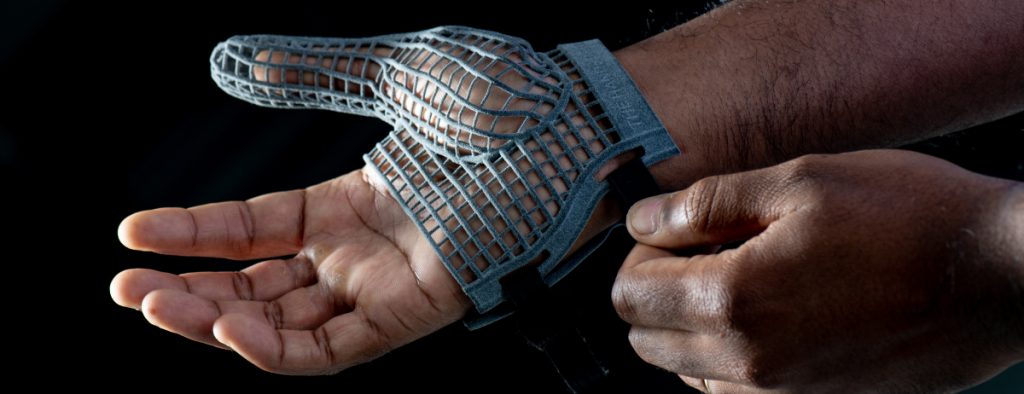
Land Rover Engineers Developing 3D-Printed Glove : Engineers from Jaguar Land Rover are working on a lightweight 3D-printed glove that could help better protect employees from the threat of a musculoskeletal disorder. The glove is designed for people working on the production line, such as those required to fit clips or fasteners into the chassis during assembly of JLR’s luxury vehicles. “The health and wellbeing of our workforce remains our priority across all factories and facilities. Technologies like the 3D-printed glove allow us to use the world-leading expertise and equipment we have in-house to protect the hands of our makers, developing equipment that will make Jaguar Land Rover a great place to work, now and in the future,” said additive manufacturing strategic engineer Chris Noble. Engineers at JLR’s Gaydon site, which is home to one of the largest 3D printing facilities in the UK, are using the company’s advanced manufacturing expertise to design and 3D print a lattice-style structure which would provide support to reduce muscle fatigue, but also be flexible and comfortable enough to wear during an eight-hour shift. In the short term the gloves will support workers across JLR’s facilities, helping to protect against musculoskeletal disorders. Manufacturing & Engineering Magazine | The Home of Manufacturing Industry News Manufacturing & Engineering Magazine (MEM), is a the leading UK based monthly print & digital publication focused on promoting innovation in manufacturing and engineering available here in the UK. We cover : SUSTAINABILITY (Waste & Water Management, Recycling, Energy); INMOTION (Rail, Marine, Aerospace, Automotive, Defence); INFRASTRUCTURE (Oil & Gas, Nuclear, Construction); Healthcare (Medical), TECHNOLOGY(Printed, Connected, Software, Composite); MANUFACTURING (Chemical, Metals, Plastics, Electronics, Electrical); CONSUMER GOODS(Furniture, Electrical, Electronics, Food) to name but a few. We have over 50,000 views of each issue of MEM on average in 2022 and go to print monthly and also publish in our newsletter, (each issue is available free for 12 months digitally). Our focus is aligned across the next 12 months with our global media partnerships around Trade Events and also contains original content.
CRP Technology Welcomes the Cutting-Edge Windform FR1
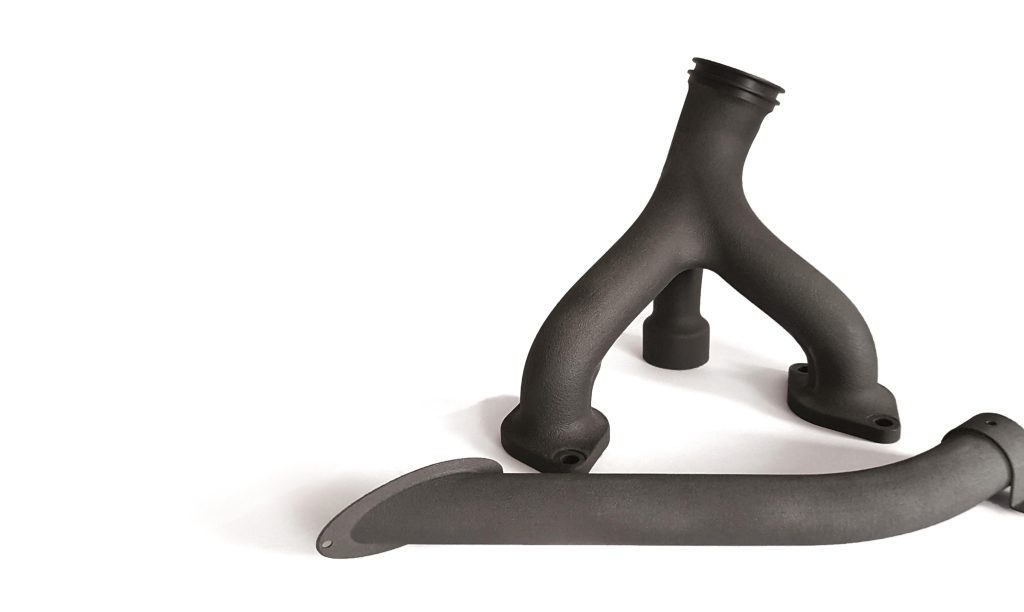
CRP Technology Welcomes the Cutting-Edge Windform FR1 Since mid-90’, CRP Technology has been changing the rules of additive manufacturing, smashing records and setting models nowadays that apply to the 3D printing technology with polyamide materials. A clear sign of this continued performance is Windform® FR1 (FR stands for Flame Retardant), the new-born material from the Windform® TOP-LINE family of composite materials for Additive Manufacturing. It is intended to become a game-changing material in the field of 3D printing for its uniqueness: it is the first Flame Retardant (UL 94 V-0 rated) material for Additive Manufacturing which is carbon fiber reinforced. It is also passed successfully the FAR 25.853 12-second vertical and 15-second horizontal flammability tests as well as the 45° Bunsen burner test. “Only a few days from the launch of a new range of Windform materials, the P-LINE for HSS technology – commented Franco Cevolini, VP and CTO at CRP Technology – I’m very proud to launch a new revolutionary composite material from the Windform® TOP-LINE family of materials for Laser Sintering technology. Our aim is to constantly produce technological breakthroughs. With Windform® FR1 we can steer you toward the proper solution for your projects” Windform® FR1 is halogen free polyamide-based material, that combines superior mechanical properties with excellent stiffness and lightweight. Owing to its flame-retardant quality, this high-performance polyamide based composite material is suitable for Aircrafts and Aerospace applications (interior parts, cockpit, cabin components, air conditioning piping, air ducts, air outlet valves); Automotive and Transportation parts (vehicle interiors, housing and enclosure assemblies); Consumer goods and Electronics (lighting, appliances) and in general for any parts requiring flame retardant rating. Windform FR1 is ideal for high feature detail applications requiring FAR 25.853 fire retardant compliancy. Windform® FR1 is also suitable for the manufacturing of components with detailed surface resolution. “We will not stop here- added Franco Cevolini – we will continue our work on renewal and technological expansion in the field of Additive Manufacturing. Stay tuned!” Manufacturing & Engineering Magazine | The Home of Manufacturing Industry News
Pro2Pro Invests in HP and Dyemansion

Pro2Pro, the country’s leading prototype and rapid manufacturing company, has invested in a HP 4200 Multi Jet Fusion 3D printer and Dyemansion Powershot C automatic de-powdering system at their Telford headquarters. The turnkey package, supplied by UK Channel partner Europac3D, will enhance Pro2Pro’s already substantial rapid manufacturing capabilities and is the first company within the UK to have purchased the combined system. “The addition of the HP Multi Jet Fusion 3d printer gives us an extra dimension within the rapid manufacturing sector, we can produce hundreds of functional end-use parts overnight and be delivering to our customers within 48 / 72 hours. Our strengths come from concentrating on our customers needs and with such a wide range of technologies at our disposal we can always offer a speedy and economic solution. The HP and Dyemansion is another significant string to our bow,” said Dave Piper, Pro2Pro Managing Director. The HP Multi Jet Fusion 4200 3D printer has significant advantages over its competitors with the ability to pack a full build volume of parts (380 x 380 x 284mm) within a 12 hour build-time. Productivity and throughput are greatly enhanced and allows Pro2pro to meet the tight deadlines demanded by modern industry. Furthermore, the Dyemansion Powershot C allows for the automatic de-powdering of components when they are first extracted from the build stations. This usually labour-intensive process is eliminated, with whole process now taking just minutes to de-powder parts rather than hours. As the only rapid manufacturing company in the UK to have the full system Pro2Pro are in a unique position to turn around large batches of 3d printed components in the shortest possible time. The HP system produces parts in PA12 / PA11 Nylon which is suitable for many end-use applications, particularly within the automotive sector and with costs highly competitive to comparable technologies, the system offers a real alternative to low volume injection moulding runs in the early development of a project. “Pro2Pro’s use of the HP’s Multi Jet Fusion printer and Dyemansion De-powdering system sets a gold standard for rapid manufacturing service providers, by investing in the complete solution Pro2pro have positioned themselves as a leading provider of rapid manufacturing services in terms of quality, accuracy and fast lead times,” commented John Beckett, Managing Director of Europac3D. Europac 3D, headquartered in state-of-the-art facilities in Cheshire, offers a full spectrum of services from the supply of cutting-edge scanners, printers and accessories to installation, maintenance and training of staff in the usage of 3D hardware and software. Manufacturing & Engineering Magazine | The Home of Manufacturing Industry News
Roboze Select Europac 3D as UK Partner

Roboze, an Italian Fused Filament Fabrication (FFF) 3D printer manufacturer which specialises in the production of advanced thermoplastic polymers, has selected Europac3D as their exclusive distributor for the UK. The agreement extends Europac 3D’s strategy to be a one stop shop for all 3D printing, scanning and design needs. The unique Roboze proposition allows their machines to meet the challenging demands of the aerospace and autosport industries by producing parts in technopolymers that have high thermal and mechanical resistance such as Carbon Peek, Peek and Ultem. The production of these parts is realised throught the conception of the HVP (High Viscosity Polymers) extruder, a made-in-Italy high-tech instrument designed for difficult-to-extrude high viscosity polymers. The Roboze machines also have a unique beltless printing system for use in high performance engineering sectors. By eliminating the belts, and introducing a direct mechatronic movement of the X and Y axes entrusted to hardened steel rack and pinion, the company has achieved real work precision. With its patented Beltless System, Roboze technology delivers unprecedented 25-micron precision levels that guarantee high performance solutions across the board. Roboze machines can 3d print in a range of high temperature performance thermoplastic polymers allowing the parts to display a high degree of accuracy and durability. The parts produced are versatile and can hold up in the most hostile environments to meet and surpass the demands of various sectors that require such high precision and performance parts. Alessio Lorusso, CEO & Founder of Roboze, comments: “Our mission is to provide market-leading professional 3D printers with FFF technology for extreme industrial applications. It is through continuous product innovation that we are able to create tangible competitive advantages in terms of precision, flexibility, personalization and convenience for our end customers. It is these strengths that separate Roboze from our competition, and we are pleased to be working with Europac 3D to provide open, integrated solutions that improve the productivity of our customers in the UK.” John Beckett, Managing Director of Europac 3D, comments; “Roboze is proven to meet the industrial needs in the Oil & Gas, Automotive, Motorsport, Aerospace, Manufacturing and Defense sectors. We are delighted to be joining forces with this team of visionaries and to have been selected as their exclusive distributor here in the UK. We look forward to introducing their professional 3D printers and materials to our growing customer base.” Europac 3D, headquartered in state-of-the-art facilities in Cheshire, offers a full spectrum of services from the supply of cutting-edge scanners, printers and accessories to installation, maintenance and training of staff in the usage of 3D hardware and software. www.europac3d.com. Manufacturing & Engineering Magazine | The Home of Manufacturing Industry News
Europac3D Announced Partnership with DWS

DWS, an Italian manufacturer of SLA (stereolithography) 3D printers and materials has selected Europac3D as their exclusive UK distributor. The partnership is a further step towards Europac3D fulfilling its strategic ambition of becoming a one-stop-shop for all 3D printing, scanning and design solutions within the UK. The DWS Systems produce parts that have an extremely high accuracy and superior part quality especially on small/medium detailed parts, making them well-suited to applications, such as jewellery, dental and complex industrial design. Furthermore the DWS systems use a technology whereby the laser shoots from underneath the resin vat which has two distinct advantages over traditional SLA technologies. First of all, because the part is drawn up out of the vat of resin it is only necessary to fill the tank with just enough material to build the parts and negating the need for large storage tanks of resin. Secondly, these small vats of resin can be easily switched out from one build to another allowing for complete freedom of material choice per build. The DWS entry level 3D printers have a cylindrical build volume of 180 x 180mm and come with a range of 12 different materials, making it an excellent choice for design houses and those looking to try out the possibilities of rapid prototyping for the first time. The new S PRO X is the premium 3D printer in the DWS range for professional bureaus and production environments with the unique 4 laser system, which enables large industrial parts to be manufactured rapidly and with the widest choice of materials on the market. DWS also create their own 3D printing materials in-house, including ‘ABS Like’ plastic, polypropylene, elastomers and high-temperature-resistant nanoceramics. The applications with such a large range of materials include high temperature moulds, direct casting, clear parts and the Irix range even mimics naturally occurring stones, ideal for the jewellery industry. Europac 3D, headquartered in state-of-the-art facilities in Cheshire, offers a full spectrum of services from the supply of cutting-edge scanners, printers and accessories to installation, maintenance and training of staff in the usage of 3D hardware and software.
Sandvik Creates the Unsmashable Guitar

Rock stars have been smashing guitars for decades, few with more enthusiasm than Swedish-born guitar virtuoso Yngwie Malmsteen. Global engineering company Sandvik decided to test its cutting-edge techniques by building the world’s first all-metal, unbreakable guitar and letting Malmsteen unleash his smashing skills. In the film, Malmsteen plays the guitar in front of an excited crowd in a rock club outside Miami – after which he does his very best to destroy it. Sandvik, a world-leader in material innovation and manufacturing, engineered the smash-proof guitar to demonstrate how advanced, precise and sustainable the company’s techniques are. “We don’t make products for consumers, so people don’t realize how far in the forefront our methods are,” says Klas Forsström, President of Sandvik Machining Solutions. “Creating a smash-proof guitar for a demanding musician like Malmsteen highlights the capabilities we bring to all complex manufacturing challenges.” Malmsteen, named one of the ten greatest electric guitar players in the world by TIME Magazine, is known for his virtuoso performances — as well as the fury he unleashes on his guitars. A master of neo-classical heavy metal, Malmsteen has produced 30 albums and has been smashing guitars onstage for over 30 years. “This guitar is a beast! Sandvik is obviously on top of their game. They put the work in, they do their hours, I can relate to that,” Malmsteen said. “The result is amazing. I gave everything I had, but it was impossible to smash.” Sandvik engineers teamed with renowned guitar designer Andy Holt, of Drewman Guitars, to match Malmsteen’s exacting musical standards and his lightning-fast playing style. “We’ve had to innovate from the top down. There’s not a single part of this guitar that has been made before. It’s a piece of art, really”, explains Holt. “The weak point in any guitar is where the neck joins the body. Sandvik solved the problem by milling the neck and the main hub of the body as one piece. “You could use the guitar as a hammer and it wouldn’t break.” Several different divisions of Sandvik collaborated to make the instrument. For the guitar’s 3D printed body, Sandvik relied on its world-leading expertise in metal powder and additive manufacturing. Lasers traced a design in beds of fine titanium powder, fusing layers of material one on top of the other. The layers, each thinner than a human hair, built up to make the body of the guitar. “Additive manufacturing allows us to build highly complex designs in small production runs,” said Amelie Norrby, additive manufacturing engineer at Sandvik. “It lets us create lighter, stronger and more flexible components with internal structures that would be impossible to mill traditionally. And it is more sustainable because you only use the material you need for the component, minimizing waste.” The guitar’s neck and fretboard were machined by Sandvik Coromant in one machine from a solid block of recycled stainless steel. “Precision was critical,” said Henrik Loikkanen, machining process developer at Sandvik Coromant. “Our software is built on years of experience, giving tool and the cutting data recommendations that helped us mill the fretboard down to a challenging thickness of one millimetre in places.” The next challenge was to strengthen the fret and neck as they extended into the guitar’s body. That solution took the form of a new, super-light lattice structure that was sandwiched between the guitar’s neck and fretboard. Made from hyper-duplex steel, a recent Sandvik innovation, the lattice structure is the strongest in the world for a given weight. “Collaborating like this, working together to solve even more complex problems is key for the future,” said Tomas Forsman, product development specialist at Sandvik. “Our customers’ challenges continue to grow more and more complex. We need to bring our expertise to work hand-in-hand with our partners and customers to invent new ways of meeting those challenges.” Watch how the world’s first smash-proof guitar was made. [youtube https://www.youtube.com/watch?v=k1hxZyD9VGI]
Global 3D Printing Market Report from IDTechEx

IDTechEx Research have recently updated their series of reports on 3D printing including the overview report ‘3D Printing 2019-2029: Technology and Market Analysis‘. After initial commercialisation in the 1990s, 3D printing underwent a period of intense interest in 2013. Key players were quick to capitalise on this interest, enjoying exponential revenue growth between 2013 and 2016 as a result. Since then, the hype has subsided and additive manufacturing is starting to find its place among other manufacturing methods. In particular, focus has now shifted away from the consumer and rapid prototyping, and towards the digitisation of workflows and the manufacture of production quality final products. Several industries are now seriously analysing the benefits and competitive edge that 3D printing can lend their operations, and the most eagerly anticipated technological innovations are catering to these professional users. Although all signs point to a period of seriousness and readjustment in the 3D printing market as it transitions to cater to the needs of this user group, there remains enormous potential for growth over the next decade: in the recently released report ‘3D Printing 2019-2029: Technology and Market Analysis‘, IDTechEx Research forecasts that the global market for 3D printing equipment, materials, software and services is estimated to be worth $31 billion by the year 2029. Technology and Applications In 2018, the 3D printing market comprises multiple different printer technologies. This report takes an in-depth look into established printer types compatible with polymer, metal and ceramic materials, including Vat Photopolymerisation (SLA/DLP/CLIP), Powder Bed Fusion (SLS/DMLS/EBM); Material Extrusion, Material Jetting, Binder Jetting, Directed Energy Deposition and Sheet Lamination. Key technological capabilities, applicable markets, SWOT analyses and key manufacturers are discussed for each established printer type. In addition, nascent printer technologies that will be commercialised in 2018 are introduced, and their technological capabilities evaluated. Market analysis 3D Printing 2019-2029: Technology and Market Analysis forecasts the overall 3D printing market to 2029, with in depth discussion of currently commercialised and emerging printer technologies. The current state of the printer market is analysed, and long-range forecasts from 2019-2029 for installed base, units sold and revenue per annum segmented by printer technology, value chain position and end user industry are evaluated. IDTechEx conducted exhaustive primary research with companies positioned throughout the entire 3D printing value chain for key insights into the trends impacting growth to 2028. Over 60 company profiles have been included in the report including Stratasys, 3D Systems, EOS, Concept Laser GmbH and Arcam AB, amongst others. Key questions that are answered in this report: • What are the current and emerging printer technology types in 2019? • How do metrics such as price, build speed, build volume and precision vary by printer type? • What are the strengths and weaknesses of different 3D printing technologies? • Which printers support different material classes? • What is the current installed base of 3D printers? • What is the price range of 3D printers by technology type? • What are the market shares of those active in the market? • What are the key drivers and restraints of market growth? • How will sales of different printer types evolve from 2019 to 2029?