
3D Printing Helps Build Wind Tunnel
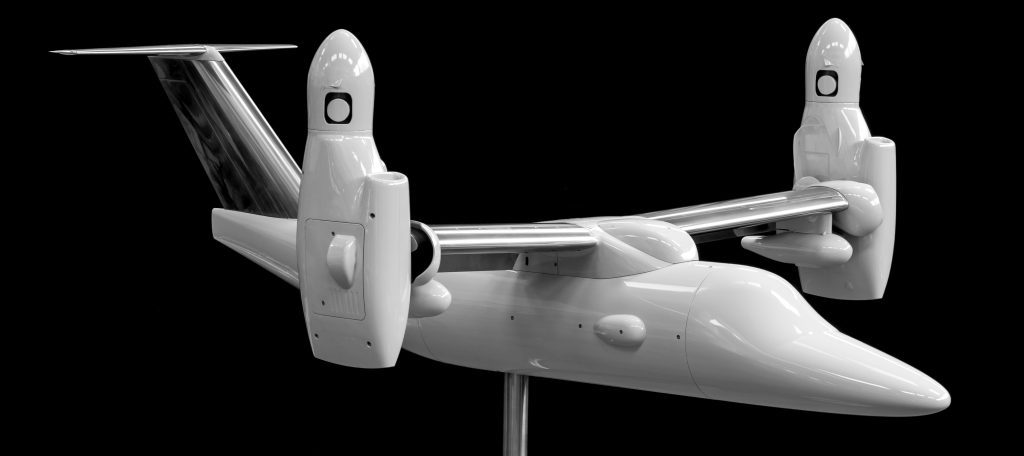
The new wind tunnel model of the LEONARDO tiltrotor AW609 manufactures developed by CRP Technology for Leonardo Helicopter Division (Leonardo HD, formerly known as Agusta Westland) is among the most interesting and significant applications in the aerospace sector. This project allowed CRP Technology, once again, to highlight the perfect union between advanced 3D printing technology (Selective Laser Sintering) and Windform® high-performance composite materials. Thanks to the Windform® materials, it was possible to complete and test the model in the wind tunnel within a very short time, with excellent results and with high-performing mechanical and aerodynamic properties. The project related to the manufacturing of some external parts (nose and cockpit, rear fuselage, nacelles, external fuel tanks, fairings) of the wind tunnel model (1:8.5 scale) for the prototype of the new LEONARDO HD tiltrotor AW609, made by Selective Laser Sintering technology and Windform® XT 2.0 Carbon-composite material, both supplied by CRP Technology. This model was designed, manufactured and assembled under the supervision of Leonardo Helicopter Division by Metaltech S.r.l. for a series of dedicated low speed wind tunnel tests. The tests were intended to cover a standard range of flight attitudes to be performed at Leonardo HD wind tunnel facility and at Politecnico of Milan for the high angles of flight envelope. During the different test sessions various external geometries have been changed and checked in order to understand all the aerodynamic phenomena. The external main components redesigned and manufactured include: fuselage and nose components, fairings, nacelles and spinner shapes, empennage, wings and flaperons. As part of a thorough review of the aircraft behavior, Leonardo Helicopter Division has performed a high speed test campaign at NASA Ames Unitary Plan 11 by 11 foot transonic wind tunnel.
Apium Helps Understand Material Extrusion 3D Printing

Material Extrusion (FFF) 3D printing technology is still the most widely adopted of all known 7 practices in Additive Manufacturing. Based on materials, its market size is higher than for the rest of the AM technologies. A key reason for this is the introduction of high performance polymers and engineered polymeric materials to the AM sector through the Material Extrusion technologies. These materials have far reaching meaning in various industries and have traditionally been processed using injection moulding or CNC milling techniques. In the global AM sector Apium has historically played a pioneering role in the use of high temperature/performance polymer based materials. Its 2015 launch of the PEEK filament and HPP 3D Printer designed for this class of materials set the pace for other machine manufacturers as well as materials suppliers to make entry into this uncharted processing space. Apium has since introduced PVDF, POM-C and PEI 9085 in 2016 and in 2017 carbon fiber reinforced (CFR) PEEK. What makes Apium’s technology unique is the proprietary temperature management system. This system is specially developed for the handling of the state transformation which occurs when the solid filament material (such as PEEK) changes to the melt state then back to the solid state during the printing process. The rate at which this transformation occurs directly influences the kind of microstructure as well as the macro-physical properties of the 3D printed part. Apium`s technology has created a unique access to defining how the properties of materials like PEEK can be created from the control of the 3D printing process. PEEK parts 3D Printed using Apium’s P220 printer allow for inducing regions of different crystallinity including the literature specified crystallinity for PEEK in key applications such as medical. Apium bring the most experience in PEEK 3D Printing, the company`s CTO, Prof. Dr. Brando Okolo has over 16 years of experience in materials research and drives the technological developments for advanced materials. Under his leadership, the technical team at Apium has amassed expertise in the 3D printing of high performance polymers. With this expertise Apium is able to support the end-users in an excellent manner ensuring the transfer of know-how through advanced trainings to achieve best-in-class results from material selection to successfully 3D printed parts. Apium`s Applications and Services Center is dedicated to best customer experience. It consists of the best of skilled AM engineers with experience in materials science, design engineering for 3D Printing, application engineering and 3D printing of advanced polymers. The team evaluates the requirements of each end-user and establishes an advanced training program. With this advanced training program, end-users will overcome the challenges in Material Extrusion (FFF) 3D Printing of PEEK and other high performance polymers.
GOM Welcome New Addition to ATOS Family

New for 2018 the ATOS 5 and ATOS 5X are the latest high-speed systems of the ATOS family, welcomed by GOM. The robust sensors are fast and precise following the introduction of new features and developments. The Blue Light Equalizer has been especially developed for the light source in the ATOS 5 to make the systems independent of ambient light conditions. The ATOS 5X takes this a step further with the introduction of a laser light compressor to generate ultra-bright light for the scanning process. More speed and light in the cameras allows for a shorter exposure time, with scan times down to 0.2 seconds per measurement and 100 frames per second, ATOS 5X gives optimal high-speed high precision data capture. “Enjoying an owner-manager-development unit in control of both software and hardware means that our technology can be released when it is absolutely ready and not just when it suits the shareholders. The speed and overall performance of these latest sensors is allowing us to deliver great data for the most challenging applications,” said Andrew Cuffley, Managing Director at GOM UK. As a result of this new technology both systems achieve high-precision data for a diverse range of manual and automated applications, from tools and moulds to plastic and metal parts. With the ability to scan small scale items such as aerofoil components up to full car body inspection, the ATOS 5 is flexible and capable over multiple applications. At the same time, fixture design can be simplified as a larger surface is captured and fewer reference points are required. During the measuring procedure, acquisition times of down to 0.2 seconds are reached. The trend for automated measuring is supported by installing the ATOS system inside an ATOS Scanbox. This option combines all the functions in one automated measuring machine. By utilising the Virtual Measuring Room software, the measurement environment is represented in a virtual simulation. All robot movements are stimulated and checked for safety before being performed in the actual environment. Five technology leaps were made before the latest generation of ATOS sensors were developed. Process application and increased process reliability are paramount for the latest and future applications.
Europac 3D Has the Biggest Stand at TCT Show

One of the UK’s leading 3D printing, scanning and inspection businesses, Europac 3D, is gearing up for their biggest and most informative stand yet at this year’s TCT Show at the NEC Birmingham, 25th – 27th September, Stand M26. Europac 3D will be showcasing the latest 3D printers and scanners and have experts on hand to discuss the entire end to end print process, as well as the latest developments in bespoke mass customised 3D printing and digital manufacturing. The company will be showcasing the following innovations at their stand: HP Multi Jet Fusion, which delivers a faster and higher print quality at a 50% cost-per-part reduction; Siemens NX Software, which helps businesses develop innovative new products or refine existing ones; a range of 3D scanners from around the world, including Kreon ACE, Solutionix C500, and Artec; the latest technologies from Uniontech, one of the largest manufacturers of SLA 3D printers; and DSM. To demonstrate the power of end to end solutions, Europac will be printing a range of 3D printed sunglasses. Moreover, the company will also be showcasing their collection of more than 50 bespoke sunglasses which have been mass customised using Siemens NX software and printed in under 12 hours using the HP Multi Jet Fusion. The speed of the HP machine coupled with Siemens NX and its ‘nesting capabilities’ allows a multitude of objects of varying shapes and sizes to be printed in a single print run. “We will have our biggest and best stand to date at TCT this year and will be hosting 3D printing, scanning and modelling experts to provide visitors with a one stop shop for all their technical queries. Europac 3D will be on hand to demonstrate all of our latest projects and innovations. We look forward to welcoming visitors to our stand for what promises to be an unforgettable event,” commented John Beckett, Managing Director of Europac. Europac 3D, headquartered in state of the art facilities in Crewe, Cheshire, has more than 20 years of experience in the field of 3D scanning, printing and installation serving a range of sectors and more than 500 businesses across the UK.
Is There Potential for 3D printing in the Manufacturing Market?

Is There Potential for printing in the Manufacturing Market? : The world is evolving at a rapid rate. What seemed like new technology yesterday is quickly being outdated by more advanced equipment and ideas. Similarly, the job market is changing with specialist recruiters such as Nesgt.com keeping up with rapidly developing trends. The question is, will all of this innovation stick around or will it be whipped away as quickly as it came? Well, letâs take a look at one of the latest technologically advanced concepts of recent years â 3D printing. While 3D printers were originally extremely expensive and inaccessible, desktop models are now in circulation. In fact, 3D printing looks to be an increasingly successful industry. Itâs an example of how innovation is launching us into brand new realms of possibility â but is there any room for 3D printing in the global manufacturing market? Improves efficiency and eliminates waste While thereâs no denying that 3D printing is a manufacturing process that requires precision, time, skilled individuals familiar with 3D printers and often expensive equipment to get the job done properly, the process can effectively improve efficiency and eliminate waste â something which, if honed, could dramatically enhance the manufacturing market. When a part is made out of aluminium today, for instance, material is cut away using a subtractive process. This often results in around 60 – 70 percent of the aluminium block ending up as scrap depending on the shape and the complexity of the structure needed. In contrast, 3D printing gradually layers materials in order to fabricate a specific object. It is a precise action which significantly reduces the amount of materials used and therefore works to drive down the overall manufacturing costs. Faster, more accurate production lines Traditional manufacturing processes require impeccable communication between the production line and sales teams. Toys, for instance, canât be marketed and sold unless theyâve been immaculately and professionally put together and assessed according to quality control standards. While machinery does much of the hard work, manual labour is also a key component of the industry, so how could 3D printing improve the process? In theory, 3D printing would give the production team increased flexibility with the capacity to produce goods at a faster rate. Of course, designing the digital file takes time and energy, but once the prototype is ready, 3D printing requires virtually no set-up with assembly being a single operation. A faster, more accurate production line could also potentially make it easier for marketing and sales teams to better plan promotions, special events and regular stock orders. 3D printing already in use within the manufacturing world While there may be some way to go before 3D printing replaces trustworthy manufacturing lines in factories, it is already being used by well-known companies across the globe. Itâs no stranger to the automotive industry, for instance, with many formula 1 racing teams using 3D printing to create customised, unique and innovative car parts. Indeed, itâs thought that instead of having singular manufacturing locations, micro-factories will pop up where needed to allow people to choose exactly how they want their customised vehicle to look. 3D printing has plenty of scope While 3D printing is gradually edging its way into many production lines, itâs also gaining support from well-known figures such as will.i.am. Speaking candidly about his passion for 3D, the star â who is currently collaborating with Coca-Cola on both eco-friendly ideas and 3D projects â said: It will revolutionise society. In 10 years, everyone will have a 3D printer in their house. Your friend will say, Letâs go, hurry up and youâll go, Wait, my shoes havenât finished printing yet. In 20 years, youâll be able to print a new kidney. With all the hype surrounding this relatively new concept, it seems thereâs still plenty of scope left for 3D printing to make its mark in the manufacturing market. Manufacturing & Engineering Magazine | The Home of Manufacturing Industry News
3 Tech Advancements Changing The Way We Live In 2017
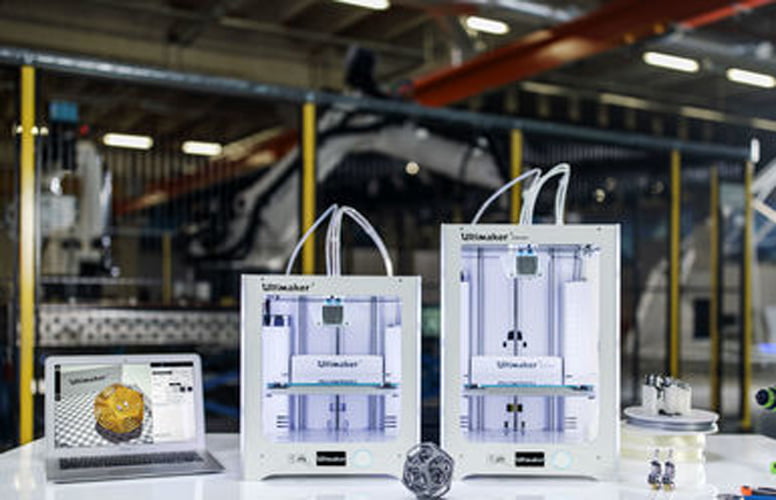
3 Tech Advancements Changing The Way We Live In 2017 : Manufacturing is an ever evolving and adapting industry, the year may have only just started however a lot of innovations and advancements have already begun that you need to know about. Robotics In the last decade a lot of buzz has been surrounding the advancements in robotics. China has been an automated manufacturing powerhouse for some time now, they have supported and driven the recent tremendous growth in industrial robots. While to some manufactures the increase in automation is a risk as they believe it will result in less overall innovation as only people can create ideas. Robotics has become less dominant in the USA and rather than replacing workers they have been added into the workplace to compliment production. 3D Printing 3D Printing is technology used to make solid objects from a digital design. Recently, it has picked up a lot significance and interested a lot of people. Layers are built through the control of a computer resulting in a high precision replica of the original design leading to overall less waste during the production which can lead to large savings for manufacturers. Historically 3D printing has been unsustainable for most businesses due to expense however recent advancements have made it a lot more affordable leading to a lot more companies adopting it. Cloud Computing The cloud is a major step for manufacturing that is beginning to see a lot more implication into the workplace. Cloud uses network connected services to store, process and manage data. Security concerns are still quite high as people are worried to place all of their information on the internet. However, the amount of companies using the technology is increasing across multiple geographic locations sharing data and influencing business decisions. Cloud helps manufacturers to reduce costs overall while helping to improve the quality and shorten the time of production. Words by Jim Starbuck Manufacturing & Engineering Magazine | The Home of Manufacturing Industry News
Thermal management for injection moulding

Thermal management for injection moulding : According to Coventry-based GF Machining Solutions Ltd, the company’s new AgieCharmilles AM S 290 Tooling additive-manufacturing (AM) system can help tool makers achieve optimised positioning and production of conformal cooling channels in plastic injection moulds and inserts. As a consequence, heat can be more effectively dissipated from both the mould tool and the plastic parts being produced, resulting in reduced cycle times and improved precision. Developed as part of a collaborative project undertaken with EOS, the machine is based on the latter’s direct metal laser sintering (DMLS) technology. In injection moulding, the cooling of a finished product can constitute up to 70% of the total cycle time. Using conventional mould-making techniques, cooling channels can only be drilled in straight lines. As a consequence, critical ‘hot-spots’ often remain beyond the reach of coolant. However, using DMLS, tool makers can ensure that thermal exchange occurs closer to the surface of a mould, improving temperature homogeneity and helping to increase operational efficiencies. The machine ‘wraps’ EOS’s DMLS technology into a GF Machining Solutions frame, creating an integrated bridge between 3-D printing and machining, automation and software systems. It offers a build volume of 250 x 250 x 325mm. Features include a System 3R MacroMagnum chuck, which can be used in combination with standard pallets, or building platforms equipped with a standard reference element. Article taken from http://www.machinery-market.co.uk/news/15893/Thermal-management-for-injection-moulding Image taken from Twitter https://twitter.com/3dfabprint/status/660037903427510272 Manufacturing & Engineering Magazine | The Home of Manufacturing Industry News
3D printing to disrupt selected manufacturing techniques says DHL

DHL, the worldâs leading logistics service provider, released its latest DHL Trend Report today â 3D Printing and the Future of Supply Chains. DHL has been testing a variety of both 3D printing hardware and techniques for several years and has identified applications that have potential to redefine manufacturing and supply chain strategies. While the 3D printing market is estimated to grow between US$180 billion and US$490 billion by 2025, the report however finds it will not become a substitute for mass-production but a complementary process. Matthias Heutger, Senior Vice President, DHL Customer Solutions & Innovation, said: The DHL Trend Report â3D Printing and the Future of Supply Chainsâ recognizes 3D printing as a transformative technology. However, it is not a magic bullet that will render factory mass production and manufacturing obsolete. Its exciting potential lies more in its capability to simplify the production of highly complex and customizable products and spare parts â and this could bring logistics and manufacturing closer together than ever before. Redefining supply chain strategies Also known as additive technology, 3D printing involves manufacturing products by layering heated plastic or metal injected from the nozzle of a 3D printer onto a plate to create a three-dimensional object, potentially replacing processes such as forging and molding at a fraction of the cost. It can lead to improved product quality, multiple products being made by a single printer, new types of products â and new supply chain strategies and models. It has been adopted globally by the aviation, engineering, automotive and healthcare industries. Mercedes Benz Trucks has launched a 3D printed spare parts service and in healthcare, 3D printing allied to scanners is creating custom-made external and internal items from prosthetics to dental crowns. It is also being used for autonomous production in remote environments â a highly sought-after service by mining companies, space agencies, and the military to make critical spare parts. A complementary technology Factors currently limiting more widespread adoption of 3D printing â around since the 1980s â include lack of management knowledge, economic and technological issues. Many printers can use only one material and costs are still high for industrial-grade 3D printer. As well as facing warranty, liability and intellectual property issues, 3D printing needs to become faster, more agile and more advanced before it can become a core production technology. Read more at https://ciltuk.org.uk/News/LatestNews/TabId/235/ArtMID/6887/ArticleID/10653/3D-printing-to-disrupt-selected-manufacturing-techniques-says-DHL.aspx
The 3D Printing Association Continues I AM 2017 Campaign at TCT & Personalize 2016

Last June, 3DPA launched a campaign to invite stakeholders to share their priority agenda for advancement of additive manufacturing in Europe for the coming year(s). The feedback that 3DPA has been receiving since then is helping to shape the future of the association. The campaign continues till after TCT & Personalize 2016, but here is a sample of the input received so far from the campaign and follow-up discussions: The business-to-consumer market is beyond the hype. The notion that every household will have its own 3D printer is subject to revision. As one observer put it: By the time you have printed your own coffee cup to serve your visitors, they have long gone home. 3D Printing should move from being âesotericâ to becoming mainstream. As another respondent was quoted: Every household will only invest $1500 if there are a number of objects that can be easily (plug and play) printed and which are needed in the home and that provide an ROI in a 6-9-month period. In the current transition phase, there is a hybrid state of business-to-business applications. On the one hand, new and creative start-ups are coming and going, as the driving force behind materials and technology innovation. On the other hand, established players are working hard to create a sustainable business model. Several of them have established their own B2B communities and networks connecting thousands of users to co-develop, improve and market their proprietary solutions. One respondent said: In our opinion, the up-to-date AM is at the top of its own overrated expectations. In spite of the fact that many customers consider the AM methods as âbreaking throughâ and crucial for the new technological revolution (technological system), their influence in terms of the world-wide manufacture is so far insignificant. The development of scalable, high-speed methods (..) requires new original decisions. (â¦) For a great number of materials and the AT processes large-scale studies are required (..). Against this background, firstly, standards are required to industrialise AM by creating a common vocabulary and facilitate process and material qualifications and certification. The second priority, but of equal importance, this respondent continues, must be education. Integrating AM/3DP in pre-university education as part of an experiential learning curriculum spanning engineering, mathematics, history and the sciences is not only an opportunity to engage young learners in a non-traditional manner but will also be where the next great ideas come from. The âI AM 2017â campaign closes on 1 October, after TCT & Personalize 2016 in Birmingham. To share your input, go to this link. We look forward to your contribution to the debate! Last year, The 3D Printing Association held an on-line survey to assess stakeholder input about the viability and priorities for an independent, member driven organization for 3D printing in Europe. The outcome of this survey can be obtained via this link. The 3D Printing Association will be exhibiting at TCT & Personalize 2016, stand F51.
Cambridge Technology Expert Provides 3D Printing Insight

A Cambridge University technology expert says the best way to manufacturing success is to improve our knowledge of technical and commercial 3D printing. Dr Tim Minshall, Reader in Innovation and Technology Management at the University of Cambridge, is head of the Institute for Manufacturingâs Technology Enterprise Research Group. The organisation is undertaking a research project supported and funded by the EPSRC and ESRC and studies both the reality and possible role that 3D printing could play in the UK economy. The group also conducts a UK research and industry network focussed on 3D printing-enabled redistributed manufacturing. Dr Minshall, who is also part of the steering group that develops the UK National Strategy for 3D printing, gave an in-depth explanation of how he sees the best future for 3D printing. He began by stating that going back three years, there was much hype surrounding 3D printing technology and that they would be the hub of a modern industrial revolution. Since then, he believes the clamour has died down somewhat as we begin to set more realistic expectations of the reality of the technology. Dr Minshall believes that in order for UK manufacturers to benefit from the technologyâs opportunities, there must be a coherent approach to dealing with its obstacles. He continued that companies with a good understanding of how the process works will have a commercial inters to prevent it from becoming freely accessible. He stated that this, combined with the media hype surrounding the technology, has resulted in a complicated state of affairs that makes it difficult for manufacturing firms to properly gauge the potential of the technologies. He said that one thing that is evident is that the technologies are increasingly used in various sectors and that UK manufacturing companies must make sure that they fully understand both the positive and negative aspects of the technology. In terms of the UK adopting the technology, he added that recently there has been a keen drive to analyse and acknowledge the primary limitations of adopting 3D printing in a wider sense. Agents across the manufacturing industry, government and universities are cooperating to establish a national approach for UK 3D printing to be showcased later in 2016. Dr Minshall concluded by saying that there is a pressing need to advance our technical and commercial understanding of the 3D printing technology processes to make sure that UK manufacturing firms are able to fully benefit from them.