


Beckhoff XTS System Revolutionises Motion in Food and Beverage Manufacturing
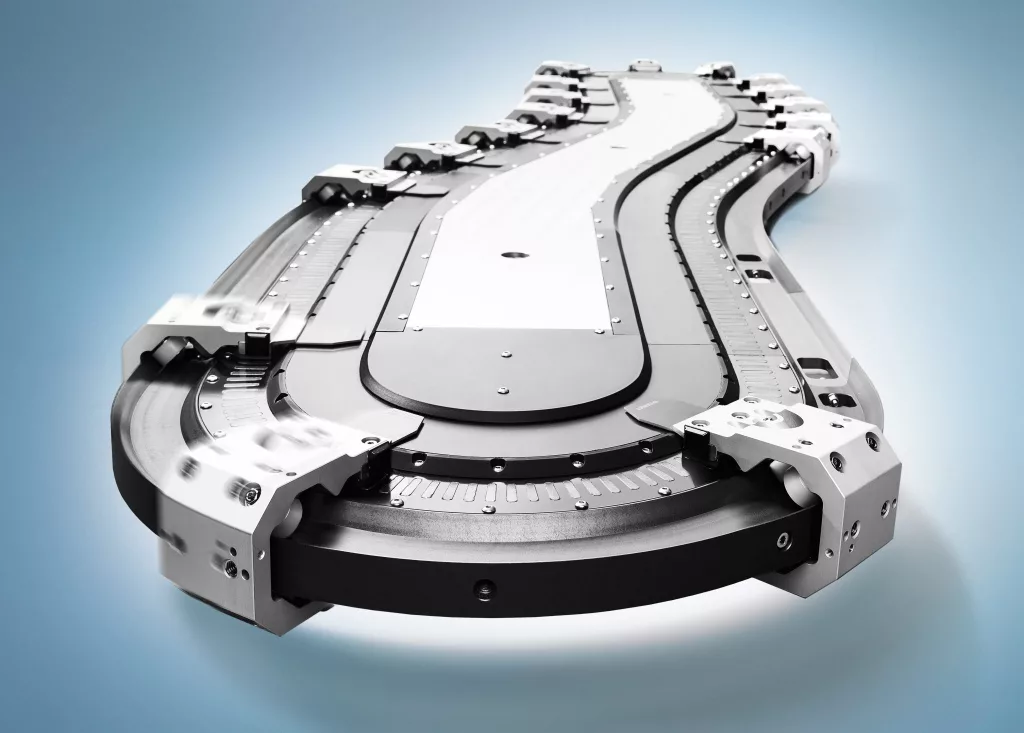
Beckhoff XTS System Revolutionises Motion in Food and Beverage Manufacturing : According the latest United Nations (UN) data, two thirds of the world’s countries expect 50 per cent increase in population between 2019 and 2050. Manufacturers in the food and beverage industry are under pressure to satisfy increasing demand, and ensure that products are safe and comply with numerous regulatory guidelines. For food manufacturers that are willing to innovate, Stephen Hayes, managing director of industrial PC provider Beckhoff Automation UK, explains how a revolutionary new transport system can help. Increasing productivity and safeguarding consumers’ health are the two main challenges for food and beverage manufacturers. On the one hand, plant managers are expected to speed-up production and diversify their offerings, in order to keep up with increasing demand from more informed consumers. On the other, they must comply with a sector that is among the most strictly-regulated when it comes to hygiene standards. Food safety essentially relies on the control of contamination. In this sense, transport systems used in food processing are a central concern for the food industry, as micro-organisms can easily accumulate in the different components of a conveyor. If this happens, consumers’ health is at risk and so is the manufacturer’s reputation. A revolutionary movement Thanks to its innovative eXtended Transport System (XTS), Beckhoff’s Automation segment has succeeded in turning food manufacturers’ biggest concerns into opportunities. Specifically, to speed up production while improving cleanability. Like any truly-innovative idea, the XTS system is based on a simple, yet ground-breaking concept. Or, in this case, two concepts: first, the possibility for every mover on the track to glide independently; plus the combination of rotary and linear elements to create a customisable track. In fact, Beckhoff’s XTS transport system combines the benefits of two well-known drive principles, linear and rotary, into a single mechatronic system. This has never been done before and allows manufacturers to create the perfect geometry for their application, no matter how complex. There are no length restrictions for the entire path and the number of movers can also be customised. In other words, the system is limited only by the available computing power of the industrial PC. On this track, movers can be positioned in different parts of the belt and travel independently; each with its own speed, acceleration and motion pattern. Alternatively, movers be combined into couples or clusters in order to create hoops that travel together at an established speed. Additionally, the XTS can be operated in any installation position, so it can be applied with maximum flexibility to match the specific needs of the production line. More hygiene with improved cleanability Beckhoff’s XTS is also available in the Hygienic version, a stainless steel model that combines the benefits of this revolutionary transport system, with improved cleanability and resistance to harsh detergents and disinfectant. The XTS Hygienic is therefore perfect for industries where frequent washdowns are mandatory, such as the food processing industry or the pharmaceutical sector. Severe rules for the hygienic design of transport systems have been established by the European Hygienic Engineering & Design Group (EHEDG). The XTS is EHEDG compliant and meets the requirements for system certification according to EL Class I AUX. It has a protection rating of IP69K and can therefore cope with surfactants, acidic and alkaline cleaning agents as well as with different types of alcohol, disinfectants and even hydrogen peroxide. The stainless steel body of the transport system ensures a high resistance to delamination, while the absence of edges or undercuts prevents soil accumulation and facilitates cleaning. Additionally, all components of the Hygienic XTS are sealed at the joints with a high-quality elastic material that enables high-pressure washdowns. Thanks to these characteristics and its innovative approach to motion, the Hygienic version of Beckhoff’s XTS has been shortlisted for the Food Processing Awards 2019 in the category, ‘Process & Packaging Solution or Process’. Unprecedented challenges call for unprecedented solutions. With the XTS Hygienic, manufacturers can optimise production and ensure that manufactured foods comply with the highest hygienic standards. Manufacturing & Engineering Magazine | The Home of Manufacturing Industry News
Essex Firm to Unveil World’s First Launch Hub for Flying Taxis

Prasad Satyavolu, CDO and Global Head of Innovation for Manufacturing, logistics, energy and utilities at Cognizant: “According to the UN, 68% of the world’s population is expected to live in urban areas by 2050. As more and more people flock to cities, we will see increased traffic congestion, and greater pressure on urban transportation and mobility. To overcome this we are seeing technology companies such as Uber announce that it is partnering with NASA to design an urban-air traffic control system and the British firm Skyport prepare to open the world’s first hub for electric aircrafts in Singapore. Both Skyport’s ‘vertiport’ – a vertical take off and landing station – and the urban-air traffic control system could significantly advance the reality of flying taxis. “However, there are a number of factors that currently stand in the way of making an airborne highway a reality. What is most likely to slow down the emergence and adoption of flying taxis is something that we take for granted: our infrastructure. A transport system is traditionally made up of a number of components – humans, infrastructure, businesses, government, policy and different modes of transport and all of these need to be considered when taking to the skies. Our systems are currently not ready to deal with the complexities of high-density traffic in the air. And unless businesses and governments work together to scale to the demand, we will face a new kind of congestion – digital congestion. Further to this, the energy ecosystem for flying taxis needs attention. The changing landscape of propulsion technologies from fossil fuel based to an electrically charged battery powered environment needs greater development to enable flying taxis. “To overcome these problems and risks, we need to adopt a consortium-based approach, where entrepreneurs, organisations and governments work collaboratively to introduce flying vehicles one step at a time.”
East Yorkshire Rail Facility Makes Major Appointment
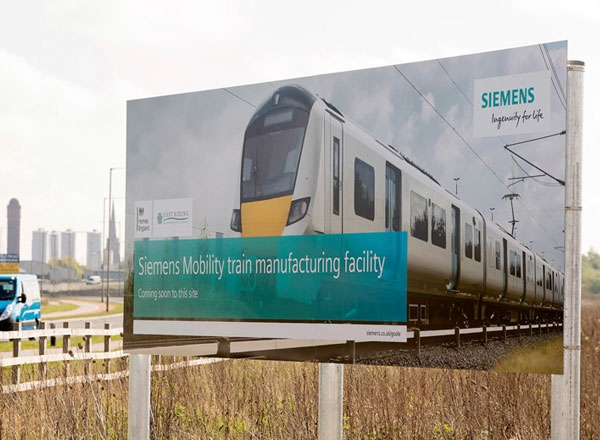
The project team behind the ongoing £200 million rail manufacturing facility in East Yorkshire has been strengthened with a new appointment. Siemens Mobility Limited appointed Mace to support the project, providing a range of services including project and cost management, health and safety work, and environmental expertise. “We are delighted to play a significant role in this innovative project led by Siemens Mobility, which brings together some of the key sectors that are driving the Northern Powerhouse, including manufacturing, industrial development and rail. Our appointment to deliver this important northern asset demonstrates our continued growth east of the Pennines and is a testament to the success of previous projects we have undertaken with Siemens, including Green Port Hull,” said Colin Harvey, Director for the North at the East Yorkshire company Mace. Located on a 104-acre site close to junction 36 of the M62 motorway, the Goole development will include approximately 860,000 sq ft of manufacturing, commissioning, warehouse buildings and stabling sidings, as well as a four-storey, 54,000 sq ft office building. It will create up to 700 jobs with a further 250 during the construction period and an additional 1,700 potential UK supply chain roles. “We’re pleased to be working closely with the Mace team as we drive forward our plans to develop an industry-leading rail factory and related facilities in Goole. Mace’s experience and capability will complement our in-house expertise in the successful delivery of major projects,” added William Wilson, CEO for Siemens Mobility Limited. Construction of the Goole rail manufacturing facility is expected to begin in spring next year and will be delivered in phases. The first phase of the manufacturing facilities is expected to open in 2023 and it is anticipated the development will be fully operational in 2025. Manufacturing & Engineering Magazine | The Home of Manufacturing Industry News
Railtex 2019 Cements Status as UK’s Leading Rail Exhibition

On its 14th and latest edition, Railtex has once again proved it is the UK’s premier exhibition of railway equipment, systems and services. A total of 6700 visitors from 50 countries and almost 2500 professionals representing exhibiting companies gathered at the event at the Birmingham’s NEC. The venue was transformed with a huge amount of technology, skills and services at some of the most eye-catching displays of the 420 exhibitors from 22 countries. The show also featured a comprehensive supporting programme of speeches, presentations and discussions. Innovation was showcased, leads created and business partnerships formed over three engaging days. It is fascinating time to be part of the rail industry in the UK and this year’s event really defined that with numerous success stories and the overall buzz around the exhibition. Recent analysis by Oxford Economics, commissioned by the Railway Industry Association, showed that rail generates £36 billion in economic growth and £11 billion in tax revenue each year, whilst employing 600,000 people. It is a major industry and from the evidence of those at Railtex 2019, it is an industry in safe hands. Darren Caplan, Chief Executive of the Railway Industry Association, commented: “Railtex has developed a reputation as a UK trade show leader for the rail supply industry, showcasing a vast range of products and services from across the sector. This year was no different, with Railtex once again bringing the industry together for three packed days of networking, discussions and events.” New product launches and previews Alstom reveals new Hydrogen train design at Railtex One of the largest and most exciting transport companies in the world, Alstom chose Railtex to present a model of its hydrogen train design. Codenamed ‘Breeze’, it will be a conversion of existing Class 321 trains, reengineering some of the UK’s most reliable rolling stock, with the aim to create a clean train for the modern age. Siemens Mobility used Railtex to reveal its latest high-speed offering, the Velaro Nova. The train can reach speeds of up to 360km/h, offers 10% more space and uses 30% less energy than previous models. It also saves 1,373 tonnes of CO2 emissions a year. Siemens Mobility Limited has formally submitted its bid to supply and maintain 54 trains for Phase One of High Speed Two (HS2). Connecting the old with the new Launched at Railtex this year was EAO’s new Passenger Interface an inductive and USB phone charger. It enhances the passenger’s journey by charging their phones and connecting them through iBeacon technology to the train operators travel app. The big talking points Beyond the main exhibition, Railtex 2019 brought together a host of experts to deliver keynote speeches and seminars, presentations and discussions with leading industry figures. Among those was Gordon Wakeford, Managing Director of Siemens Mobility and Co-Chair of the Rail Supply Group, who explained how the Rail Sector Deal is based on four pillars, which together will transform the UK’s rail industry for the better – Digital Railway, Data, Sustainable Railway and Exports. The comprehensive supporting programme included the Seminar Theatre, featuring a range of interactive forums, topics and discussions, and the Knowledge Hub, which hosted a selection of project updates and industry briefings. Among speakers were Network Rail’s Managing Director for the Group Digital Railway Stuart Calvert, who spoke on Devolution and the Digital Railway; HS2’s Supply Chain Manager Robin Lapish, who discussed supply chain opportunities on the landmark project; and Clair Mowbray, Chief Executive at the National College for High Speed Rail (NCHSR), who was speaking on the topic Taking Action on the Skills Shortage in the rail industry. Railtex 2019 also featured a brand-new Future Focus Conference, bringing together a whole host of speakers to cover the key challenges and opportunities that UK rail will face in the coming years. This included; keynote addresses from Crossrail 2’s Head of Commercial and Controls, Simon Adams; Digital Railway’s Head of Strategy, Franchising & Sponsorship, James Drury and a lively Q&A with the Rail Minister Andrew Jones MP. During his speech at the Future Focus Conference on the second day of the show, Rail Minister Andrew Jones MP stressed the requirement for 50,000 new workers by 2033 to replace retiring workers and explained that the industry needs to adapt to changes in technology. He also issued a call for more digital skills and workforce diversity in the rail industry. Digital rail placed under the microscope Digital Rail brings much discussion around the industry, with Network Rail looking to create more capacity on an increasingly crowded network by modernising systems and adapting new technologies and innovations. The UK government has earmarked £450 million specifically for digital railway schemes, as part of an almost £48 billion investment in maintenance, modernisation and renewal of the rail network by 2024. The digital age was placed under the microscope at Railtex 2019, with the Birmingham Centre for Railway Research and Education presenting its Digirail project, which supports organisations working in the industry’s supply chain. There was also a busy panel discussion at the Future Focus Conference entitled ‘Digital Journey’ featuring key members of Network Rail’s Digital Railway programme, discussing the challenging and opportunities that lie ahead for the programme. Companies are already grasping the importance of digital technologies. Exhibiting in Birmingham was Israeli-based IAI ELTA Systems, showcasing its SeeFar real-time railway obstacle detection and early warning system. Another big draw was VR Simulation Systems Ltd’s stand and its interactive Platform Simulator – a world-first, combining 3D fully interactive technologies with the latest in immersive simulation environments and VR headsets. Predictive maintenance and the Internet of Things As the rail industry moves towards a digital future, companies are increasingly looking to utilise data to identify potential cost savings and manage maintenance issues in real time. Exhibitors at Railtex were keen to showcase their solutions, with California-based software company ETAP presenting the eTraX Rail Traction Power system, which utilises advanced geospatial asset information to allow for the modelling, simulation, prediction and optimisation of rail infrastructure. The ‘Internet of
Most Industrial Companies Planning to Implement 5G

Most Industrial Companies Planning to Implement 5G : Industrial companies are embracing 5G connectivity as a primary enabler of digital transformation, and plan to implement the technology within two years. This is spurring interest in private licenses, which nearly half of large industrial companies (47%) intend to apply for, according to the latest findings from the Capgemini Research Institute. The 5G in Industrial Operations: How Telcos and Industrial companies stand to benefit study found that 5G is regarded as a catalyst of digital transformation, and that manufacturers expect it to deliver more secure and efficient operations. Key findings of the study, which surveyed over 800 industrial companies’ executives and 150 telecoms executives across 12 countries, include: 5G is critical to digital transformation: When industrial companies’ executives were asked which technologies will be the most integral to their digital transformation over the next five years, 75% mentioned 5G as a key enabler, ranking second to cloud computing (84%), and ahead of technology innovations such as advanced automation and AI/machine learning. Industrial companies believe that 5G’s versatility, flexibility and reliability will help address connectivity challenges (a limiting factor to digital transformation for 44% of those polled) and fuel future use cases. Industrial companies want to move quickly to implement 5G: There is widespread confidence in 5G’s potential, with almost two-thirds of industrial companies (65%) planning to implement it within the first two years of availability. In Italy (35%), France (30%) and Canada (27%), over a quarter intend to use 5G within the first year, while 75% of industrial companies in the UK and Italy, 69% in Spain, and 68% in the US and Norway plan to start within the first two years. The largest manufacturers are most likely to implement 5G first compared to the broader industry: 74% with annual revenue above $10bn expect to do so within the first two years, compared to 57% with revenue between $500m and $1bn. One-third (33%) of industrial companies are planning to apply for their own 5G license and large organizations will take the lead with 47% expressing interest. This is fueled by a desire for greater autonomy and security combined with concerns about telecom operators being too slow in rolling-out 5G public networks. However, there will be regulatory barriers which differ across countries. Gunther May, Head of Technology and Innovation, Business Unit Automation and Electrification at Bosch Rexroth AG says, “As a solution provider and a manufacturer, we are monitoring the 5G landscape closely and we believe there are multiple benefits to holding our own license. It would allow us to be in full control of our 5G strategy by giving us the freedom to either deploy the network alone or with a telecom operator.” Security and operational advantages will drive 5G adoption: When asked about the business reason for investing in 5G, more than half cited more secure operations (54%) and efficiency of operations/cost savings (52%), with the expectation that 5G will help in enabling or enhancing use cases such as real-time edge analytics, video surveillance, remote control of distributed production, AI-enabled or remote controlled motions, remote operations through AR/VR, etc. Industrial companies will pay more for premium services: Despite uncertainties around the speed of deployment, manufacturers are already willing to pay a premium charge for enhanced connectivity. 72% of industrial companies will pay more for enhanced mobile broadband speed and increased capacity, yet only 54% of telecom operators think there is appetite for this. This presents an opportunity for telecom operators to consider how they build a highly profitable 5G business model. Manufacturing & Engineering Magazine | The Home of Manufacturing Industry News
Showcase Innovation at the UK’s Largest Annual Engineering Event
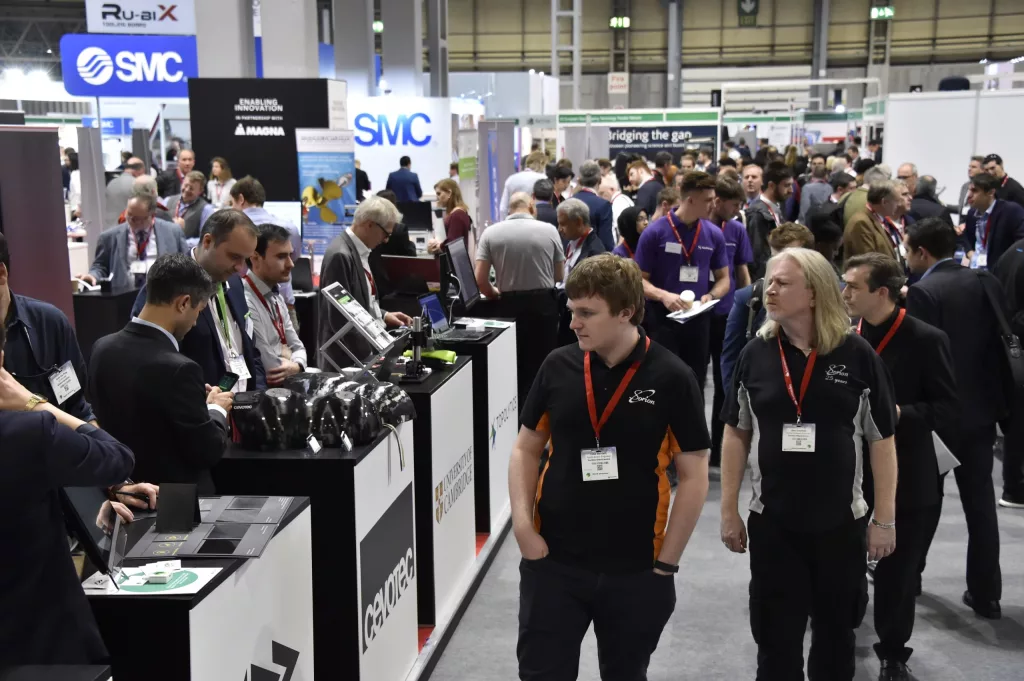
Advanced Engineering is on the lookout for start-ups to showcase their inventions as part of its innovation zone. As the UK’s largest annual exhibition for manufacturers and supply chain professionals, the Enabling Innovation Zone will support smaller enterprises that are eager to accelerate their innovations into the advanced manufacturing and technology industries. Supported by Innovate UK/KTN, Advanced Engineering is searching for growing businesses to exhibit their disruptive technologies and inventions on the show floor. Start-ups across all engineering sectors, whether that be aerospace, automotive, marine, medical, automation or any other industry, are encouraged to apply. We expect to see some of the most exciting technologies including novel materials, automotive and autonomous technologies. The opportunity, which is free of charge for successful applicants, will give innovators a platform to showcase their inventions to thousands of key industry players from a range of notable companies. From senior directors and engineers to research and development specialists, chief technology officers and investors, a wealth of influential people spanning across the world’s most renowned manufacturing businesses will be visiting the zone. Successful applicants will receive a branded plinth in the Enabling Innovation Zone to display their technologies, along with full marketing support in the show’s catalogue, on its website and across its PR campaigns. During the show, exhibitors have the chance to gain further recognition as visitors will be able to vote for their favourite innovation, with the winner announced ahead of the show’s closure. “Following the success of the Enabling Innovation showcases, this dedicated zone will act as a springboard for new and exciting technologies,” explains Jeremy Whittingham, Head of Marketing at Advanced Engineering. “As we are establishing an entire area of the show for such innovative businesses, the impact the zone will have is bound to surpass that of previous years and encourage the growth of even more innovations”. Previous showcases have been instrumental in accelerating business growth. Listed in Forbes 30 Under 30 Class of 2017, previous winner Aceleron has revealed that the showcases played a key role in the company’s business development. “It played a crucial part in establishing our credibility and had a direct impact on at least five business relationships we have today”, said the advanced lithium battery developer. Is your business ready to showcase its innovation? To submit an application, please complete this short form or email Jeremy.whittingham@easyfairs.com. For more information visit www.advancedengineeringuk.com Manufacturing & Engineering Magazine | The Home of Manufacturing Industry News
TCT and Women in 3D Printing Partner Up

The TCT Group is delighted to announce a collaboration with Women in 3D Printing for the 2019 edition of the TCT Awards. The partnership sees the launch of a new ‘Women in 3D Printing Innovator Award’ which will shine the spotlight on female innovators who are leading the charge in the world of design-to-manufacturing. Women in 3D Printing is a global organisation dedicated to promoting, supporting, and inspiring women who are using additive manufacturing (AM) technologies. Their mission is to increase the visibility of women in the AM industry and encourage more women to use 3D Printing technologies. “TCT has been working with Women in 3D Printing and their partners Cyant, another fantastic female-led company, for the last two years on a series of hugely insightful panel sessions at our events in the UK and US,” Laura Griffiths, Deputy Group Editor at TCT Magazine said. “At TCT, we are increasingly conscious of the gender-bias within our industry and committed to delivering more diversified content across our events and publications. The launch of the Women in 3D Printing Innovator Award will be a celebration of the achievements of the trailblazing women who are pioneering and applying 3D technologies.” The shortlist will be selected by Women in 3D Printing’s international network of ambassadors which spans more than 30 chapters around the world. The winner will be determined by a vote which will open to the public on the TCT Awards website in May. “We are thrilled to work with TCT for this first edition of the Women in 3D Printing Innovator Award. TCT is a great partner for Women in 3D Printing and after successful past collaborations, building this Award together makes perfect sense. As we promote female leaders and game-changers in the field of Additive Manufacturing on a weekly basis on our platform, partnering with TCT for this Award is a fantastic way to give even more visibility to those women innovators,” added Nora Toure, Founder of Women in 3D Printing.
Altair Presents New Technology at JEC World

Altair, (Nasdaq: ALTR) a global technology company that provides solutions in product development, high-performance computing and data intelligence, will present comprehensive technology and expertise for the design, optimization, and simulation of composite structures and materials at this year’s JEC World from March 12-14 in Paris. As “Official Innovation Partner” for the competition, Altair will support the Startup Booster Competition, part of the JEC Startup Booster program. Altair’s senior director of composites technology, Jeff Wollschlager, is a member of the high-level jury. The three winners of the competition will each receive six-month licenses for Altair HyperWorks™. Altair will host a conference session “Empowering Composites Innovation with Simulation“, featuring keynote presentations from Altair, Boeing, Cevotec, Gurit, and others, on leveraging computer-aided engineering (CAE) simulation software to design, optimize, and validate composite structures. The two-hour Altair conference will take place at the Agora Stage in Hall 5 on Tuesday March 12, 2019 at 1pm. Outstanding examples of Simulation-driven Design will be presented at the Altair booth G97 in hall 5. Highlights will include the NCC’s sit-ski, a glass fiber-reinforced polyamide 66 pedal bracket by Enlighten Award winner Asahi Kasei, a composite bike frame by Guerrilla Bikes, and two automotive industry composite pieces by CETIM. Live demos of Altair solutions for composite design and optimization will round-up the Altair booth presence. “The interest in composite materials is still growing, and since JEC World in Paris is the go-to event for the composite industry, Altair is delighted to present our solutions for simulation, design, and optimization,” said Jeffrey Wollschlager, senior director – composite technologies, Altair. “Last year the conference session we hosted was a big success, and with this year’s line-up I expect it to draw even more attendees. I’m also very much looking forward to presenting the successes of our customers at the booth and to be part of the Startup Booster Competition Jury.” View the Altair JEC conference program here.
First Partners Announced for Graphene Engineering Innovation Centre

The £60 million Graphene Engineering and Innovation Centre (GEIC), part of the University of Manchester, will accelerate the commercialisation of graphene in Manchester through a series of industrial partnerships. The first in the series of partnerships has been agreed with First Graphene Ltd, Haydale Graphene Industries, and Versarien PLC; together hoping to exploit opportunities to develop and commercialise graphene products and applications. Along with the National Graphene Institute (NGI) and the Henry Royce Institute (set to be completed in 2019) the GEIC will be crucial in maintaining the UK’s world leading position in advanced materials. “The GEIC is a key component of the University’s strategy for Graphene@Manchester. Our aim is to accelerate the commercialisation of real-world applications and transition graphene and other 2D materials from the lab to the marketplace. The GEIC will bring in an additional 30 staff in addition to academics to grow community to over 300 graphene-related staff at the University,” said James Baker, CEO of Graphene@Manchester. The three companies are Tier One partners, benefiting from access to world-leading expertise and experience along with specialist equipment within the GEIC to aid projects that will accelerate product and process development and market entry. GEIC’s focus will be on industry-led application development in partnership with academics, filling a critical gap in the graphene and 2D materials ecosystem by providing facilities designed specially for pilot production, characterisation, and application development in composites, energy, solution formulations and coatings, electronics and membranes. Apart from First Graphene, Haydale and Versarien, the University of Manchester is in discussions with a number of other companies for both Tier One and Tier Two partnerships. The Tier Two has been developed in particular for engagement with smaller businesses as well as those businesses who wish to explore how graphene can really make a benefit for their business or product range. The advanced materials innovation ecosystem will be able to take a graphene application from basic research to finished product if a critical mass of scientists, manufacturers, engineers, innovators and industrialists is working together to achieve the same goal.
Focus on Communication More!

Communication is a key driver of competitive advantage for any business and it has been fundamentally changed by the advancement of digital enterprise technologies, both internally and externally. From the humble email to smart mobile devices, cloud platforms and next gen apps, never have customers, suppliers and employees been so connected. At the same time however, these ever-growing, multi-platform networks comprised of old and new technologies can become unwieldly and difficult to manage, restricting the very agility and collaboration they were once revered for. The solution is simple – unify the IT, cloud and communication systems. To become a true digital business, an organisation needs to adopt an ‘always on’ infrastructure, supported by an agile workforce which is always fully connected and protected. Unified communications provide a consistent user interface and user experience across multiple devices and media types, instead of a single product or collection of disparate products. In this way, unified communications enable seamless information sharing, knowledge gathering, collaboration and productivity. In order to get a deeper understanding of how businesses are coping with the demands of this very rapidly changing world, UK manufacturers are being asked to complete this survey: https://www.research.net/r/TM-DaisySurvey2018. The survey wants to find out how UK manufacturers collaborate and share information now, and what their plans are for the future, as well as what the pain points involved with adopting a more connected enterprise are, and whether businesses are already future-proofing their IT and communication networks. A comprehensive insights report will be created once the results come through and all contributing business will receive their own copies. Manufacturing & Engineering Magazine | The Home of Manufacturing Industry News