

10 Reasons Why Engineers Make The World A Better Place To Live In

10 Reasons Why Engineers Make The World A Better Place To Live In : Engineering is something which is essential to a country running smoothly, being economically stable and improving not only itself but also the planet. Sadly, there are many aspects of engineering that people donât know or overlook. Recently researchers and engineers have been attempting to widen their skill field by exploring knowledge of those in rival countries and by educating the youth on their possibilities in the engineering and scientific sphere. Here are some of the top reasons engineering is so inspiring… 1. Engineering has its own month!In 2006 March was titled as national celebration of engineering month, before this it was a week-long celebration starting in 1992 and taking place all over Canada. March is therefore an opportunity for young people to learn about the disciplines of engineering and discover more about the field of work. 2. Engineering means thinking globally.Engineering includes empowering faculties and supporting students to reach meaningful goals and advances in the vision of becoming global engineers. Thinking on a global scale is serious stuff, and engineers are helping to ensure our planet is a better place tomorrow. 3. Engineering is shaping the way we travel.Not only this, it is shaping where we can travel too. New runways at airports, new technologies that can allow us to travel further and new innovations into plane craft and materials all link into where we can go and how we can get there. 4. Engineering is shaping the way we communicate.Each day new technologies are being developed and revealed that change how we as a species connect with one another. 5. Engineering is changing how we exercise.With new technologies that can monitor so much of our daily lifeâs it has never been easier to exercise and stay active. Engineers who specialise in fitness know what people want and when to release new softwareâs. 6. Engineering is advancing healthcare.Every day researchers are hypothesising and developing new treatments for illness, such as potential cancer cures and treatments for the blind that are essential to the development of human kind. 7. Engineering is changing how we make and use energy.Environmentalism is at the concern of everyone in the business so creating energy by the use of such developments as wind turbines is really helping to shape the world we live in. The largest wind turbine in the world stands in Denmark at 720 feet tall, with 260-foot blades and the ability to generate eight megawatts of power-enough to supply electricity for 3,000 American homes. 8. Engineering is improving the environment.Tying into number eight, engineering really is having an impact on how we look after the place we live in. Energy efficient or energy aware developments are constantly advancing and this is exciting news in terms of political, social and moral issues people are engaging with on a more constant level. 9. Engineers push things to the limit.Engineers know they have to continuously push themselves in order to keep up with the competition. They ensure they are at the top of their game, with innovative ideas and an immense amount of ever expanding knowledge. 10. Marie Curie, a polish French physicist and chemist who conducted pioneering research on radioactivity was the first person to win two noble prizes.In questions of equality especially in relation to her time, this is a stunning achievement for not only for Curie but for the engineering world, proving they were innovative from the beginning. There are plenty of fun and interesting facts on the field, the word engineer comes from Latin meaning cleverness, and engineers are thought to tell fantastic jokes (as long as your sense of humour involves wit and mathematics). The fastest passenger train in the world was the Shanghai Maglev with a maximum operation speed of 267mph. Despite what we know, engineering is always finding ways to enlighten us and we canât wait to see what it reveals in the up and coming years! Manufacturing & Engineering Magazine | The Home of Manufacturing Industry News
Our Cars Will Soon Talk To Each Other: Vehicle-To-Infrastructure Communication

Our Cars Will Soon Talk To Each Other: Vehicle-To-Infrastructure Communication : In the automotive industry technology transforms and evolves at a frighteningly quick pace, and if any recent projections are to come to fruition we will see plenty more amazing innovations in years to come. It’s expected that self-parking, already a highly advanced technology, will only become more nuanced in future years as we begin to understand it further. Currently there are many cars that can park by themselves and it is increasingly becoming a standard extra. However, recent improvements in technology may lead to cars not just being able to park themselves, but being able to find a space to park independent of the driver’s contribution. This is known as vehicle-to-infrastructure communication and pretty much means in the future we will be able to talk to our cars through a network and tell it where open spaces are available. But communication with our cars will not end there. It is expected that as we continue to advance in that area, we can reach a point where cars can communicate with each other, in such ways as to notify each other of weather conditions, roadworks and even live updates on motorway accidents. All this potentially without us even asking or knowing that this data transfer is taking place. This network between cars will notify all drivers of any potential dangers and as fail safes could even automatically shut down, thereby serving to reduce car crash and injury statistics nationwide to record lows. For when we will be able to communicate with our cars, we are likely to use smartphones/watches to even greater capacities than we are currently. There are as of writing numerous apps that can let people use smartphones to connect with their car, but as this technology becomes more mainstream, so does its opportunities. Hyundai are one of the first manufacturers to incorporate smartphone apps to enable a number of features, including starting and shutting off the engine, and flashing lights. Manufacturing & Engineering Magazine | The Home of Manufacturing Industry News
3 Tech Advancements Changing The Way We Live In 2017
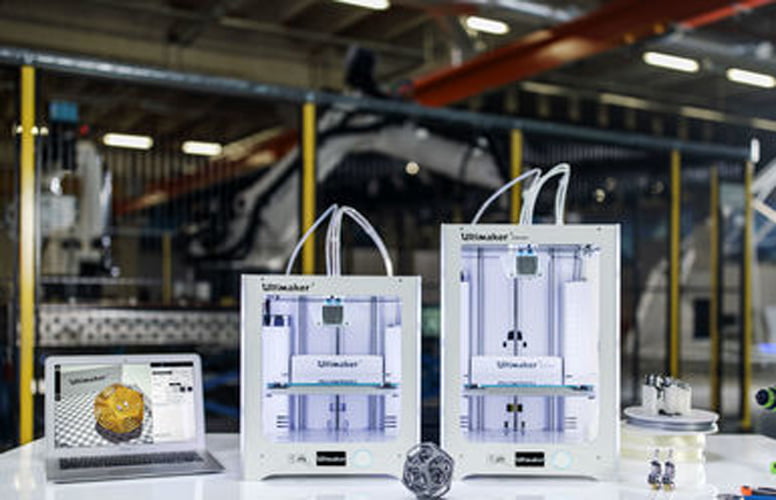
3 Tech Advancements Changing The Way We Live In 2017 : Manufacturing is an ever evolving and adapting industry, the year may have only just started however a lot of innovations and advancements have already begun that you need to know about. Robotics In the last decade a lot of buzz has been surrounding the advancements in robotics. China has been an automated manufacturing powerhouse for some time now, they have supported and driven the recent tremendous growth in industrial robots. While to some manufactures the increase in automation is a risk as they believe it will result in less overall innovation as only people can create ideas. Robotics has become less dominant in the USA and rather than replacing workers they have been added into the workplace to compliment production. 3D Printing 3D Printing is technology used to make solid objects from a digital design. Recently, it has picked up a lot significance and interested a lot of people. Layers are built through the control of a computer resulting in a high precision replica of the original design leading to overall less waste during the production which can lead to large savings for manufacturers. Historically 3D printing has been unsustainable for most businesses due to expense however recent advancements have made it a lot more affordable leading to a lot more companies adopting it. Cloud Computing The cloud is a major step for manufacturing that is beginning to see a lot more implication into the workplace. Cloud uses network connected services to store, process and manage data. Security concerns are still quite high as people are worried to place all of their information on the internet. However, the amount of companies using the technology is increasing across multiple geographic locations sharing data and influencing business decisions. Cloud helps manufacturers to reduce costs overall while helping to improve the quality and shorten the time of production. Words by Jim Starbuck Manufacturing & Engineering Magazine | The Home of Manufacturing Industry News
3 Big Changes Impacting Engineering In 2017
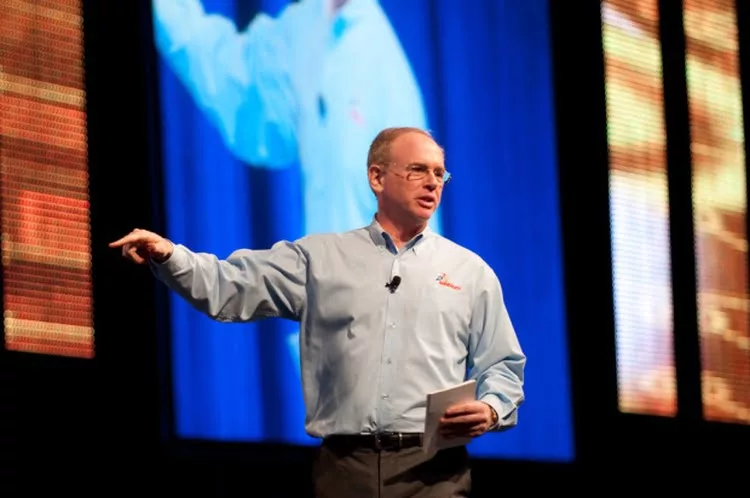
3 Big Changes Impacting Engineering In 2017 : The year has only just begun, but the engineering industry is already off at full force with three big changes happening now that you need to know about. Engineering software is finally moving to the cloud The first change happening that you need to know about is that engineering software is finally starting to move to the cloud. Engineers at computer aided design (CAD) gathered in Cambridge to showcase their improvements in the cloud software. The big picture for this new advancemens is that with CAD software running on the cloud it will enable engineers to collaborate in real time. It is believed that the time for change has arrived, Jon Hirschtick the Chief Executive Officer of Onshape said, I believe the work weâre doing can improve the way every manufactured product on earth is designed. Small firms are taking a hit The second change for 2017 is that business rates are becoming ticking time bombs for small companies in the UK. The government is aiming to give all businesses a fair deal and are establishing a £3.6bn transitional fund to help businesses facing big jumps in rates. However, these changes are being met with backlash as smaller businesses will be facing massive hikes while larger retailers benefit from reduced cuts. Christopher Richards from the Engineering Employers Federation said, “The inclusion of plant and machinery in business rates bills represents a tax on productive investment and undermines the international competitiveness of UK manufacturing.” Mastership may be the future of engineering The third change happening in 2017 is that there will be an introduction of an apprenticeship levy from April 2017, this means that employers will be able to take advantage of the available subsides and specifically be able to offer a higher skill degree level. A mastership is a level 7 apprenticeship degree with is the equivalent to a masterâs degree, the mastership is aimed at both employees with some experience or people who have already followed an academic trajectory. The mastership is built on a strong two-way commitment where employers invest in their employeeâs future. Words by Jim Starbuck Manufacturing & Engineering Magazine | The Home of Manufacturing Industry News
Aqua Cooling Boosts UK Oil Rigs With State-Of-The-Art Technology

Innovation comes with the territory when it comes to Fareham-based Aqua Cooling. The leading specialist in the provision of cooling and associated products has supplied state of the art technology to help the world’s latest oil rig pumps reach their potential. The Queen’s Award-winning business, which last year took home the prize for Enterprise after developing a new leak prevention system, has installed its latest piece of kit at Hayward Tyler’s Centre of Excellence in Luton. The deal with Hayward Tyler is worth £200,000. The South of England specialist has established an enviable reputation for its suite of industrial chiller products which boast cooling potential up to 3,564kW. Its latest innovation is the design of a cost-effective, energy-efficient alternative to historically proven but costly, less efficient cooling methods. Removing as much as 2 megawatts of energy waste, Aqua’s bespoke product drastically reduces costs and energy use when new and prototype fluid-filled performance-critical pump motors are tested. The pump motors in question – which utilise as much as 8 megawatts of power and thus generate extremes of heat – will find their use tested on offshore oil-rigs where environments can, at times, be some of the most testing. Extensive research by Hayward Tyler has revealed the success of Aqua’s product at maintaining a maximum temperature of 25 degrees when the pumps are in operation. Heat is dissipated as it is produced. The product has enabled Hayward Tyler to increase its test capability in its Centre of Excellence where global leaders such as GE and FMC sees motors developed. For Hayward Tyler, Aqua’s solution is a real boost. Aqua’s sales director Simon Davies has noted his happiness at the successful collaboration between Aqua and Hayward Tyler. He noted not only the qualities of the product and the success it can bring Hayward Tyler in its overall operation but the cost and energy-critical savings it provides.