


New Trade Show Announced for the UK’s Chemical Industry

Industry professionals from all sides of the UK’s chemical and process sector are set to descend on the Yorkshire Event Centre, Harrogate, Yorkshire on May 1st & 2nd 2019, for the brand new, free to attend CHEMUK 2019 UK supply chain expo & speaker programme. The CHEMUK 2019 event will bring together the UK’s chemical processing & chemical product formulation industries, providing an intensive 2-day supply chain sourcing, business networking, intelligence gathering, best-practice & strategy development experience. Designed to introduce new relationships, strengthen existing ones throughout the intersecting layers of the UK’s ‘chemical sector’, the event allows the ‘industry’ to consider the big challenges and opportunities. 2-Day Chemicals Industry Supply Chain Expo CHEMUK 2019 will provide visitor groups with a diverse and impressive showcase of 170+ specialist exhibitors showcasing latest plant, equipment, materials & services supporting the chemicals industries, driving operational performance, efficiency, future-proofing, safety, compliance and more… Speaker Programme Hosted in purpose build ‘open’ theatres, integrated into the busy CHEMUK show floor, the 2-day speaker programme will deliver some 20+ hours of free to attend expert intelligence, best practice and tech-insight ‘snapshots’, to inspire and assist next level processing plant investment & operational strategies for attending groups across the UK chemicals & chemical product sectors. Over a packed 2-day programme, a wide variety of expert contributors and hosted ‘feature sessions’, including leading industry & professional bodies, will seek to address the BIG topics influencing & affecting today’s and tomorrow’s Chemical Processing sector, from Process Automation & Digitalisation to Process Safety & Compliance, from Process Optimisation to Innovations in Flow measurement, Control & Instrumentation and much more…. Harrogate Venue Hosted at the recently completed Yorkshire Event Centre in Harrogate (Leeds City Region), CHEMUK 2019 is located to be equidistant between the crucially important North West, Humber & Teesside chemical cluster regions. In addition, providing easy access for the important Yorkshire-based chemical & bio industries plus good central UK positioning. With FREE ENTRY into all exhibits, features & presentations, plus on-site FREE PARKING, as well as easy access by Rail & Air, the venue provides an easy experience for all visitor groups. Who should visit? CHEMUK 2019 reaches out to ALL key chemicals/chemical product & chemical using industries, targeting Plant Managers & Plant Engineers, Chemical Process Engineers, Operational, HS&E, Control & Instrumentation, Test & Inspection, Manufacturing, Formulation, Logistics, Procurement & Supply Chain, R&D & Scientific professionals plus Chemical industry business teams. Organisers are anticipating attendee groups from across the broad industrial chemicals processing & distribution sectors. From petrochemicals & base chemicals, to fine & speciality, intermediates & additives, polymers, inorganics, dyes, pigments, green chemicals, process chemicals and more. Equally, formulated product processing industries, from the cosmetics & personal care industries to paints & coatings, household & industrial cleaning, pharmaceuticals, water treatment, plastics and others.
How the Robot Revolution Affects Manufacturing
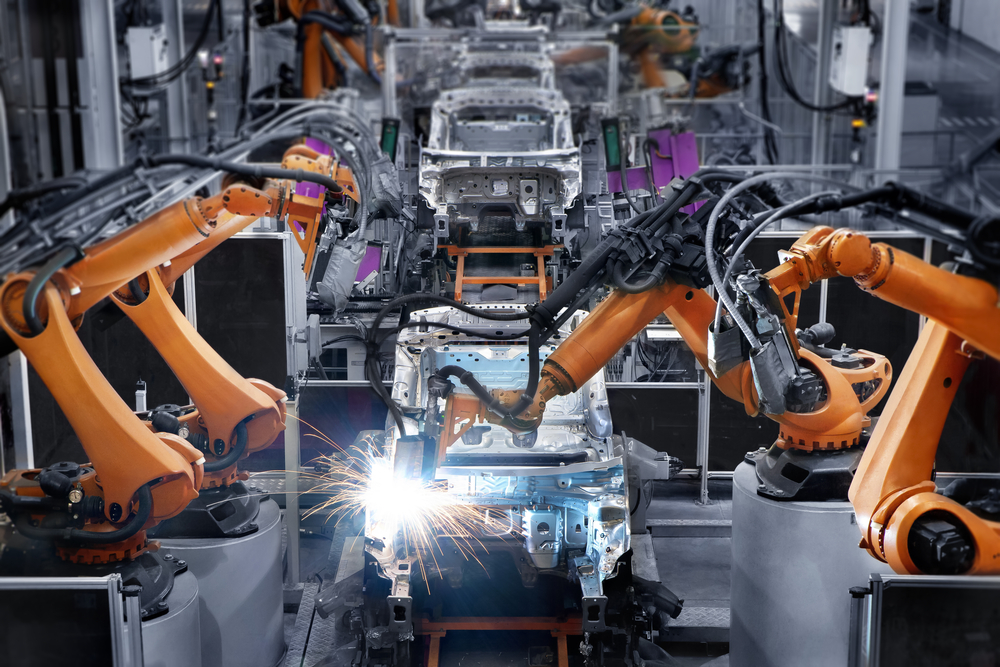
Since the inception of the assembly line, manufacturers have continually searched for ways to improve their efficiency. In the past few decades, robots have taken over some of the functions of human workers, mostly in repetitive, routine tasks. This has caused alarm for some who are worried about robots taking their jobs. So how exactly is the robot revolution changing the manufacturing business? Here’s what you need to know. The State of the Robot Revolution Last year, an 11-inch armless robot named Jibo — a so-called “social robot” — became the latest example of a clear phenomenon: more capable robots are coming soon. In truth, they’re already everywhere: in planes, in cars, in operating rooms, on assembly lines, in the military, and on the last mile. As more robots appear, a new product architecture and more computing power become essential. In 2015, Gill Pratt, who oversaw robotics technology at the Defense Advanced Research Projects Agency (DARPA), said “Improvements in electric energy storage and the exponential growth of computation power and data storage had enabled robots to learn and make decisions informed by the experiences of other robots.” Does that sound frightening? Robots learning from other robots? In a sense, it leads to a larger consumer interest because the smarter robots are, the more helpful they are to humans. The consumer market will approach $100 billion in the coming years. Today, most of the world’s robots are used in factories. What’s different is that those robots are smaller, more observant and more cooperative than their predecessors. Venture capitalists are flooding the robot market, which means we will be seeing more of them in our distribution centers and warehouses soon. And it’s not just manufacturers who are utilising robots. Companies from retailers to hotels are implementing the use of smarter machines. So, not only will more robots become available, the manufacture of the units, all of their parts, and their internal chips and other technology will greatly affect the robotics industry. The Changes Wrought By Bots The upcoming “robot revolution” will change the global economy over the next two decades, cutting the costs of doing business, as machines take over jobs like caring for the elderly or flipping burgers. Robots can already perform manual jobs, such as vacuuming the living room or assembling machines. The development of artificial intelligence (AI) means computers and robots are improving their ability to “think”. They are on the verge of being able to perform analytical tasks once seen as requiring human cognition. This begs the question: what jobs could eventually be taken over by machines? Bank of America Merrill Lynch’s analysts predict the following jobs to be at risk: Burger Flippers, Manufacturing Workers, Financial Advisers, Doctors, and Care Workers. Manufacturing Robots Running off Humans? Should workers be concerned about the infiltration of robotic workers? While the US and Canada have lost more than 6 million jobs to overseas outsourcing, the majority of job losses in both countries was due to machines replacing humans. The facts, however, tell us that over the past two decades, inflation-adjusted U.S. manufacturing production has grown nearly 40%. While there may be fewer jobs, more is getting done. Manufacturing employees have better education, are better paid and produce more valuable products — including technology that allows them to be more productive. In the past few years, there have been millions of jobs remaining unfilled in the manufacturing sector. The aging workforce is not being replaced by younger workers. Youth are more interested in other work. There are other issues to consider as well: Robots are safer. They are reliable. They are more ethical than using exploited labor overseas. They’re incredibly cost-effective, with manufacturers seeing return on investment in 12 months or less. Robots allow manufacturers to focus on innovation. This creates new jobs that require and build a more educated, highly skilled workforce. So, will a robot take your job? Possibly. But, in return, workers of the future will likely find more meaningful work, for better pay. But there is also a distinct possibility that more white-collar jobs will be taken by robots with AI. Conclusion While many will continue to fear robots and AI for the damage they can do to the job market, when businesses are able to save money with cost effective machinery, they have more resources to higher more skilled workers. The robot revolution is inevitable. Humans in manual labor jobs need to prepare for adding new skills or starting a whole new career. Full article: https://www.iqsdirectory.com/resources/how-the-robot-revolution-affects-the-manufacturing-business/
Automotive Industry a Pioneer for Most Technologies

Automotive Industry a Pioneer for Most Technologies : The adoption of smart manufacturing technologies is growing in almost all industries within the leading manufacturing countries such as the United States, Japan, and Germany, and the automotive industry has been a pioneer for most technologies in each of them, finds ABI Research, a market-foresight advisory firm providing strategic guidance on the most compelling transformative technologies. “The automotive industry has been a pioneer in adopting many transformative technologies because it has more of a need and a demand to increase flexibility and agility,” explained Pierce Owen, Principal Analyst at ABI Research. These technologies include Additive Manufacturing (AM), Artificial Intelligence (AI) and Machine Learning (ML), Augmented Reality (AR), and Collaborative Robotics (cobots), as well as Industrial Internet of Things (IIoT) platforms. Some of the leading automotive Original Equipment Manufacturers (OEMs) including Audi, Volkswagen (VW), Ford, Honda, Daimler, and BMW have at least piloted and, in some cases, have scaled these technologies. In terms of overall automation, while most industries have automated 20% to 30% of their operations, the automotive industry has automated closer to 50% of operations. This has resulted in more real-time operational data made available to automotive OEMs and their suppliers. Some of the OEMs use the 3D printers for customized or low-volume production parts, a trend in-line with demand for more customized, low-volume batches. Smart manufacturing vendors targeting automotive have already seen a surprising amount of progress. Dassault Systèmes has Honda North America using DELMIA to design and simulate its plant floors before building them and works with Cummins on the execution side. Telit also works with Honda North America, connecting its equipment. In addition, Telit works with BMW as a client in its factories in Africa and the United States and has Ford as a client with factories spread around the globe. EOS sells 3D printers to BMW, Audi, and Daimler, and Universal Robots sells cobots to 90% of all the OEMs, and even more to suppliers. But, to meet and exceed the complex demands of the automotive industry and scale adoption, smart manufacturing technology vendors need to understand the unique automotive industry challenges, offer solutions with obvious business cases, and have a stakeholder management strategy for all involved parties. “As in many other industries, automotive manufacturing faces the challenges of bridging the gap between IT and OT and providing low-code or no-code tools for content creation, app development, and logic configuration,” Owen explained. “Technology vendors targeting the automotive manufacturing industry need to understand that while automotive shares many challenges with other industries, it often takes them to extremes. For example, while all industries struggle right now to deploy new technologies and integrate them with current processes, the magnitude and complexity in automotive manufacturing present greater risks. One minute of downtime in automotive can cost tens of thousands of U.S. dollars.” If smart manufacturing vendors hope to scale their solutions and platforms in automotive, they must guarantee and prove that they can provide value. “Automotive manufacturing deals with relatively high-value, high-volume and high-complexity products. Neither automotive OEMs nor their suppliers will take gambles on unproven technologies when it comes to their production lines. Vendors must define, prioritize, prove and present their business case before approaching this sector. If they can do so and show potential automotive clients exactly how to implement and integrate their technology without disrupting production, this market will adopt and scale the solution,” Owen concluded. Manufacturing & Engineering Magazine | The Home of Manufacturing Industry News
How Will Brexit Affect British Engineering and Manufacturing?
Post Brexit Britain is a place that is scary for many, people are in fear of what will affect them and to what extent, or if it will affect them at all. In terms of manufacturing and engineering, there are the positives, the negatives and still the unknown… An obvious impact of the referendum is the sterlings rapid depreciation against other currencies. This in fact makes exports cheaper, so buying British goods becomes more attractive to foreign purchases who suddenly realise their currency will go a lot further than in previous years. Essentially this might mean we are giving other countries a bargain when we can’t really afford too, but this will give Britain a short term boost for the internal market. Manufacturers are becoming more likely to source components for products domestically, as buying from abroad becomes a little more expensive. Sourcing components from local manufacturers means cars can claim back the old-Made in Britain statement which could lead to interest from companies abroad in the long run. Since the financial crisis and dark days of 2008, production seems to have declined slowly since the all time record set in 1972. Now, new technology, models and investments, even new company owners are aiming to put this depressing trend in reverse! There have been predictions that the UK could speed past the previous record and hit 2m for the first time in the next three years. That’s exciting news for all, with approximately 160,000 people employed in the vehicle manufacturing business and a total of 800,000 across the wider industry it certainly seems that Britain’s car industry is in high gear, although this was also the case before brexit, with most manufacturers voting remain, so there is some obvious remaining concern. Brexit present unprecedented opportunities that will increase trade deals that are of benefit to both the UK and foreign partners. There are already steady reports in gains of revenue and profit as we approach mid 2017. The result was unexpected for the business and people are still trying to get their head around the change, the main disadvantage to the industry being the time it takes to negotiate new sales strategies to the rest of the world outside of the brexit drama. The Royal Academy of Engineering has revealed a heavyweight analysis of both the threats and opportunities the referendum has brought with it, which include the need to maintain a supply of skilled labourers. Those in the industry are aware this is a critical time for Britain’s engineering sector with plans for a new industrial strategy being announced after the referendum took place, people are in high indications that the government realises how important engineering and manufacturing are to the overall economy. Making up approximately 10% of the UK’s economy and contributing approximately 280bn gross added value (which leads to about 20% in total) means these two industries must not be overlooked for Brexit to be a success. The Academy has warned a lack of skilled staff in the UK is trumping their other concerns and are determined more time and money should go into the encouragement of young people to follow in the field. Hiring people from all over the world, not just Europe needs to be made easier to fill the void of skills that Britain seem to suffering from. This is putting politicians in a difficult spot of trying to satisfy voters desires to control immigration but simultaneously support the crucial engineering sector who need more variety of staff, skills and knowledge. It appears that Brexit can have many positive advancements for both the manufacturing and engineering trades, but in order for those benefits to become clear the industries need to work on the issues that remained before the referendum. The new wave of manufacturing and engineering will be able to come forward and be bigger and better than ever, predictions for the next half decade are very exciting and the industries need to remain positive in times of uncertainty and continue doing what they do best. Manufacturing & Engineering Magazine | The Home of Manufacturing Industry News