


UK Industry Still Skeptical About Deployment of Robots
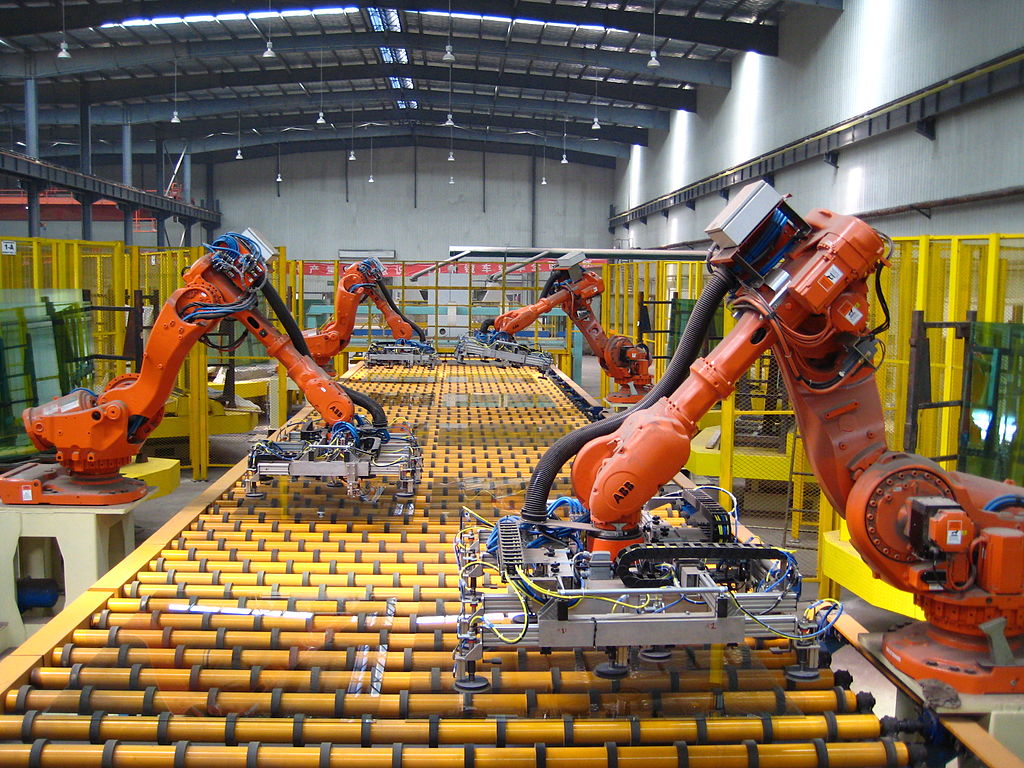
A leading robotics industry expert believes that UK industry remains skeptical about the deployment of robots, and that what is needed is a more positive and realistic attitude. Dr Susanne Bieller, General Secretary of the International Federation of Robotics, voiced her thoughts ahead of Bot-Talks, an open event to be held in Bristol on Wednesday 20th November for SMEs, and organised by Bristol robotics online platform, Bot-Hive. Dr Bieller, who is travelling from her base in Frankfurt, Germany to talk at Bot-Talks, said in the build-up to the event: “Overall, the business world is accepting robotics and automation very well. If you are active on a global scale and want to remain competitive, there is no alternative to automation for most businesses – the question rather is where to start and which processes to automate first. “The issue we are facing here in Europe, and I think the UK is not an exception, is the public perception of robotics and, related to that, a certain scepticism against the deployment of robots. There is a huge difference among the public opinion across Europe. It certainly has an impact how trade unions are supporting the automation process, and also how the media are influencing the debate. “It is quite interesting to see that this debate basically is unknown in countries like Japan and China, where they see the basic need to automate in order to compensate the lack of qualified labour. “I would love to see a more positive and realistic attitude toward robots. Neither fears nor exaggerated expectation do really help in the further expansion of robotics and automation.” Some of Europe’s leading experts on robotics will descend on The Watershed, on 20th November as Bot-Hive holds its first ever Bot-Talks (tickets available here). Created to provide SMEs with a best-in-class overview of robotics and automation, Bot-Talks consists of presentations from leading industry experts, a panel discussion and a networking hall filled with robot demonstrations. Bot-Hive CEO Jacques Bonfrer will open an afternoon of talks, with the following line-up: Mike Wilson, Chairman of British Association of Robotics & Automation, on the state of UK robotics; Kate Hyslop, Head of Marketing of Automata, on democratising robotics; Jim Davison, Regional Director of Make UK on robotics in manufacturing; Professor Tony Pipe, Deputy Director of the Bristol Robotics Laboratory, on autonomous vehicles; and, Karl Foster, Head of Technology at Blake Morgan, on robotics and ethics. This will be followed by a panel discussion between: Farid Dailami, Associate Professor of the Research Innovation Facility Bristol; Dominic Keen, CEO of Britbots; Dr Susanne Bieller, General Secretary of the International Federation of Robotics; Paul Grantham, Manufacturing Lead at Natwest; and Ashu Sharma, Robotics Expert, PwC Consulting. Bot-Hive CEO Jacques Bonfrer said: “This is a superb opportunity to hear some of the leading lights in the robotics sector talk about the state of play as regards UK industry and automation, where we currently are and what is coming up in the future. UK industry has to automate in order to become competitive within the global market and SMEs need someone to look to for guidance and leadership in these difficult times. I hope that Bot-Talks will play a part in this process.” Bot-Hive is a startup funded by Britbots and the Startup Funding Club, and based in The Robotics Laboratory, part of The University of the West of England. It is on a mission to help UK industry with its productivity problems. Bot-Talks takes place on Wednesday 20th November at The Watershed, 1 Canon’s Road, Harbourside, Bristol, BS1 5TX. It starts between 1.30pm and 1.45pm, with the conference taking place between 2pm-5pm, and networking and demonstrations between 5.30pm and 8pm. SMEs and other interested parties are welcome to attend the event and should register here. Manufacturing & Engineering Magazine | The Home of Manufacturing Industry News
Elfab Has Designed a New Solution for Pharmaceutical Industry

Elfab is launching a new solution designed to meet the needs of the global pharmaceutical industry. Pure-Gard is a pressure relief device specifically for use in sanitary (hygienic) manufacturing environments including pharmaceutical and food. The product has been designed and developed by Elfab’s engineers at the company’s headquarters in North Shields. The product’s main applications will be in biopharmaceutical facilities where cleanliness and compliance are critical; where they are producing medicines, which are then used to treat patients with disease such as cancer, multiple sclerosis and kidney disease. Commercial Director, Chris Billinge, commented: “We’re extremely proud to be launching this product, which the team at Elfab’s North Shields facility has worked diligently on over recent months. Pure-Gard is the result of listening to the market and understanding the challenges our customers face in the pursuit of maximising processing output and efficiency whilst maintaining a safe manufacturing environment. Our innovative solution will benefit manufacturers operating in unique and complex environments such as pharmaceutical.” Sally Cowling, Marketing Manager, added: “We have worked closely with existing customers to ensure we are meeting their needs with our new solution and we’re excited to be bringing to market an innovative product which, whilst designed here in the North East, will bring benefits to a global industry.” Pure-Gard will be manufactured in Elfab’s facility in North Shields, alongside their other products which are used in various industries worldwide to provide protection for people, equipment, processes and the environment. Manufacturing & Engineering Magazine | The Home of Manufacturing Industry News
MGTS Increases Apprentices for Food and Drink Industry
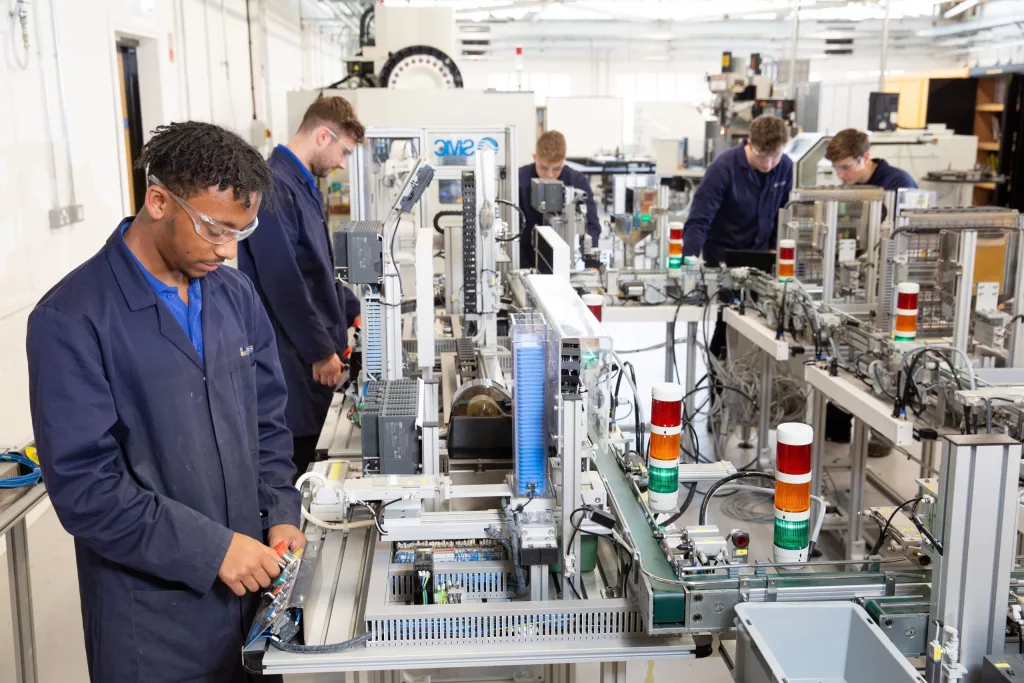
Midlands based MGTS, a leading specialist training provider for engineering food maintenance and food process manufacturing industries, announced it had doubled its capacity in delivering apprenticeships for the food and drink industry. The employer-led and membership-based charity is celebrating this announcement with an official opening on Friday, 5 July by Redditch MP, Rachel Maclean. MGTS already train 800 apprentices at any one time across the whole of the engineering industry. It has invested in its Redditch facility and has doubled the space devoted to apprenticeship training for the food industry by 355m2, refurbishing and equipping this space with industry standard equipment. The additional workspace supports the demand of an ever-growing food and drink engineering maintenance apprenticeship programme. MGTS has already delivered this apprenticeship programme for seven years at its engineering academy within Reasheath College with increasing numbers of starts each year. The additional space enables MGTS to build on its offering to budding engineers from around the UK and local firms. Already working with the cream of the food and drink industry, including Müller, Arla, Ferrero, Dairy Crest, Morrisons and Heineken, this expansion will help the whole of the food and drink industry to recruit much needed, highly skilled engineers. David Bridgens, CEO of MGTS, said: “The country needs skilled engineers and that applies particularly to the food and drink industry. We are playing our part by increasing the numbers of apprentices. This would mean that our yearly intake capacity would be 100; circa 50 at each site. This is a fantastic time to build a career in food process manufacturing and we can help individuals develop the necessary skills and businesses recruit a trained workforce. Its’ a win-win for everyone involved.” Naboth Tinarwo of Arla Foods added: “Engineering and maintenance skills are of vital importance to the food and drink sector. Our dairy industry like any other in the UK is faced with massive engineering skills shortage needed to drive efficiency, innovation and productivity. “Arla Foods and MGTS have been tirelessly working together for the past 10 years to developing these engineering skills and will continue to do so in order deliver these capabilities. Arla foods welcomes the huge investment and commitment that MGTS is putting into increasing of training capacity and infrastructure, and I am convinced that we share the same ambition and we will continue to recruit more apprenticeships through this programme.” Brandon Smith, an apprentice from Morrisons, commented on his apprenticeship: “Since starting my career as an engineer I have noticed myself viewing everyday situations a lot more logically. It has introduced me to new subjects I never thought I would be interested in.” For more information about the event or apprenticeships for the food and drink industry, visit www.mgts.co.uk or contact Ian Amis on 02476 630333. Manufacturing & Engineering Magazine | The Home of Manufacturing Industry News
Most Industrial Companies Planning to Implement 5G

Most Industrial Companies Planning to Implement 5G : Industrial companies are embracing 5G connectivity as a primary enabler of digital transformation, and plan to implement the technology within two years. This is spurring interest in private licenses, which nearly half of large industrial companies (47%) intend to apply for, according to the latest findings from the Capgemini Research Institute. The 5G in Industrial Operations: How Telcos and Industrial companies stand to benefit study found that 5G is regarded as a catalyst of digital transformation, and that manufacturers expect it to deliver more secure and efficient operations. Key findings of the study, which surveyed over 800 industrial companies’ executives and 150 telecoms executives across 12 countries, include: 5G is critical to digital transformation: When industrial companies’ executives were asked which technologies will be the most integral to their digital transformation over the next five years, 75% mentioned 5G as a key enabler, ranking second to cloud computing (84%), and ahead of technology innovations such as advanced automation and AI/machine learning. Industrial companies believe that 5G’s versatility, flexibility and reliability will help address connectivity challenges (a limiting factor to digital transformation for 44% of those polled) and fuel future use cases. Industrial companies want to move quickly to implement 5G: There is widespread confidence in 5G’s potential, with almost two-thirds of industrial companies (65%) planning to implement it within the first two years of availability. In Italy (35%), France (30%) and Canada (27%), over a quarter intend to use 5G within the first year, while 75% of industrial companies in the UK and Italy, 69% in Spain, and 68% in the US and Norway plan to start within the first two years. The largest manufacturers are most likely to implement 5G first compared to the broader industry: 74% with annual revenue above $10bn expect to do so within the first two years, compared to 57% with revenue between $500m and $1bn. One-third (33%) of industrial companies are planning to apply for their own 5G license and large organizations will take the lead with 47% expressing interest. This is fueled by a desire for greater autonomy and security combined with concerns about telecom operators being too slow in rolling-out 5G public networks. However, there will be regulatory barriers which differ across countries. Gunther May, Head of Technology and Innovation, Business Unit Automation and Electrification at Bosch Rexroth AG says, “As a solution provider and a manufacturer, we are monitoring the 5G landscape closely and we believe there are multiple benefits to holding our own license. It would allow us to be in full control of our 5G strategy by giving us the freedom to either deploy the network alone or with a telecom operator.” Security and operational advantages will drive 5G adoption: When asked about the business reason for investing in 5G, more than half cited more secure operations (54%) and efficiency of operations/cost savings (52%), with the expectation that 5G will help in enabling or enhancing use cases such as real-time edge analytics, video surveillance, remote control of distributed production, AI-enabled or remote controlled motions, remote operations through AR/VR, etc. Industrial companies will pay more for premium services: Despite uncertainties around the speed of deployment, manufacturers are already willing to pay a premium charge for enhanced connectivity. 72% of industrial companies will pay more for enhanced mobile broadband speed and increased capacity, yet only 54% of telecom operators think there is appetite for this. This presents an opportunity for telecom operators to consider how they build a highly profitable 5G business model. Manufacturing & Engineering Magazine | The Home of Manufacturing Industry News
PPS Crowned Distributor of the Year

PPS Crowned Distributor of the Year : Brighouse-based Pennine Pneumatic Services, a market-leading supplier of compressed air solutions, has been named Distributor of the Year at the Motion Control Industry Awards 2019. The Motion Control Industry Awards “recognises the achievements of ‘motion control’ companies and individuals who strive to go the extra mile”, and has established itself as a leading national event, offering companies a platform to shout about their achievements. “We were thrilled to receive this award, especially against such stiff competition. To be nominated was fantastic, to be a winner a complete shock; it just shows how hard our team work. The night was a real celebration of our industry and we were proud and humbled to be part of it. Congratulations to all nominees and winners alike,” said Ian Harrison, Managing Director. Much more than a compressed air supplier, PPS offers market-leading design, supply, install and service of energy-saving solutions – all under one roof. The judging panel of industry experts deemed PPS a worthy winner due to the company’s commitment to staff training, their focus on minimising customer downtime by providing full turnkey solutions and their proven ability to install energy saving equipment. Manufacturing & Engineering Magazine | The Home of Manufacturing Industry News
Inspiring the Female Future with Advanced Engineering 2019

On 23 June 1919, a committee of influential women sensed a new dawn. The First World War had ended, and significant steps had been taken towards women’s suffrage. The group, ranging from designers and munitions factory managers to wives of eminent engineers, rallied to found the Women’s Engineering Society (WES). 100 years later, progress for women in industry has often felt stagnant. Hetal Patel, Marketing Projects Manager for the UK’s largest annual manufacturing and engineering exhibition, Advanced Engineering, discusses the importance of women in engineering. As we celebrate the centenary of the Women’s Engineering Society, the fact that only eleven per cent of the UK’s engineers are female is a tough pill to swallow. The Society’s initial journal outlined its aims to “encourage and stimulate all women who are interested in engineering”, but today’s figures show that it’s often hard to see these efforts come to fruition. So, what can be done to nurture talent in this milestone year? The state of industry The UK has the lowest percentage of female engineers in Europe. As it stands, this figure isn’t set to rise any time soon. It’s estimated that less than eight per cent of engineering and manufacturing apprentices are female, with figures plunging to as low as two per cent in the building and construction sector. But the UK needs to significantly increase its number of engineers. The STEM skills shortage is costing businesses £1.5 billion in recruitment every year. For the engineering sector to reduce its skills shortage, it needs to employ around 186,000 recruits each year until 2024. Role models To inspire the future, we should reflect on the past. A lack of role models is often cited as a reason why women shy away from a career in this industry. However, the reality is that our engineering heroines are often unsung. The pressures of war drew many women to the home front, only for them to experience rebuke once men returned. In resistance, the founders of WES created a committee that promotes engineering as a rewarding profession for women as well as men. The original members of the group paved the way for women in industry. Renowned for her adventures as a pilot, Amy Johnson was a qualified engineer and WES president from 1933-34. Johnson’s campaigning inspired others such as Dorothy Spicer, another society member and the first person to hold all four types of aeronautic licenses. Whether it’s a female Doctor at the helm of the Tardis, or a woman encouraging the next generation of engineers, prominent role models need to be realised as figures of inspiration. Striking the balance If we are to progress, we must strive for a more balanced workforce that reflects the diversity of our society and invests in the development of all talented workers. McKinsey’s Delivering Through Diversity report states that many companies struggle to increase the representation of diverse talent and create truly inclusive organisational cultures to profit from diversity. Yet data from 2017 found that companies in the top-quartile for gender diversity on their executive teams were 21 per cent more likely to have above-average profitability than companies in the fourth quartile. To address the skills gap and boost productivity, companies need to act to diversify. The next generation International Women in Engineering day takes place on June 23. To encourage women to pursue a career in engineering, action has to begin as early as possible. Professor Karen Holford, Deputy Vice Chancellor at Cardiff University and voted one of WES’s most influential female engineers in 2016 explains that “the stumbling blocks are there from a very young age, such as girls not being given toy trains and cars to play with. It may sound like a small thing, but unconscious stereotyping is still holding girls back, without them even realising it. “Schools must ensure that teachers have the critical skills to teach the subjects needed for a career in engineering. Finally, companies need to do more to promote flexible working for both men and women. This way we can ensure that the burden of childcare is equally shared so that women aren’t out of the workplace for long periods. If we can solve these problems, I believe we’ll see a big increase in women choosing engineering careers and, even better, staying in them.” The Women’s Engineering Society will be exhibiting at Advanced Engineering from 30–31 October 2019 at the National Exhibition Centre, Birmingham. For more details on the show’s exhibitors, or to sign up to attend, please visit: www.advancedengineeringuk.com
Green Light to New Automotive Initiative
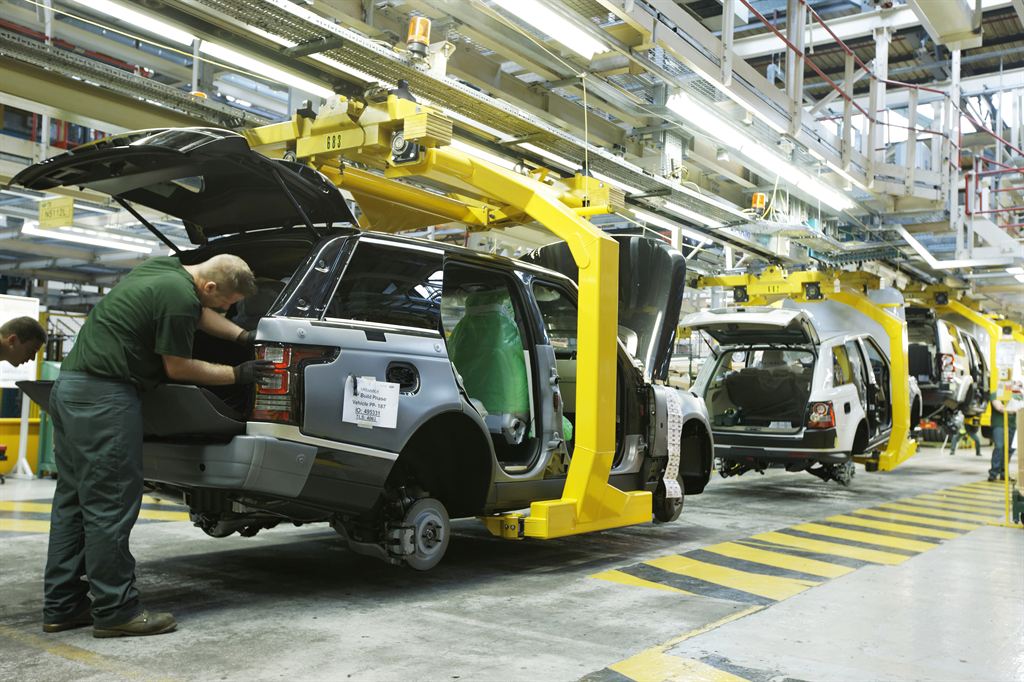
The selection of the National Manufacturing Competitiveness Levels (NMCL) programme, which will deliver the government’s national supplier competitiveness and productivity improvement initiative, has been announced by the Department for Business, Energy and Industrial Strategy (BEIS). Designed to improve competitiveness, raise workforce capacity and increase productivity of UK manufacturers, NMCL will be boosting the nation’s exports and economic growth. Led and match-funded by industry, and with the backing of 25 of the UK’s largest manufacturers, NMCL has been jointly developed by the automotive and aerospace sectors for application across all areas of manufacturing. Delivered by SMMT, NMCL Automotive is designed for the automotive sector and will make use of the £16 million of government funding to develop sustainable and internationally competitive UK supply chains. The new NMCL approach has already been successfully piloted by companies in the North West of England. NMCL is designed to help manufacturers of all sizes and stages of development understand how competitive they currently are and develop the specific business capabilities they need to boost their performance. The programme includes an in-depth competitiveness assessment based on company capabilities and the views of key customers. This data is then applied to investment decisions across six areas of competitiveness; quality, cost, delivery, flexibility, products/technology and customer experience. Projects are tailor-made for each manufacturer and focus on boosting competitiveness, increasing ‘value-add’ and winning more orders. “This announcement is a shot in the arm for the UK’s automotive industry in general and the supply chain in particular. NMCL is a central part of the Government’s Industrial Strategy and the sector deal for the industry, offering a proven way for business to achieve competitiveness. Coming at a time of considerable upheaval, it is important that all manufacturers are alert to the technological, market and trading changes that are occurring and take the right steps to ensure they are not just viable but globally successful in the future,” said Mike Hawes, SMMT Chief Executive. NMCL projects will typically last from six months for smaller initiatives to up to three years for entire business transformations. NMCL’s approach is also ideally suited to other manufacturing sectors such as rail and defence. Companies are invited to declare an initial expression of interest in participating in NMCL by completing a short form on the NMCL website.
Engineering Firm Raises Thousands for Children’s Hospice

Staff from leading engineering solutions provider Boulting Ltd., which has offices around the UK and its headquarters in the North West, have completed a series of fundraising events and activities, raising almost £6,000 for Liverpool-based Zoe’s Place Baby Hospice. Employees from Boulting Ltd’s numerous sites across the UK have organised a series of fundraising activities throughout 2018 to raise £5,690 for the charity. Staff arranged dress down days, cake and coffee mornings and participated in a version of the iconic It’s a Knockout game show. The money raised has been donated to children’s charity, Zoe’s Place Baby Hospice, which provides respite, palliative and end of life care for babies and infants age zero to five suffering from life limiting or life-threatening conditions, as well as family and bereavement support. Boulting Ltd works across numerous industry sectors, offering engineering services including mechanical, electrical and instrumentation, as well as maintenance and project management support. Staff at Boulting have raised money for a different charity every year since 2011. “Our annual fundraising started after one of our colleagues had a baby girl who was born prematurely,” said Boulting Ltd. purchasing manager, Lianne Cross. “We decided to raise money for the neonatal unit where she was being looked after and raised over £2,400. “Every year the fundraising efforts have grown, and the staff really get involved in raising money. The charity for the year is decided through a staff vote, where employees can nominate charities that are special to them,” Lianne continued. “Fundraising at Boulting is companywide and runs from January to December every year. Other fundraising activities throughout 2018 have included opening a tuck shop selling snacks as well as a book library. A few of my colleagues even raised money by taking part in a spooky night time tour around an old asylum. “We delivered the cheque to Zoe’s Place in February,” Lianne said. “When we visited, they gave us a tour of the hospice and we were able to meet some of the children and the nurses. It was a pleasure to see where our donation will go.” “We are a free of charge service to those who need us”, said corporate and events fundraiser for Zoe’s Place, Natasha Baggaley. “This means we have to raise £1.6 million a year, just to keep the doors to our hospice open; that’s £4,500 a day. “The donation from Boulting means that we can continue to provide the care our families rely on. This donation will help us to continue to support our babies and their families throughout 2019, so we can’t thank them enough.” Staff at Boulting have already selected their chosen charity for 2019 — The Bloom Appeal, a blood cancer patient support and clinical research charity.
New Programme Aims to Develop Industry Leaders

A new programme, launched by Make UK, the manufacturers’ organisation, will be taking a fresh approach to developing leadership talent in order to help industry leaders achieve even greater success. Combining the worlds of branding and image consulting with the fields of leadership coaching and the latest in neuroscience, Their Building your brand of leadership programme helps leaders build upon their own personal style of leadership, so that they can quickly achieve their leadership goals. “In the current business climate, there’s never been a more crucial time for bold and strong leadership in organisations. Many people think personal branding is for celebrities. It’s not. Your personal leadership brand plays a huge role in your career progression and success. We’re helping leaders and aspiring leaders to bring their boldest self to the forefront so that they can quickly achieve even more, with greater impact and clarity,” said Lisa Gillespie, head of learning and development services at Make UK. The programme starts with applying the personal branding techniques, also used by icons such as Taylor Swift and Lionel Messi, will will enable leaders to identify and express their own distinctive brand of leadership. Delegates also access one on one support from a leadership coach and image consultant to enable them to unleash their potential and express their true leadership identity. Building your Brand of Leadership will take place at various locations across the UK starting this month. It can also be tailored for in-house leadership teams or delivered on a one to one basis for busy executives. Manufacturing & Engineering Magazine | The Home of Manufacturing Industry News
Brexit and the UK Automotive Industry
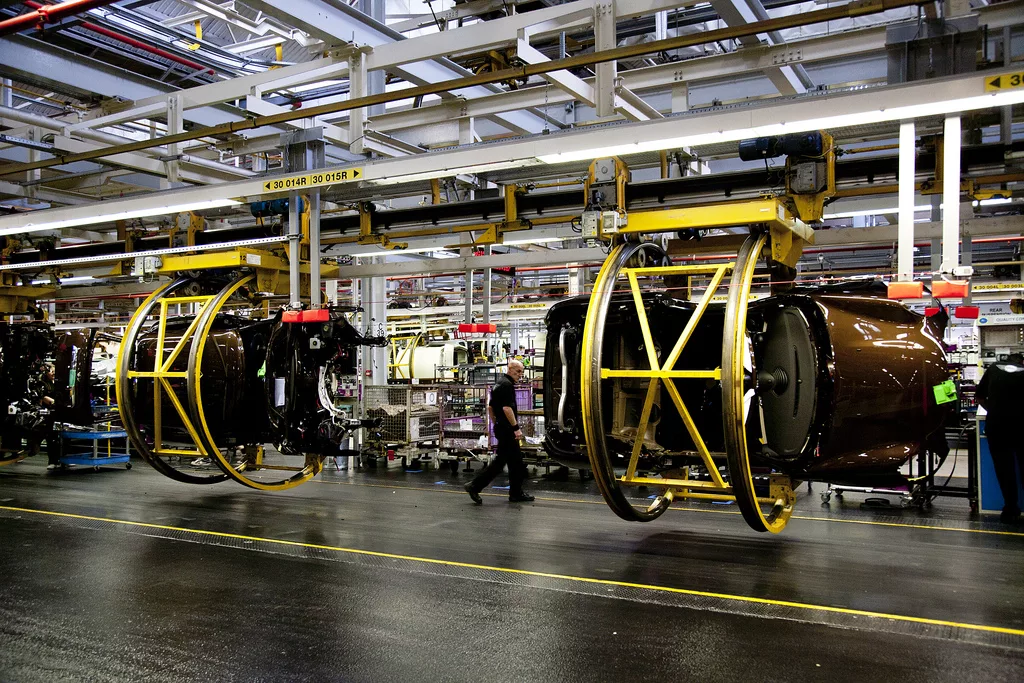
Brexit and the UK Automotive Industry : Uncertainty around the final Brexit deal between the UK and the EU still remains. This is particularly true for the automotive industry where OEMs such as Ford, Honda and Renault-Nissan have all publicly raised their concerns. To find out what was happening within the industry, OpenText and the Centre of Brexit Studies conducted a comprehensive study focusing on this sector. The research study set out to identify the likely implications that different Brexit options could have on the industry and how prepared organisations were across five key business areas: supply chain management, operations and logistics, human resource management, regulations and compliance, and customer communications. The research drew on many different information resources and included in-depth interviews with senior executives in the UK automotive industry. The research findings suggest that all current available trade scenarios put up different types of trade barriers for the sector, and makes a series of recommendations for risk management and scenario planning strategies that can help companies adapt, whatever the final outcome of Brexit negotiations. Key recommendations include: Automotive companies need to have good enterprise information management (EIM) policies in place for managing and reporting on contracts to implement changes and mitigate risks. OEMs and suppliers need to have a strong information governance strategy in place to ensure compliance with any new regulatory requirements or checks. More emphasis on workforce planning and skills development is needed for the UK automotive industry to mitigate restrictions or changes to the free movement of people. Closer communication and collaboration between automotive manufacturers, partners and customers is needed to ensure a free flow of information. Automotive manufacturers need to have an improved understanding of their supply chain, particularly with respect to any new documentation and compliance requirements that might be put in place. Manufacturing & Engineering Magazine | The Home of Manufacturing Industry News