


Sheffield Opens Three Advanced Engineering Centres
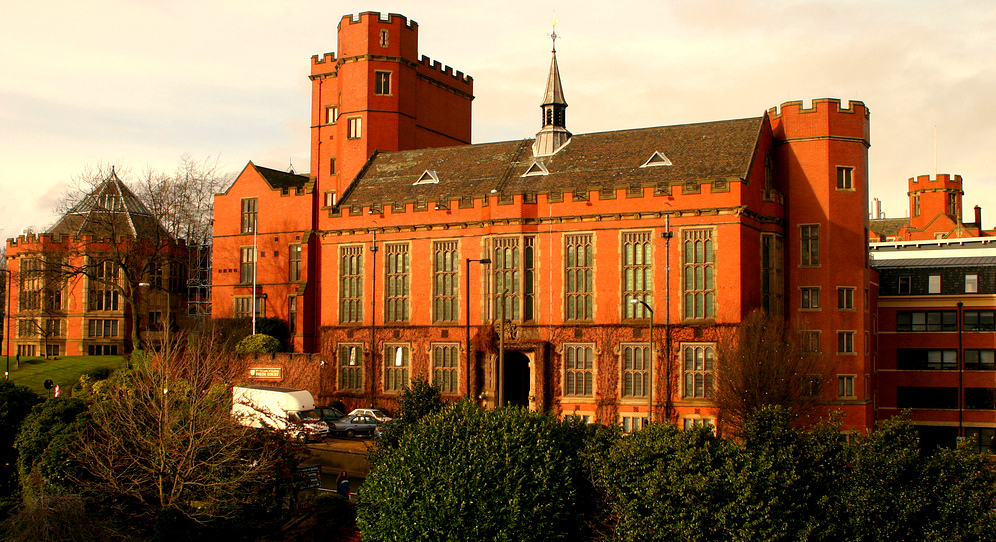
Three new multi-million pound research centres have been opened by the University of Sheffield in the region, aiming to further boost the city’s reputation as a hub for advanced engineering. The new centres could also boost the reputation of the Northern Powerhouse as a leader in advanced research, innovation and engineering. The Royce Translational Centre (RTC), the Laboratory for Verification and Validation (LVV), and the Integrated Civil and Infrastructure Research Centre (ICAIR) are all located within the Sheffield City Region’s Advanced Manufacturing Innovation District. RTC has been set up to evolve novel materials and processing techniques developed by research teams and make them accessible for trial by industry. It is home to Royce@Sheffield and the metals research group of AMRC, the National Metals Technology Centre (NAMTEC). LVV will enable research into the design and operation of advanced engineering structures when exposed to real-world vibration and environmental conditions, allowing testing of both full structures and substantial components. Experimental data, computer modelling and machine learning will allow industry to produce lighter, safer designs for a range of industrial sectors. ICAIR will enable experimental tests for investigating both underground and above ground constructed infrastructure. It can integrate data, AI, robotics and advanced manufacturing techniques to the field of infrastructure. The centres are working with companies to help develop new technologies, using research to cut costs and lead times, which could potentially transform industrial processes and businesses. They form part of a £47 million investment, part funded by the European Regional Development Fund (ERDF), UK research and Innovation (UKRI) and the University of Sheffield. The site is already home to the University of Sheffield’s Advanced Manufacturing Research Centre (AMRC) Factory 2050 – the UK’s first advanced factory, dedicated to conducting collaborative research, component manufacturing and developing machining technologies.
Combining Resource Planning Can Elevate Engineering’s Key Issues

All industries have specific requirements when planning for the upcoming days, weeks, months and even years ahead. One of the key issues concerning planning in the engineering sector is that the industry as a whole needs a resource plan that can manage both the people on the ground and the equipment they are using. The solution here is to use an online resource planning tool such as Ganttic which allows management of a project portfolio while utilizing resources with maximum efficiency. Creating clear and comprehensive visual plans that give you an instant overview of all your resources and projects is key to engineering efficiency. Ganttic has a number of key benefits for businesses including unlimited users, up to 10 resources free, click-drag-release to start planning, the ability to assign a task to multiple resources, custom data fields, implement colour schemes and manage resource grouping. These features can benefit both staffing and equipment logistics which the engineering sector needs a firm grip upon. Being able to have a number of people working on any one document at the same time, allows project managers within different teams, to see what is going on across the company. Ganttic allows you to have one eye on day to day requirements and also on the long-time needs of the company. Moving around the resources, be they people or vehicles, is easy to facilitate with the same drop-and-drag option. Working in real-time, managers can update their co-workers to the new schedule, without having to contact them directly. The immediate update facility within Ganttic creates an efficient and coherent space to optimize staff working practices. Without a solid resource planning tool, engineering practices could become muddled and confused. Using it correctly offers transparency across all sectors. It’s a win-win situation.
How Engineering Can Benefit from Better Planning

Overseeing the movements of people, equipment, transport and office space is an engineering project manager’s ultimate goal. Using a flexible resource planning tool, engineering companies can see where equipment is and where the operators are located (and most importantly if they are free). They can also add in information around maintenance of tools, vacations or training as well as bookings to know the whereabouts and the condition (damaged, shipping, in order) of their equipment. Ganttic is one such resource planning tool that is both flexible and efficient. It is designed to be used in whichever way best fits the organisation’s needs. Whether they are looking to build a simple resource schedule, a complex resource management system, or something in between, Ganttic can help to get things done efficiently and on time. One of the biggest issues faced by the engineering sector is understanding the movement of people and equipment around the country or even around the world. Ganttic’s real-time planning capabilities coupled with multi-user access, gives visibility across an entire company. Everyone is in the loop. Expensive setbacks can be avoided as projects can be viewed weeks, months and even years in advance. By the same token the ability to assign tasks to multiple resources, implement colour schemes and manage resource grouping can all help to streamline planning within the engineering industry. Recent reports indicated that there is an increasing gap between the availability of project managers and the huge boom within the manufacturing and engineering sectors. Better planning systems can only help companies save money and streamline their enterprises. Manufacturing & Engineering Magazine | The Home of Manufacturing Industry News
Assystem Turns 50!

The international group Assystem in a specialist in engineering. The company is celebrating 50 years of engineering heritage that covers aerospace, automotive and nuclear engineering sectors. While celebrating this momentous anniversary, the company if looking to improve their presence in the sector by increasing the delivery of next generation and end to end full life cycle solutions. Assystem has been able to deliver a number of major international projects within the aerospace, automotive and energy sectors. The business is one of the top five engineering supplier in nuclear space around the globe. They are also key partners for the worldâs largest industrial groups as well as engineering projects and work with companies including Airbus, BAE Systems, EDF Renault and Rolls-Royce. Assystem focuses on providing an advanced level of engineering solutions to their clients and employs 1,400 employees around the UK. Assystem has two main divisions which are Global Product Solutions and Energy & Infrastructure. The business is a key partner in the development of a range of end to end engineering solutions that can be employed in technology-intensive sectors as well as the provision of cutting edge substantiation techniques. The business also offers solutions that can be used in global projects and initiatives while also complying to strong safety and regulatory constraints. A notable project that Assystem was a part of is the Amphibian. The Amphibian is the only commercially available amphibious ultralight aircraft in the world. The company also has an international team that is based in Bristol and provides key 3D scanning capabilities for the Bloodhound SSC engine design. The Bloodhound is a supersonic land vehicle made in Britain that is aiming to be able to match or exceed 1,000 mph. Assystem are constantly working on innovative and ground-breaking projects across their sector and letâs hope that they will continue to have the same degree of success for the next fifty years.
15 Of The World’s Engineered Animals & Their Benefits To Science

Engineering animals, or cloning is a controversial topic. For some it is a glimpse into the amazing advancements of the future and for others it’s a step too far out of their ethical means. Either way it cannot be denied that this technology will have important ramifications for everyone in years to come, whether we like it or not. Cloned steaks are on supermarket shelves and cloning really isn’t anything `new. ` In fact cloning has been around since 1885 when Hans Adolf Edward Dreisch cloned a sea urchin. The use of engineering animals could in reality be a huge saving grace for many endangered species but it’s understandable that many are worried over what that means for morals, ethics and traditions. Humans, with very little doubt, will be on the cloning list in the not too distant future (and if you’re one to follow conspiracy theories, you might believe they have already been cloned). Before human cloning though, let’s take a minute to eat some cloned meat (that US law requirements state doesn’t have to be labelled as such) and take a look at some of the animals that have already been genetically engineered. 1. Dolly the sheep We can’t talk about genetically modified or engineered animals without mentioning Dolly the sheep. She was artificially created in 1996 and lived to be the ripe age of six, she was the first cloned mammal ever and was a huge success in the engineering world. 2. Cumulina the Mouse In 1997 this cheeky rodent was cloned in Hawaii. She was the first successfully cloned mouse and lived till two years and seven months, a ripe age that her creators were overjoyed with and during her lifetime Cumulina gave birth to two litters. 3. Tetra the Rhesus Monkey This lab monkey was cloned in 2000 and the US-based tetra is the first in a series of cloned monkeys that scientists used as test subjects to explore diseases such as diabetes. 4. Carp the Carp An Asian Carp was successfully cloned in 1963, a decade later scientist Tong Dizhou also cloned a European Crucian Carp. Excluding the example from 1885, cloning is so often thought of as a new development so this experiment was truly amazing. 5. Prometea the Horse This horse was cloned in Italy, 2003. The belief was that they could in fact mass produce Italian Stallions but sadly the experiment failed, she was birthed by her own clone source `parent. ` 6. Ditteaux the African Wildcat As this animal is endangered it would appear this could be a cause for the animals cloning experiment. That is not the case, Ditteaux was cloned for no other reason that someone could. US scientists however did use Ditteaux as a cloning template however to genetically engineer other vulnerable animals. 7. Noto & Kaga The Cows During the 90’s the Japanese were quite prolific for their cloning programme; these two cows were created in 1998. Subsequently the cows have been duplicated several thousands of times since, Noto and Kaga have paved the way for many clones who have been engineered to produce meat and milk products. 8. Millie, Alexis, Christa, Dotcom & Carrel, the Family of Pigs This family of clones was corrected to allow for human cell and organ transplant. Millie and her copies were created by a US based company in 2000. 9. Noah the Gaur A guar is an Asian ox who found their numbers dwindling, fortunately in 2001 they were successfully cloned, sadly though Noah lived a short live of two days, dying of dysentery (an infection of the intestines). 10. Mira the Goat Mia was cloned in 1998, herself and her sisters were created in a US lab for engineering in the pharmaceutical industry. 11. Ralph the Rat Ralph was one of three rat pups created in 2002. His genetic makeup is basis for research labs in the future but the argument arises here that rats are perhaps an animal in need of genetic engineering. 12. Idaho Gem the Mule Mules are a complex animal because they are made when a female horse and a male donkey mate. The male offspring Mules, and the female-hinnies are sterile and cannot create offspring themselves as the chromosome miss-match means they cannot produce sperm or eggs. Cloning a mule does not change the fact they are sterile but it is a way to battle against the biological boundaries, Idaho Gem was created in 2003. 13. Libby & Lily the Ferrets Libby and Lily were cloned in 2004 as ferrets are useful to the study of human respiratory diseases and cloning ferrets opens new options for research. 14. Ombretta the Mouflon Mouflons are a subspecies group of wild sheep and Ombretta was cloned in 2000 for the greater good. Until 2001 the Mouflon was an endangered species and the use of Ombretta is a great example of how science and engineering can help to change that for the better. 15. CC the cat (Copy Cat) Copycat was created in 2001 as a domestic cat, it was the world’s first cloned pet and was a starting gun with an entirely new industry of pet clones. Since this there have been various examples of domestic cloning, including Little Nicky the cat. She was cloned in California from the DNA of a dead cat whose owner paid $50,000 for the clone of their former beloved pet. Despite being controversial the benefits of genetic engineering in terms of aiding species in need of help cannot be denied. The ethical issues of is the animal `real` or `artificial` are often brought to light and they are at the discretion of the individual, but cloning has been happening for a lot longer and a lot more frequently than people may realise. As science develops the future is sure to hold more exciting and innovative things in the concept of genetically engineered animals. Manufacturing & Engineering Magazine | The Home of Manufacturing Industry News
How Will Brexit Affect British Engineering and Manufacturing?
Post Brexit Britain is a place that is scary for many, people are in fear of what will affect them and to what extent, or if it will affect them at all. In terms of manufacturing and engineering, there are the positives, the negatives and still the unknown… An obvious impact of the referendum is the sterlings rapid depreciation against other currencies. This in fact makes exports cheaper, so buying British goods becomes more attractive to foreign purchases who suddenly realise their currency will go a lot further than in previous years. Essentially this might mean we are giving other countries a bargain when we can’t really afford too, but this will give Britain a short term boost for the internal market. Manufacturers are becoming more likely to source components for products domestically, as buying from abroad becomes a little more expensive. Sourcing components from local manufacturers means cars can claim back the old-Made in Britain statement which could lead to interest from companies abroad in the long run. Since the financial crisis and dark days of 2008, production seems to have declined slowly since the all time record set in 1972. Now, new technology, models and investments, even new company owners are aiming to put this depressing trend in reverse! There have been predictions that the UK could speed past the previous record and hit 2m for the first time in the next three years. That’s exciting news for all, with approximately 160,000 people employed in the vehicle manufacturing business and a total of 800,000 across the wider industry it certainly seems that Britain’s car industry is in high gear, although this was also the case before brexit, with most manufacturers voting remain, so there is some obvious remaining concern. Brexit present unprecedented opportunities that will increase trade deals that are of benefit to both the UK and foreign partners. There are already steady reports in gains of revenue and profit as we approach mid 2017. The result was unexpected for the business and people are still trying to get their head around the change, the main disadvantage to the industry being the time it takes to negotiate new sales strategies to the rest of the world outside of the brexit drama. The Royal Academy of Engineering has revealed a heavyweight analysis of both the threats and opportunities the referendum has brought with it, which include the need to maintain a supply of skilled labourers. Those in the industry are aware this is a critical time for Britain’s engineering sector with plans for a new industrial strategy being announced after the referendum took place, people are in high indications that the government realises how important engineering and manufacturing are to the overall economy. Making up approximately 10% of the UK’s economy and contributing approximately 280bn gross added value (which leads to about 20% in total) means these two industries must not be overlooked for Brexit to be a success. The Academy has warned a lack of skilled staff in the UK is trumping their other concerns and are determined more time and money should go into the encouragement of young people to follow in the field. Hiring people from all over the world, not just Europe needs to be made easier to fill the void of skills that Britain seem to suffering from. This is putting politicians in a difficult spot of trying to satisfy voters desires to control immigration but simultaneously support the crucial engineering sector who need more variety of staff, skills and knowledge. It appears that Brexit can have many positive advancements for both the manufacturing and engineering trades, but in order for those benefits to become clear the industries need to work on the issues that remained before the referendum. The new wave of manufacturing and engineering will be able to come forward and be bigger and better than ever, predictions for the next half decade are very exciting and the industries need to remain positive in times of uncertainty and continue doing what they do best. Manufacturing & Engineering Magazine | The Home of Manufacturing Industry News
10 Reasons Why Engineers Make The World A Better Place To Live In

10 Reasons Why Engineers Make The World A Better Place To Live In : Engineering is something which is essential to a country running smoothly, being economically stable and improving not only itself but also the planet. Sadly, there are many aspects of engineering that people donât know or overlook. Recently researchers and engineers have been attempting to widen their skill field by exploring knowledge of those in rival countries and by educating the youth on their possibilities in the engineering and scientific sphere. Here are some of the top reasons engineering is so inspiring… 1. Engineering has its own month!In 2006 March was titled as national celebration of engineering month, before this it was a week-long celebration starting in 1992 and taking place all over Canada. March is therefore an opportunity for young people to learn about the disciplines of engineering and discover more about the field of work. 2. Engineering means thinking globally.Engineering includes empowering faculties and supporting students to reach meaningful goals and advances in the vision of becoming global engineers. Thinking on a global scale is serious stuff, and engineers are helping to ensure our planet is a better place tomorrow. 3. Engineering is shaping the way we travel.Not only this, it is shaping where we can travel too. New runways at airports, new technologies that can allow us to travel further and new innovations into plane craft and materials all link into where we can go and how we can get there. 4. Engineering is shaping the way we communicate.Each day new technologies are being developed and revealed that change how we as a species connect with one another. 5. Engineering is changing how we exercise.With new technologies that can monitor so much of our daily lifeâs it has never been easier to exercise and stay active. Engineers who specialise in fitness know what people want and when to release new softwareâs. 6. Engineering is advancing healthcare.Every day researchers are hypothesising and developing new treatments for illness, such as potential cancer cures and treatments for the blind that are essential to the development of human kind. 7. Engineering is changing how we make and use energy.Environmentalism is at the concern of everyone in the business so creating energy by the use of such developments as wind turbines is really helping to shape the world we live in. The largest wind turbine in the world stands in Denmark at 720 feet tall, with 260-foot blades and the ability to generate eight megawatts of power-enough to supply electricity for 3,000 American homes. 8. Engineering is improving the environment.Tying into number eight, engineering really is having an impact on how we look after the place we live in. Energy efficient or energy aware developments are constantly advancing and this is exciting news in terms of political, social and moral issues people are engaging with on a more constant level. 9. Engineers push things to the limit.Engineers know they have to continuously push themselves in order to keep up with the competition. They ensure they are at the top of their game, with innovative ideas and an immense amount of ever expanding knowledge. 10. Marie Curie, a polish French physicist and chemist who conducted pioneering research on radioactivity was the first person to win two noble prizes.In questions of equality especially in relation to her time, this is a stunning achievement for not only for Curie but for the engineering world, proving they were innovative from the beginning. There are plenty of fun and interesting facts on the field, the word engineer comes from Latin meaning cleverness, and engineers are thought to tell fantastic jokes (as long as your sense of humour involves wit and mathematics). The fastest passenger train in the world was the Shanghai Maglev with a maximum operation speed of 267mph. Despite what we know, engineering is always finding ways to enlighten us and we canât wait to see what it reveals in the up and coming years! Manufacturing & Engineering Magazine | The Home of Manufacturing Industry News
Report Reveals Fears UK Education System Is Failing The Engineering Sector

The UK education system “will not fulfil the needs of the engineering sector by 2025” according to a Tata report with 63% of engineers believing reforms must be made to meet the needs of the sector. More than 500 members of the Institution of Mechanical Engineers said in a recent survey that UK education should focus on maths, physics and theory to boost the supply of engineers. 1,150 members were surveyed with some saying “more hands-on work” and a “greater emphasis on industry and vocation” would help too. Amongst 18-24 year olds, however, the order was reversed: 74% saw “more hands-on work” as the number one priority; “Maths, Physics and Theory” was prioritised by just under half. 70% said that “understanding of an engineer’s job”, together with “the image of engineering” (68%) were the two biggest barriers to young people choosing an engineering career. Dr David Landsman OBE, Executive Director of Tata Limited, said: As the UK charts a course for itself outside the EU, a thriving engineering sector is critically important to our future prosperity as a nation. To achieve all this we need to boost the numbers of home grown engineers’ which means radically re-shaping both how engineering is perceived and respected, and how our young people are taught. Unless we take action now, we will be faced with a severe shortage of engineering talent which will act as a drag on future economic growth. The new Industrial Strategy is a very welcome step in the right direction, as is the Government’s clear commitment to prioritising infrastructure spending and improved technical education as part of its blueprint for growth. Based on this research and our experience, we believe the Government and the broader engineering community should focus on three strategic areas of activity’ long term investments in infrastructure; enhancing the status of engineers; and developing world-class engineering talent. Tata has been active in the UK since 1907 and will continue to play a proactive role in supporting this agenda, not just by providing training and learning opportunities for thousands of UK employees but by working with partners to pioneer new ways of teaching skills and engaging young people with STEM careers. When it came to lifelong learning, digital skills were highly valued, with almost half (48%) of existing engineers choosing “Data Analytics”, 47% saying “Connectivity” and one-third saying “Artificial Intelligence” would be the most important digital skillsets of the next decade. At present, more than one third (35%) of engineers said their companies have to source “CAD design and product development skills” from the EU, while 25% of respondents said “software development” skills were necessary to source from Europe. Dr Colin Brown, Engineering Director, Institution of Mechanical Engineers, said: In our increasingly technological age engineering is more important now than ever. As the UK gears up to leave the European Union, we urgently need to raise our game in developing the highly-skilled, technically-trained workforce to underpin our Industrial Strategy, build new infrastructure and secure our future economy. This report offers some valuable insight from Tata and the Institution’s members on key issues, as seen by engineers, as the UK rolls out its new Industrial Strategy. What is clear is that the UK’s engineering skills shortage is a huge challenge and one that cannot be tackled by engineers and industry alone. We need to entice more young people into engineering by getting parents, teachers, employers and education specialists on board to bring about the culture change necessary. A first step is seeing engineering as a people focused, creative and socially beneficial activity. More than 1.8m additional engineers and qualified technicians will be needed by 2025 to meet existing and growing demand for skills across Britain, according to Engineering UK; there is currently a shortfall of at least 20,000 UK-trained engineers every year. The engineering sector as a whole currently accounts for 26% of GDP and more than 5.7m jobs. Manufacturing & Engineering Magazine | The Home of Manufacturing Industry News
All Aboard The Bitcoin Bandwagon: Why Engineering is Joining The Party

Engineering and the financial sector may not have the strongest connections in the world, but with Bitcoin reaching record highs in 2017, the race is on to see how the two can come closer together. For those with a keen on eye on the movements of currency, the first quarter of 2017 has been bullish for the leading cryptocurrency, Bitcoin. Despite having its ups and downs since it was created in 2009, the early part of the year saw it break records and even surpass the price of gold. At one time in its history, a single bitcoin was worth less than £5. Today, through a combination of increased usage, improved technology and better understanding, a single bitcoin is worth more than £1,000. In fact, on March 2, the price reached a record high of $1,270/£1,035 on some trading platforms. Part of the reason for the latest surge in price is the pending decision by the Winklevoss twins with regards to bitcoin becoming an ETF (exchange traded fund). Although the jury is still out on whether this will happen, the mere possibility that it could be traded like other stocks and assets has sent the price skyward in recent months. However, to get to the point where the financial traders and regulators are considering it a potential commodity, something must have clicked. Increased Usage Gives Bitcoin a Boost “Stock Photography – Canadian Coins” (CC BY 2.0) by MorboKat One undeniable reason for the growth in popularity of the virtual currency is its increased usage. Today, even those without an idea of the technology behind it, can use bitcoins to pay for all manner of goods and services. From flights and holidays to online gaming entertainment, bitcoin payments are becoming mainstream online. For example, people who want to play online casino games such as blackjack and roulette can now use Bitcoin. When they go to BitCasino.io, they’ll have the ability to deposit, play and withdraw funds in BTC and nothing else. For individuals, playing games like Satoshi Baccarat, this is great because it eliminates issues such as currency conversion charges and, importantly, helps protect their identity. Similarly, gamers on the other side of the gaming spectrum can now pay for Xbox Live credits via Microsoft. Beyond gaming, online retailers like Overstock give consumers the ability to buy everything from electronics and computers using the cryptocurrency. As if that wasn’t enough, Virgin Galactic, Baltic Air and even British Airways will all take you on a flight to faraway destinations without you needing to use your pounds or pence. Blockchain Holds the Key to Industry Advances “Worksheets” (CC BY 2.0) by ingeniarius’ However, it’s not simply the proliferation of bitcoin payments that’s helped the currency. Blockchain technology, the technology powering bitcoin transactions, is also finding its way into industries and that’s where engineering comes in. Blockchain, in essence, is an online ledger or distributed database that maintains an ever-growing list of blocks. Each block written into ledger is encrypted and time stamped which basically makes it resistant to change. This ability to process and store data in a more efficient and secure way is where engineering could benefit. According to the Lloyd’s Register Foundation programme for data-centric engineering, data considerations are at the core of engineering design and blockchain technology could help improve this process. Indeed, during a meeting of minds at The Alan Turing Institute back in January 2017, the idea of using blockchain technology was floated. Focusing specifically on data-centric engineering and its two core assets – the physical and the digital – the workshop discussed how assurance between these two outputs could be enhanced. Using blockchain technology to better process the latter could result in enhanced performances from the former. Although the adoption of blockchain technology by the engineering world is still in its early stages, the cogs are starting to turn. However, just as the medical world and even the music industry have started exploring blockchain, it now seems as though engineering is firmly on the bitcoin and blockchain bandwagon. Manufacturing & Engineering Magazine | The Home of Manufacturing Industry News
3 Big Changes Impacting Engineering In 2017
3 Big Changes Impacting Engineering In 2017 : The year has only just begun, but the engineering industry is already off at full force with three big changes happening now that you need to know about. Engineering software is finally moving to the cloud The first change happening that you need to know about is that engineering software is finally starting to move to the cloud. Engineers at computer aided design (CAD) gathered in Cambridge to showcase their improvements in the cloud software. The big picture for this new advancemens is that with CAD software running on the cloud it will enable engineers to collaborate in real time. It is believed that the time for change has arrived, Jon Hirschtick the Chief Executive Officer of Onshape said, I believe the work weâre doing can improve the way every manufactured product on earth is designed. Small firms are taking a hit The second change for 2017 is that business rates are becoming ticking time bombs for small companies in the UK. The government is aiming to give all businesses a fair deal and are establishing a £3.6bn transitional fund to help businesses facing big jumps in rates. However, these changes are being met with backlash as smaller businesses will be facing massive hikes while larger retailers benefit from reduced cuts. Christopher Richards from the Engineering Employers Federation said, “The inclusion of plant and machinery in business rates bills represents a tax on productive investment and undermines the international competitiveness of UK manufacturing.” Mastership may be the future of engineering The third change happening in 2017 is that there will be an introduction of an apprenticeship levy from April 2017, this means that employers will be able to take advantage of the available subsides and specifically be able to offer a higher skill degree level. A mastership is a level 7 apprenticeship degree with is the equivalent to a masterâs degree, the mastership is aimed at both employees with some experience or people who have already followed an academic trajectory. The mastership is built on a strong two-way commitment where employers invest in their employeeâs future. Words by Jim Starbuck Manufacturing & Engineering Magazine | The Home of Manufacturing Industry News