


adi Group Broadens Sustainability Debate at Manufacturing Expo
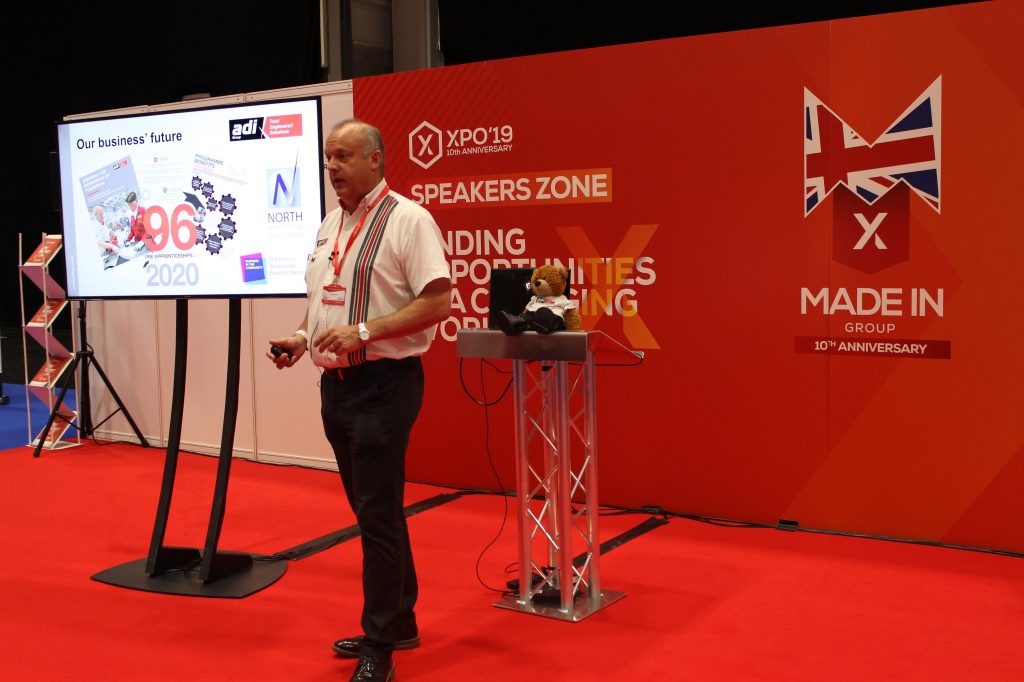
The national conversation around sustainability is too narrow in its scope, an influential leader from one of the Midlands’ premier engineering firms has told a gathering of key industry figures. Sustainability is a subject on everybody’s lips in business circles – and for good reason, with those working across many sectors increasingly doing their best to be sustainable. But our terms of reference and, therefore, our actions around sustainability are too limited, warned James Sopwith, Group Strategic Account Director of leading West Midlands multi-disciplinary engineering firm, adi Group. And he set out the business case for the much broader interpretation of sustainability that informs the firm’s strategic growth and skills objectives for the years ahead at the Made in the Midlands EXPO ’19. James was a guest speaker at a seminar during the tenth anniversary edition of the UK’s largest regional manufacturing and engineering exhibition, held at Coventry’s Ricoh Arena on Thursday 20 June. “People talk about carbon footprints and resource depletion, and rightly so,” said James. “Absolutely, we must take care of our climate and environmental responsibilities. “People talk about the financial stability of our businesses, and there’s nothing wrong with that. If we don’t generate a surplus, we can’t reinvest in order to grow. If we lose money, we perish. But, there, the sustainability conversation tends to stop. “However, we think there’s significant value, for everyone, in taking that conversation much further to introduce a range of interlinking, related ideas. We want to really open things up for discussion and for action. And we try to set an example. “At the adi Group, we believe the conversation around sustainability is too narrow in its scope.” The Birmingham-based firm, established in 1990, has long questioned conventional wisdom, incrementally developing over 30 expert specialisms in a challenge to the traditional UK engineering model of niche providers. Not satisfied with meeting and exceeding its commitment, as a member of The 5% Club, to raising their number of apprentices on formal programmes to five per cent of total staff within five years, or with attaining the coveted Ecovadis Gold Accreditation that places it in the world’s top one per cent most sustainable and engaging employers, the adi Group does something unique. Aiming to inspire young people to consider engineering as a career, the firm has teamed up with North Bromsgrove High School close to its Kings Norton HQ to give 14 to 16-year-olds hands-on experience in a real-life working environment. The youngsters spend half a day per week over two years learning in-demand hands-on electrical and mechanical skills from adi’s own in-house mentors, while still completing their other GCSE curricula, earning themselves an EAL qualification and making significant headway towards a Level 2 attainment in electrical and mechanical engineering. The pre-apprenticeship scheme, funded entirely by the firm, is three times oversubscribed and saw its inaugural 2016 intake graduate last year. Proof of the concept came when the group enrolled five of those 10 graduates onto its full-time apprenticeship programme. Thinking more broadly about sustainability has paid dividends in other ways too. Consistent double-digit year-on-year growth means the adi Group now has a team of over 660 highly skilled employees working from 12 facilities across the UK and the Republic of Ireland self-delivering robust turnkey solutions to clients in almost every sector. But the adi Group will not rest on its laurels. This is a business with serious long-term ambitions, intending, as James Sopwith puts it, to engineer a better future. The key to that lies in taking a broader view of sustainability. Manufacturing & Engineering Magazine | The Home of Manufacturing Industry News
Advanced Engineering Discusses the Importance of Women

On 23 June 1919, a committee of influential women sensed a new dawn. The First World War had ended, and significant steps had been taken towards women’s suffrage. The group, ranging from designers and munitions factory managers to wives of eminent engineers, rallied to found the Women’s Engineering Society (WES). 100 years later, progress for women in industry has often felt stagnant. Hetal Patel, Marketing Projects Manager for the UK’s largest annual manufacturing and engineering exhibition, Advanced Engineering, discusses the importance of women in engineering. As we celebrate the centenary of the Women’s Engineering Society, the fact that only eleven per cent of the UK’s engineers are female is a tough pill to swallow. The Society’s initial journal outlined its aims to “encourage and stimulate all women who are interested in engineering”, but today’s figures show that it’s often hard to see these efforts come to fruition. So, what can be done to nurture talent in this milestone year? The state of industry The UK has the lowest percentage of female engineers in Europe. As it stands, this figure isn’t set to rise any time soon. It’s estimated that less than eight per cent of engineering and manufacturing apprentices are female, with figures plunging to as low as two per cent in the building and construction sector. But the UK needs to significantly increase its number of engineers. The STEM skills shortage is costing businesses £1.5 billion in recruitment every year. For the engineering sector to reduce its skills shortage, it needs to employ around 186,000 recruits each year until 2024. Role models To inspire the future, we should reflect on the past. A lack of role models is often cited as a reason why women shy away from a career in this industry. However, the reality is that our engineering heroines are often unsung. The pressures of war drew many women to the home front, only for them to experience rebuke once men returned. In resistance, the founders of WES created a committee that promotes engineering as a rewarding profession for women as well as men. The original members of the group paved the way for women in industry. Renowned for her adventures as a pilot, Amy Johnson was a qualified engineer and WES president from 1933-34. Johnson’s campaigning inspired others such as Dorothy Spicer, another society member and the first person to hold all four types of aeronautic licenses. Whether it’s a female Doctor at the helm of the Tardis, or a woman encouraging the next generation of engineers, prominent role models need to be realised as figures of inspiration. Striking the balance If we are to progress, we must strive for a more balanced workforce that reflects the diversity of our society and invests in the development of all talented workers. McKinsey’s Delivering Through Diversity report states that many companies struggle to increase the representation of diverse talent and create truly inclusive organisational cultures to profit from diversity. Yet data from 2017 found that companies in the top-quartile for gender diversity on their executive teams were 21 per cent more likely to have above-average profitability than companies in the fourth quartile. To address the skills gap and boost productivity, companies need to act to diversify. The next generation International Women in Engineering day takes place on June 23. To encourage women to pursue a career in engineering, action has to begin as early as possible. Professor Karen Holford, Deputy Vice Chancellor at Cardiff University and voted one of WES’s most influential female engineers in 2016 explains that “the stumbling blocks are there from a very young age, such as girls not being given toy trains and cars to play with. It may sound like a small thing, but unconscious stereotyping is still holding girls back, without them even realising it. “Schools must ensure that teachers have the critical skills to teach the subjects needed for a career in engineering. Finally, companies need to do more to promote flexible working for both men and women. This way we can ensure that the burden of childcare is equally shared so that women aren’t out of the workplace for long periods. If we can solve these problems, I believe we’ll see a big increase in women choosing engineering careers and, even better, staying in them.”
Altair Brings Powerful Design and Engineering Software

Altair, a global technology company providing solutions in product development, high-performance computing and data intelligence, announced today the release of Altair HyperWorks™ 2019, the latest version of its simulation- and AI-driven product development software. The new release expands on the number of solutions available for designers and engineers, under a single, open-architecture platform, to speed decision-making and time to market. User experience advancements and intuitive workflows empower both expert and citizen analysts to streamline product innovation. “We want to help our customers explore more ideas, better understand their designs, and improve profitability,” said James Scapa, Altair’s chief executive officer and founder. “To achieve this, our development focus for HyperWorks 2019 was to increase solve speed and functionality across our solutions for every stage of product development with optimization and multi-physics workflows for all manufacturing methods.” Highlights of this release include: Fast simulation of complex assemblies Altair SimSolid™ makes designers and engineers more productive by performing structural analysis on original, un-simplified CAD assemblies in seconds to minutes. SimSolid can analyze complex parts and large assemblies that would take hours or days using traditional structural simulation tools. Easy-to-learn fatigue life prediction Altair HyperLife™ enables customers to quickly understand potential durability issues through an easy-to-learn solution for fatigue life under static, transient and vibrational loading. The intuitive user experience enables test engineers to perform simulations with little or no training. HyperLife helps customers to confidently predict product durability in hours, complementing physical testing, which can take months. Efficient workflows for multi-physics Altair SimLab™ is an intuitive workflow software for simulating multi-physics problems. Automatic feature and part recognition can make simulation cycles more than five times faster. Design exploration is easier with synching to popular CAD tools. The multi-physics workflows feature deeply embedded solvers; including statics, dynamics, heat transfer, fluid flow, electromagnetics analysis, fluid-structure interaction, and electromagnetic-thermal coupling. Superior high-fidelity modeling HyperWorks 2019 includes the most robust Altair HyperMesh™ version yet. New features enable the generation of the largest, most complex finite element models. The model build and assembly tools in HyperMesh make managing large, complex assemblies easier than ever. This allows CAE to keep pace with design changes by rapidly swapping new parts and assemblies into existing models, managing multiple configurations, mesh variants and part instances. The direct mid-mesh generation makes it possible to create shell meshes straight from solid geometry of complex castings and injection molded parts. Enhanced user experience for fast concept modeling The HyperWorks software already includes Altair Inspire™, Altair Activate™ and SimLab delivering class-leading solutions with intuitive and consistent user-interfaces. In this release Altair HyperWorks X is included with a new set of workflows for geometry creation, editing, morphing and meshing employing this same user experience. The easy-to-learn mesh morphing features of HyperWorks X will bring efficiency to teams working on simulation models early in product development. These workflows enable concept level changes to be made directly on an existing FEA model bypassing CAD generation and accelerating decision-making. Expanded non-linear solver functionality Analysis with Altair OptiStruct™ is increasing at companies performing stiffness, strength and fatigue-life simulations; fueled by the significant process improvement it provides. The single-model, multi-attribute workflow enabled by OptiStruct delivers time and cost savings. Design decisions can be made faster by engineers performing linear, non-linear, and durability analysis – using one optimization-ready model. Continued generative design leadership Altair has been the industry leader for generative design for more than two decades. Altair HyperWorks software optimizes structures, mechanisms, composites, and additive manufactured parts. Regardless of how your product is produced, HyperWorks can enhance creativity by proposing designs that are as manufacturable as they are efficient and innovative. “HyperWorks 2019 enhances the user experience for both experts and part-time analysts,” explained Scapa. “This release includes a new set of workflows for our flagship Altair HyperMesh product, making advanced analysis capabilities more accessible. In addition, the new Altair HyperLife product enables test engineers to perform fatigue simulations with minimal training.”
Inspiring the Female Future with Advanced Engineering 2019

On 23 June 1919, a committee of influential women sensed a new dawn. The First World War had ended, and significant steps had been taken towards women’s suffrage. The group, ranging from designers and munitions factory managers to wives of eminent engineers, rallied to found the Women’s Engineering Society (WES). 100 years later, progress for women in industry has often felt stagnant. Hetal Patel, Marketing Projects Manager for the UK’s largest annual manufacturing and engineering exhibition, Advanced Engineering, discusses the importance of women in engineering. As we celebrate the centenary of the Women’s Engineering Society, the fact that only eleven per cent of the UK’s engineers are female is a tough pill to swallow. The Society’s initial journal outlined its aims to “encourage and stimulate all women who are interested in engineering”, but today’s figures show that it’s often hard to see these efforts come to fruition. So, what can be done to nurture talent in this milestone year? The state of industry The UK has the lowest percentage of female engineers in Europe. As it stands, this figure isn’t set to rise any time soon. It’s estimated that less than eight per cent of engineering and manufacturing apprentices are female, with figures plunging to as low as two per cent in the building and construction sector. But the UK needs to significantly increase its number of engineers. The STEM skills shortage is costing businesses £1.5 billion in recruitment every year. For the engineering sector to reduce its skills shortage, it needs to employ around 186,000 recruits each year until 2024. Role models To inspire the future, we should reflect on the past. A lack of role models is often cited as a reason why women shy away from a career in this industry. However, the reality is that our engineering heroines are often unsung. The pressures of war drew many women to the home front, only for them to experience rebuke once men returned. In resistance, the founders of WES created a committee that promotes engineering as a rewarding profession for women as well as men. The original members of the group paved the way for women in industry. Renowned for her adventures as a pilot, Amy Johnson was a qualified engineer and WES president from 1933-34. Johnson’s campaigning inspired others such as Dorothy Spicer, another society member and the first person to hold all four types of aeronautic licenses. Whether it’s a female Doctor at the helm of the Tardis, or a woman encouraging the next generation of engineers, prominent role models need to be realised as figures of inspiration. Striking the balance If we are to progress, we must strive for a more balanced workforce that reflects the diversity of our society and invests in the development of all talented workers. McKinsey’s Delivering Through Diversity report states that many companies struggle to increase the representation of diverse talent and create truly inclusive organisational cultures to profit from diversity. Yet data from 2017 found that companies in the top-quartile for gender diversity on their executive teams were 21 per cent more likely to have above-average profitability than companies in the fourth quartile. To address the skills gap and boost productivity, companies need to act to diversify. The next generation International Women in Engineering day takes place on June 23. To encourage women to pursue a career in engineering, action has to begin as early as possible. Professor Karen Holford, Deputy Vice Chancellor at Cardiff University and voted one of WES’s most influential female engineers in 2016 explains that “the stumbling blocks are there from a very young age, such as girls not being given toy trains and cars to play with. It may sound like a small thing, but unconscious stereotyping is still holding girls back, without them even realising it. “Schools must ensure that teachers have the critical skills to teach the subjects needed for a career in engineering. Finally, companies need to do more to promote flexible working for both men and women. This way we can ensure that the burden of childcare is equally shared so that women aren’t out of the workplace for long periods. If we can solve these problems, I believe we’ll see a big increase in women choosing engineering careers and, even better, staying in them.” The Women’s Engineering Society will be exhibiting at Advanced Engineering from 30–31 October 2019 at the National Exhibition Centre, Birmingham. For more details on the show’s exhibitors, or to sign up to attend, please visit: www.advancedengineeringuk.com
New Engineering Practice Announces Its First Office
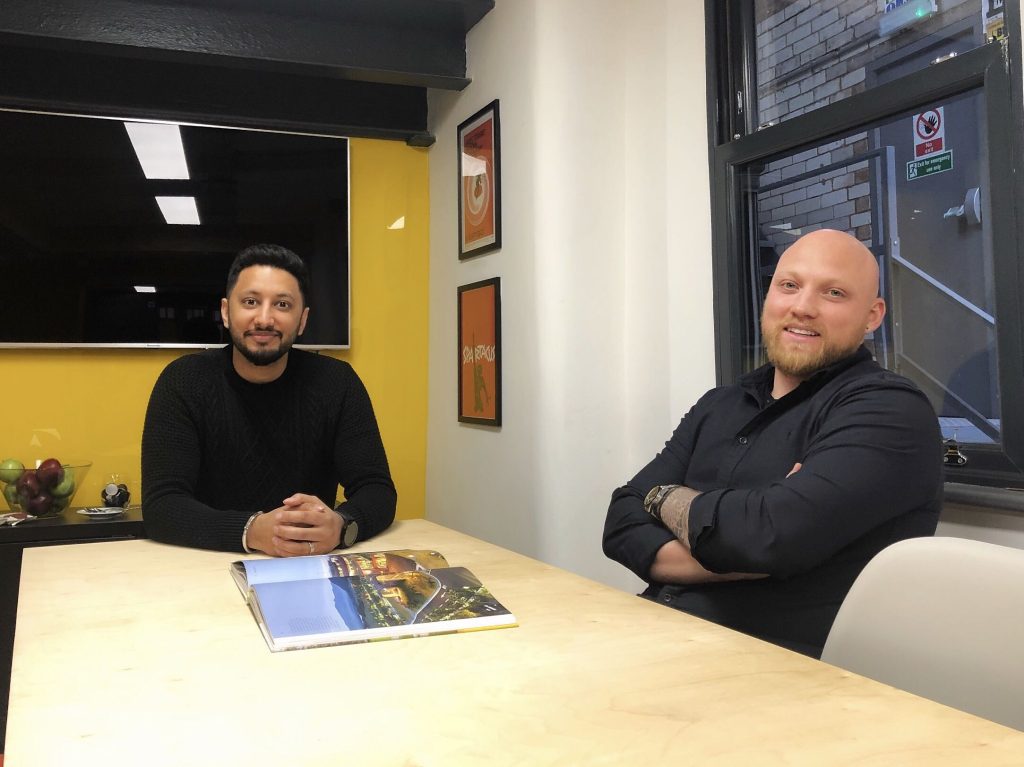
The current perception of engineering is that of a traditional industry; engineers with their heads buried in squared paper and visiting building sites in garish, yellow hard hats. But, in reality, it is a sector which is rapidly developing to meet the evolving requirements of clients, updates in technology, environmental changes and social factors; and a new, Nottingham practice plans on proving this. Dice, a new engineering practice, was set up less than 12 months ago and has recently moved into its first office. As the anchor tenant at Works Social – Nottingham’s newest co-working space – directors, Wayne Oakes and Raj Somal, now have big plans for the future of the business. “We’re delighted to now be in our first office in the Lace Market. We’ve always worked in Nottingham and Works Social is the perfect base for us – it’s a totally new concept for Nottingham; a dynamic, flexible space which suits us perfectly,” said Wayne. The East Midlands-based duo had always worked for large, established civil and structural engineering firms but had a firm belief that they could bring something different to the industry, which is why they’ve created a new concept for their engineering practice. Wayne added: “Raj and I have worked together for a number of years and, during this time, we’ve learnt a lot about what works and what doesn’t. “When we set up Dice, we knew we wanted to create a business that was honest and operated with integrity above all else – with customer service being at the heart of everything we do.” The duo have already developed an impressive portfolio, completing a range of services nationwide for PureGym, as well as working with Co-Op during its UK-wide store improvement programme and rationalisation of its existing stores. They are also involved in the new student residential development on Derby Road and a mixed use development on the Isle of Man. Wayne continued: “Sustainability is now more important than ever and goes beyond token gestures such as the installation of solar panels. There’s so much more potential with sustainable design now, which encompasses far more than just energy saving techniques. “We have a holistic approach to environmentally-sustainable designs, considering every facet of the environment, and actively look to incorporate at least one element of sustainability into every project we’re involved in. From Bee Bricks – designed to accommodate bees’ habitats inside bricks – to attenuation tanks made from soya beans, we want to push the boundaries of what has always been considered ‘the norm’. “As a business, we’re also aiming to be 95% paperless – incorporating sustainability into the fabric of the practice, not just in our work for clients.” A creative and agile approach to design and use of tech is what the industry needs in order to progress, the team at the new engineering practice believes. Raj added: “We need to inspire the next generation of engineers if we’re going to address the skills crisis we’re experiencing in the sector. Utilising technology to its full potential – promoting our industry as the modern, dynamic place to work it really is – is one way of doing this. “We use drone technology as well as design tools like Site 3D, Tekla Structures for completing designs, whilst drawing mark-ups are annotated on iPads. All of our technical drawings are produced in a traditional fashion but stored on cloud-based servers. “The business community in Nottingham has been really supportive and we’ve achieved a lot in less than a year. It’s a really exciting time for construction in the city – with the regeneration of the Southside of the city, all of the work happening within the vicinity of our Derby Road site, as well as the Boots Island site and Nottingham College work – so we look forward to seeing what the next 12 months brings.”
MCMT Holds Largest Career Day
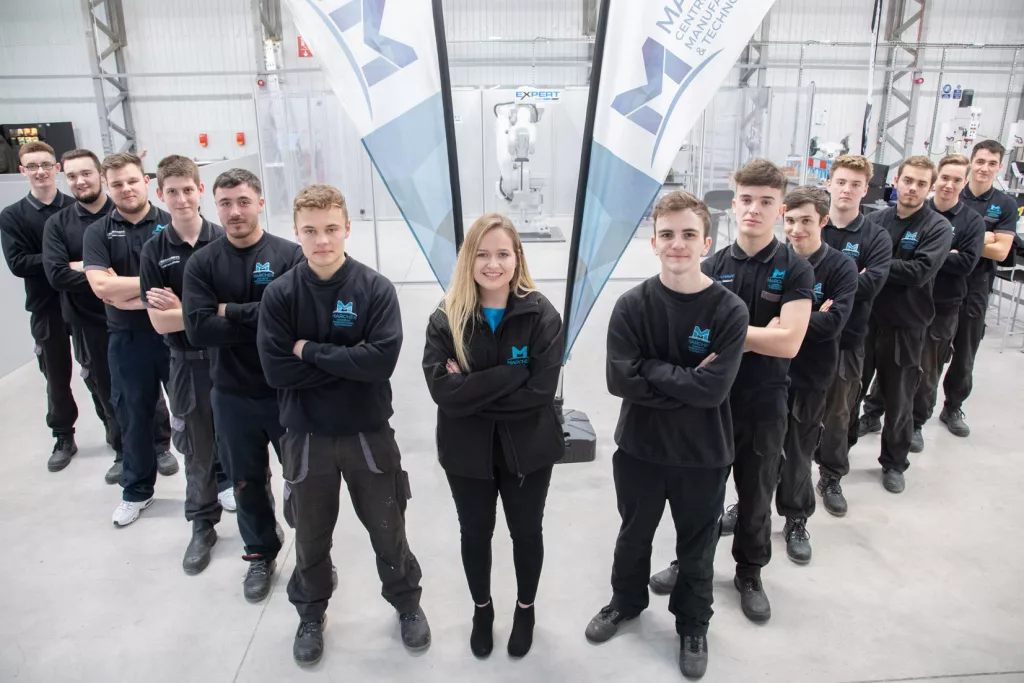
Shropshire’s largest dedicated career event for vocational learning in engineering and manufacturing is set to take place later this month. The Marches Centre of Manufacturing & Engineering (MCMT) will host a special day for young people and mature learners to explore the latest apprenticeship opportunities currently available in the county. Held on April 23rd between 10am and 3pm, the interactive event will assemble a large collection of employers looking to recruit future staff, as well as giving visitors a chance to look around the 40,000 sq ft training centre on the Stanmore Industrial Estate in Bridgnorth. There they will find over £4m of technology, including the latest metrology, a dedicated CNC zone, robotics and a recently installed electrical cell. “This is a perfect opportunity for local people to come down and see what an apprenticeship can offer them– and better still it’s all under one roof with numerous firms taking part, including Engineering Technology Group, Hyfore, and Guhring,” commented Matt Smallwood, Centre Manager at MCMT Shrewsbury. “We have over 40 different part and full-time Trailblazer apprenticeships currently available, ranging from machinist and mechatronics to a soon-to-be launched Heritage technician course that will look to replenish dying craft skills in automotive.” He went on to add: “Apprenticeships are a great way to set-out on a career path in industry that could lead to a good salary, international travel and the chance to design/make things that can change the way we all lead our lives. “And this isn’t just an opportunity for young people. We are also seeing an increase in older people choosing to use an apprenticeship as a way of retaining for a career in a different sector.” The Marches Centre of Manufacturing & Technology is an employer-led consortium of Classic Motor Cars, Grainger & Worrall, Salop Design & Engineering and In-Comm Training. It operates two state-of-the-art facilities in Bridgnorth and Shrewsbury and was set-up to help bridge the skills and competency gaps found in local industry, providing apprentices and thousands of upskilling opportunities between now and 2020. This is the first time it has put on a dedicated Careers Day and trainers will be on hand to discuss courses on offer, whilst a number of apprentices will give a first-hand insight into learning at MCMT. Manufacturing & Engineering Magazine | The Home of Manufacturing Industry News
Engineering Firm Raises Thousands for Children’s Hospice

Staff from leading engineering solutions provider Boulting Ltd., which has offices around the UK and its headquarters in the North West, have completed a series of fundraising events and activities, raising almost £6,000 for Liverpool-based Zoe’s Place Baby Hospice. Employees from Boulting Ltd’s numerous sites across the UK have organised a series of fundraising activities throughout 2018 to raise £5,690 for the charity. Staff arranged dress down days, cake and coffee mornings and participated in a version of the iconic It’s a Knockout game show. The money raised has been donated to children’s charity, Zoe’s Place Baby Hospice, which provides respite, palliative and end of life care for babies and infants age zero to five suffering from life limiting or life-threatening conditions, as well as family and bereavement support. Boulting Ltd works across numerous industry sectors, offering engineering services including mechanical, electrical and instrumentation, as well as maintenance and project management support. Staff at Boulting have raised money for a different charity every year since 2011. “Our annual fundraising started after one of our colleagues had a baby girl who was born prematurely,” said Boulting Ltd. purchasing manager, Lianne Cross. “We decided to raise money for the neonatal unit where she was being looked after and raised over £2,400. “Every year the fundraising efforts have grown, and the staff really get involved in raising money. The charity for the year is decided through a staff vote, where employees can nominate charities that are special to them,” Lianne continued. “Fundraising at Boulting is companywide and runs from January to December every year. Other fundraising activities throughout 2018 have included opening a tuck shop selling snacks as well as a book library. A few of my colleagues even raised money by taking part in a spooky night time tour around an old asylum. “We delivered the cheque to Zoe’s Place in February,” Lianne said. “When we visited, they gave us a tour of the hospice and we were able to meet some of the children and the nurses. It was a pleasure to see where our donation will go.” “We are a free of charge service to those who need us”, said corporate and events fundraiser for Zoe’s Place, Natasha Baggaley. “This means we have to raise £1.6 million a year, just to keep the doors to our hospice open; that’s £4,500 a day. “The donation from Boulting means that we can continue to provide the care our families rely on. This donation will help us to continue to support our babies and their families throughout 2019, so we can’t thank them enough.” Staff at Boulting have already selected their chosen charity for 2019 — The Bloom Appeal, a blood cancer patient support and clinical research charity.
World Bank Signs Agreement to Use FIDIC Contracts

International engineering federation FIDIC (the International Federation of Consulting Engineers) has secured a major agreement with the World Bank that will see the international funding organisation adopt the use of six FIDIC standard contracts for the next five years. Under the terms of the agreement, FIDIC has granted the World Bank a non-exclusive licence to refer to the six major FIDIC contracts (see list in notes below) for projects they finance and the documents will be used as part of the bank’s standard bidding documents. The contracts mainly include the 2017 Second edition FIDIC contracts, which cover a wide range of international construction and infrastructure work, and the World Bank’s move represents a major endorsement for the contracts from a major international funding organisation. FIDIC also expects to announce a similar agreement with the other multilateral development banks. FIDIC chief executive Dr Nelson Ogunshakin said: “This is a major development for FIDIC and we are delighted that the World Bank has agreed to adopt our 2017 editions of the Rainbow suite of contracts and use them as a key part of their standard bidding documents. This will create more certainty in the market as by adopting the FIDIC contacts on major projects the World Bank is saying that they endorse the fair and balanced approach that these documents offer to parties on major construction contracts. The familiarity that the FIDIC contracts bring make it easier to get projects underway as many of the typical commercial risks are clearly addressed in the contracts and all the parties understand their obligations and responsibilities. “Endorsement by the World Bank should provide additional comfort to the financial, institutional and private equity investors operating in the global market to adopt the use of FIDIC standard procurement contracts as an effective tool to mitigate the risk associated with investable infrastructure asset class. Over the coming months, we will be working with our member associations and strategic partners to ensure that the FIDIC 2017 contract editions are translated into five major languages – Arabic, Chinese, French, Portuguese and Spanish – to aid effective use across the World Bank and other multilateral development banks’ operating countries.” Commenting on the signing of the agreement, Enzo De Laurentiis, chief procurement officer at the World Bank, said: “We are very pleased to continue to build on our long collaboration with FIDIC by adopting the standard conditions of contracts in the 2017 suite for use in projects financed by the World Bank, as appropriate and complemented by our Conditions of Particular Application (COPA). Together, the 2017 FIDIC standard conditions and our COPA, will ensure that infrastructure contracts financed by the World Bank continue to be based on an internationally recognised standard and reflect key aspects of our policies and practice related, among others, to managing environmental, social and integrity risks.” FIDIC president Alain Bentéjac said: “This move by the World Bank represents major international market buy-in for our FIDIC 2017 Second edition contracts and one that we hope will also influence the supply chain to adopt FIDIC contracts thereby creating even more certainty in the planning and delivery of major international construction and infrastructure projects. We look forward to continuing our strong partnership with the World Bank and the other multilateral development banks (MDBs) over the coming years.”
Men in Engineering Earn 30% More Than Women

Men in engineering earn up to 30% more than women in the same roles, revealed a new research conducted by on of the UK’s largest accountants. Hemel Hempstead-based SJD accountants has analysed salaries of both male and females in the sector revealing some astonishing figures. According to the analysis, females with job titles such as mechanical engineer or maintenance engineer earn almost a third less than males with the same occupation. “The gender pay gap has been a topic of increasing conversation, putting the difference in salary into real terms has been shocking. This information now highlights the genuine impact that this can have not only on employees but their families and long-term prospects,” commented Derek Kelly, CEO of Optionis which owns SJD Accountancy. The gender pay gap has been an increasingly important and developing conversation for a number of years within the media and government. Increasing pressure has been put on businesses to disclose their gender pay gaps and redress the balance to aim for more equal pay. The survey by SJD Accountancy saw more than a 1,000 contractors questioned, and data gathered on their salaries to create a better picture of which sectors are closing the gap and which are still struggling to find parity. To find out more details about your industry and the gender pay gaps SJD has launched an interactive tool, visit www.sjdaccountancy.com/gender-pay-gap-tool for more information. “The tool helps to give workers, whether in permanent or temporary roles, more of an insight into the pay gap within their industry. This improves understanding of the pay issues within certain sectors,” explained Mr Kelly.
BakerHicks Appoints Business Development Director

John Lawton has been appointed by BakerHicks, the multidisciplinary design and engineering company, as Business Development Director to support the continued success and growth of the business across its key sectors. John will specifically support the company’s business development and management teams in implementing their respective sales and marketing strategies within the Aviation, Defence, Life Sciences & Manufacturing, Nuclear, Power, Public Sector and Rail industries across the UK and the D-A-CH (Germany, Austria and Switzerland) region. The role reflects John’s own experience in successfully running operational and sales teams in Europe, Ireland and Asia Pacific, most recently for Jacobs, where he spent more than 20 years of his 30 year career in a number of roles, latterly as Vice President of Strategy. “John’s expertise is closely aligned with our sector-led approach. He brings a depth of knowledge and experience that will be crucial as a client advocate, challenging our teams to deliver the best outcomes for our customers,” said Martin Lubieniecki, managing director of BakerHicks. “He has already been supporting our Life Sciences & Manufacturing team in developing its growth strategy since the start of the year. In his new role, he will extend this to the company as a whole, working closely with our leadership team to identify further opportunities for growth and evolving the services we provide,” Martin added. John, a Chartered Electrical Engineer by profession, is a member of the Institution of Engineering Technology (IET). Manufacturing & Engineering Magazine | The Home of Manufacturing Industry News