


Engineering Group Avingtrans Reports Revenues of Over £100M

Cambridgeshire-headquartered engineering group Avingtrans has seen revenues jumping past the £100 million milestone, with the business also returning to the black. Avingtrans generated revenues of £105.5 million, up from £78.9 million 12 months prior to the year to 31 May 2019. The business also reported a pre-tax profit of £3.1 million compared to a loss of £4.5 million in 2018. Gross margin improved to 26.7 per cent from 25.5 per cent. Avingtrans chairman Roger McDowell hailed the “record year” and said acquired companies were performing well. “The former Hayward Tyler Group (HTG) businesses performed very well in their first full year with the group and the Ormandy turnaround produced a solid, if modest profit in its first full year since acquisition in February 2018,” he added. “The recent, tactical acquisitions of Tecmag, Texas; Booth, Bolton, UK; and Energy Steel, Michigan are all integrating well thus far.” McDowell said Brexit and “tariff wars” are “unwelcome distractions” to Avingtrans. “But they will not cause us to deviate from our well-planned course,” he said. “Despite the chill in the macroeconomic air, we remain quietly confident about our prospects in both energy and medical, with our strong balance sheet allowing us to be both agile and resilient. Recent order wins and our pipeline of opportunities underpin that outlook.” As a result of its performance, Avingtrans has proposed an increased final dividend of 2.4p per share, bringing its total dividend to 3.8p, up from 3.6p. Manufacturing & Engineering Magazine | The Home of Manufacturing Industry News
Systra Acquires Engineering Firm TSP Projects

Systra Acquires Engineering Firm TSP Projects : Systra has acquired engineering firm TSP Projects. It will enable the firm to double the size of its UK & Ireland operations. It is the company’s first major engineering acquisition in the UK and follows the acquisitions of SIAS Transport Planners in 2016 and JMP Consultants Ltd in 2015. TSP Projects will continue to operate as TSP Projects and run as a business unit of its UK & Ireland operations. The combined company will provide clients with a complete end-to-end service spanning every aspect of rail projects, as well as specialist understanding of mobility and complex infrastructure. It will deliver expertise across the full project lifecycle, from strategic advisory and design to systems integration, programme and construction management, testing & commissioning, and asset management. The combined company will also give clients access to new digital services, smart technologies, international expertise and proven innovation developed across Systra’s global portfolio of mass transit and mobility projects. UK clients will benefit from high-end, specialist technical expertise and high-quality production capacity across the full spectrum of design, engineering and programme/construction management. Serving infrastructure owners and operators, as well as contractors, the combined company will deliver specialist design & build, lead designer and programme management services. Pascal Mercier, Systra Ltd CEO said: “As the signature team for transportation solutions, SYSTRA is committed to providing clients with truly specialist expertise, delivered locally. This acquisition is a gamechanger for our UK & Ireland business, placing us among the leading UK consulting engineering firms. This is a good fit between two like-minded companies with a shared commitment to excellence, safety and innovation.” Manufacturing & Engineering Magazine | The Home of Manufacturing Industry News
Renishaw Supports INEOS TEAM UK in America’s Cup bid

Global engineering company Renishaw is supporting Sir Ben Ainslie and INEOS TEAM UK in their bid to bring the America’s Cup home to Britain. As the team’s official precision measurement and additive manufacturing (AM) partner, Renishaw will contribute its engineering expertise to aid and fast track the build process as they bid to win the 36th America’s Cup in 2021. Renishaw is a world-leading engineering business with core expertise in precision measurement and position encoding. The company is also the only UK manufacturer of metal additive manufacturing machines, which it produces at its plant in Miskin, South Wales. The America’s Cup is the oldest international trophy in world sport and one that Britain has never won. First won by America in 1851, the competition was turned into a challenge trophy, open to sailing clubs from around the world. INEOS TEAM UK was formed to challenge for the America’s Cup in 2021, with petrochemical and manufacturing company INEOS making the biggest ever investment in the competition. British sailing legend and INEOS TEAM UK Principal, Sir Ben Ainslie, will skipper the yacht. The AC75 boat will be a 75-foot foiling mono-hull built and equipped with some of the best of British technology. To aid the team in building the technologically advanced boat, Renishaw is supplying its products and expertise in the fields of metal additive manufacturing, position encoders, manufacturing process control and Raman spectroscopy. This will include contributing to the design optimisation and manufacture of 3D printed metal parts, for example structural components; digital position feedback to improve the boat’s performance, including monitoring control surfaces; and material analysis. “Renishaw is proud to again contribute our expertise to the British America’s Cup challenge, having supported Sir Ben’s team for the 2017 challenge in Bermuda,” explained Chris Pockett, Renishaw’s Head of Communications. “It means a great deal to us that our past contributions have been recognised and that we will be a key partner for INEOS TEAM UK, providing a range of innovative solutions and becoming an integral part of its engineering team.” “Leading manufacturing technologies are crucial to the performance of the boat,” added Pockett. “From giving real-time position feedback during racing, to the use of metal additive manufacturing for lightweight, highly complex components, we are very excited about the contribution that we can make to the performance of the boat.” Sir Ben Ainslie, Team Principal and Skipper of INEOS TEAM UK, said, “We’re really excited to be working with Renishaw. They’ve been a fantastic partner to us and we’re really looking forward to the challenge to bring the Cup home in 2021 with their support.” “We chose to work with Renishaw because they have such a breadth of world-class engineering and scientific design knowledge,” added Mark Chisnell, Technology Coordinator at INEOS TEAM UK. “They are a fantastically resourced company with great facilities and people.”
adi Group Looking at the Future with Pre-Apprenticeship Scheme
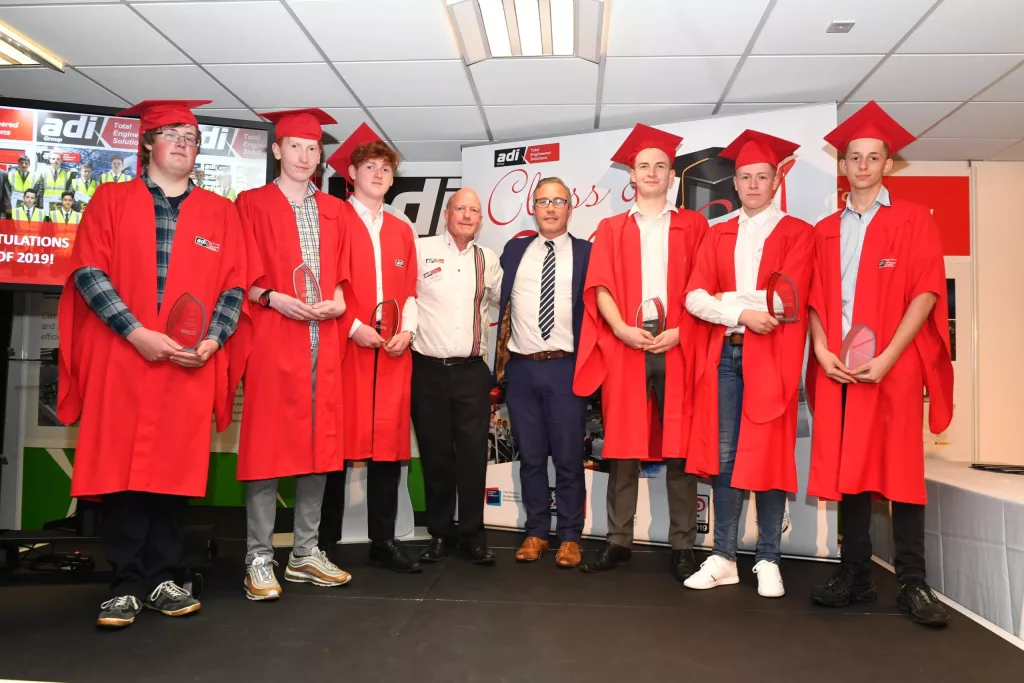
A leading engineering firm’s commitment to addressing the UK skills gap has been celebrated with the graduation of 11 students from its pioneering pre-apprenticeship scheme. In front of a packed audience of influential business leaders, mentors and proud parents, the youngsters, donning university-style graduate gowns, collected their course certificates at adi Group’s headquarters in Kings Norton, Birmingham. And, underlining the scheme’s achievements, it was announced on the night that two lucky students would move on to a full-time apprenticeship at the multi-disciplined engineering firm. Discussing his achievements, Bromsgrove student Lewis Smith, 16, said: “It’s really been a unique experience. I know now that when it comes to applying for full-time work in the future, I’ll have something over the competition. “Mechanical and electrical engineering are two sectors to get great experience in, so I’m really looking forward to what the future might hold.” “Everyone was really welcoming and friendly,” said 16-year-old Travis Cashmore about the experience. “The mentors made it really easy to get used to the work, so I do feel like I have some great skills to take into full-time work.” The firm’s pre-apprentice scheme, which was the first to launch in the UK, offers local students aged 14 to 16 the chance to learn hands-on engineering skills in a real working environment. For one afternoon a week for two years, talented youngsters get the chance to earn an EAL accredited qualification. Past students on the successful programme have included 17-year-old Abbie Beaver, now a fabrication and welding apprentice at the firm, and one of the top female engineers in the UK, as named by the Women’s Engineering Society. Commenting on the night and the students’ achievements, adi Group strategic account director James Sopwith said: “At adi we firmly believe in the need to expose youngsters to potential new career pathways at a much earlier age. “Last night was not only evidence of the success of our approach, but also a demonstration of how committed we are to making our communities much more sustainable. “Our investment in these students extends far beyond just delivering quality local jobs, it’s also part of an ethos here at adi to engineer a better future, where businesses and schools of all sectors work together to improve prospects across the region. “As a company that works with some of the biggest brands in the world, we’re looking forward to showing these students even further the exciting work available on UK soil.” Far from just being just an adi initiative, the company has drawn up a guide for other UK businesses to copy their model and create similar partnership with local schools. The scheme is especially relevant after Government figures recently revealed that over 20,000 engineering candidates would be needed annually to fill roles at companies in the West Midlands alone. As one of the companies that has already exceeded its commitment to having five per cent of its full-time workforce made up of apprentices by 2020, James is confident adi is delivering on the youth skills front. “We’ve really been ahead of the curve when it comes to apprenticeships,” he said. “What we’re hoping to do is equip thousands of young people with the practical skills that businesses need, but we can’t do it alone. “Right now, we’re calling on companies across the region to follow the path we have set up with pre-apprenticeships and address the UK skills gap before it is too late.” The adi Group is a major Birmingham engineering firm with over 30 specialist divisions serving household names across the UK and the Republic of Ireland. Manufacturing & Engineering Magazine | The Home of Manufacturing Industry News
FIDIC Launches Golden Principles to Safeguard Integrity of Its Documents

International engineering federation FIDIC (the International Federation of Consulting Engineers) has launched its Golden Principles to set out the essential characteristics of its general conditions of contract that should not be amended if the contract is to be regarded as a genuine FIDIC contract. In a bid to safeguard the integrity of FIDIC contracts and to ensure that employers, contractors and the public are not misled about what is and what isn’t a bone fide contract, the FIDIC Golden Principles outline the essence of a contract and articulate those essential characteristics of FIDIC’s general conditions that should not be amended if it is to be recognised as a FIDIC contract. The Golden Principles are the output of the work of a FIDIC task group (TG15) which looked at the essential characteristics of FIDIC contracts that must not be amended if it is to be recognised as a genuine contract. Task group chair Husni Madi, who is also the CEO of Jordan-based Shura Construction Management, explained the thinking behind the principles. “More and more frequently, FIDIC has been experiencing applications of ‘FIDIC contracts’ where significant changes to the General Conditions are made by means of replacing, changing or omitting parts of the wording through the Particular Conditions,” said Madi. “The replacements and changes introduced have lately been found to be substantial and of such extent, that the final contract no longer represents the FIDIC principles, and thus are jeopardising the FIDIC brand and misleading tenderers and the public. “That’s why the FIDIC contracts committee set up a special task group to identify which contractual principles of each form of contract FIDIC considers to be inviolable and sacrosanct. These principles are now referred to as the FIDIC Golden Principles and are available as a free download from the FIDIC website. Put simply, it’s not a FIDIC contract without the Golden Principles,” Madi said. The Golden Principles were launched at the Asia Pacific Contract Users’ Conference in Hong Kong on 25 June 2019. The 12-page guide, They (First Edition 2019), outline the five Golden Principles and explains in detail the reasoning behind each of them. In order to promote acceptance and understanding: the GPs are formulated at a conceptual level to encapsulate the essence of a contract; each GP expresses a single, readily understood and generally accepted concept; the GPs are limited to the minimum number necessary for completeness. The guide makes the point that minor additions or grammatical changes to the wording of a General Conditions sub-clause that do not alter the intent are not a breach of the GPs. However, such cosmetic changes should only be made for good reasons, the guide advises. All five Golden Principles are listed below. The Golden Principles GP1: The duties, rights, obligations, roles and responsibilities of all the contract participants must be generally as implied in the General Conditions, and appropriate to the requirements of the project. GP2: The Particular Conditions must be drafted clearly and unambiguously. GP3: The Particular Conditions must not change the balance of risk/reward allocation provided for in the General Conditions. GP4: All time periods specified in the contract for contract participants to perform their obligations must be of reasonable duration. GP5: Unless there is a conflict with the governing law of the contract, all formal disputes must be referred to a Dispute Avoidance/Adjudication Board (or a Dispute Adjudication Board, if applicable) for a provisionally binding decision as a condition precedent to arbitration.
BAE Systems Calls for Nationwide Effort to Develop Skills for Industry 4.0
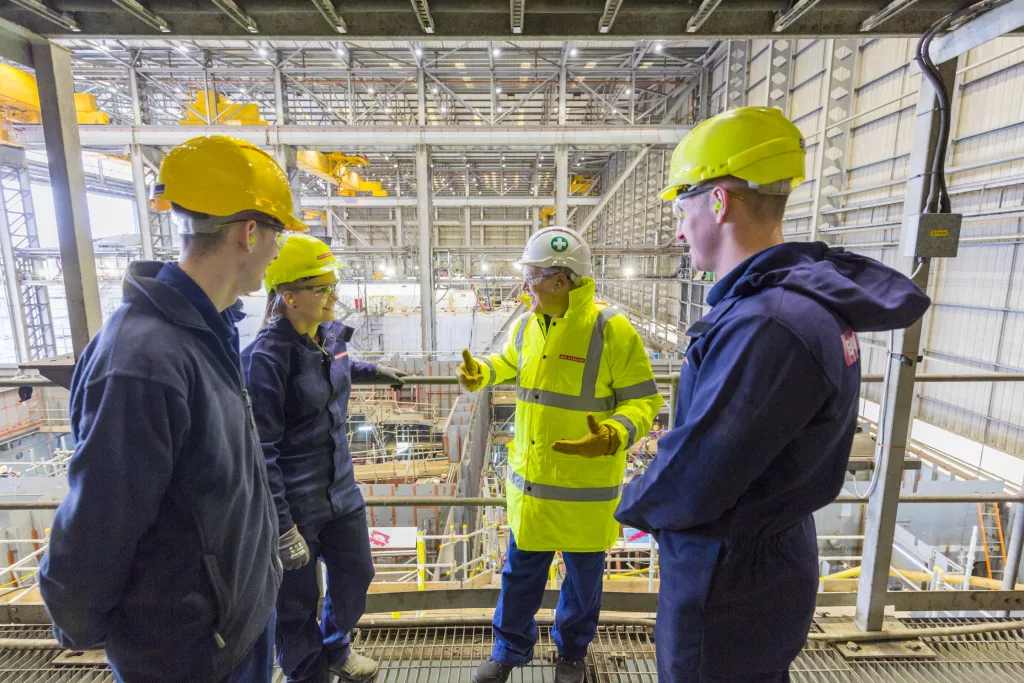
BAE Systems Calls for Nationwide Effort to Develop Skills for Industry 4.0 : BAE Systems has called today for a concerted and co-ordinated effort by industry, Government and the education sector to ensure the UK can fully benefit from the digital revolution and Industry 4.0. Nigel Whitehead, Chief Technology Officer at BAE Systems, stated that defence, aerospace, engineering and manufacturing sectors need to work together and prioritise investment in digital and ‘soft skills’, upskilling and retraining and supporting supply chains and SMEs, to respond to the expected levels of complexity in industrial and business systems and unprecedented demand from technologies such as artificial intelligence, for the Industry 4.0. Mr Whitehead also suggested that businesses in these sectors need to create a more diverse, inclusive and flexible workplace by reflecting different working preferences and lifestyles. To help address the UK’s shortage of engineers, he called for a nationwide programme of activity to improve the perception of science, technology, engineering and maths (STEM) subjects and careers and for the engineering industry to consider recruiting more people with highly applicable skills that traditionally are more associated with arts subjects, such as creativity and problem solving. In its whitepaper – ‘Future Skills for our UK Business’ – BAE Systems sets out six guiding principles for the development of skills in the UK in an environment of rapid technological change and fierce global competition: 1. Create a more diverse, inclusive and flexible workplace for the employees of tomorrow; the UK must attract and retain top class talent; 2. Commit to retraining and upskilling; it is vital for innovation and growth that employees continue to learn throughout their careers; 3. Prioritise investment in digital, soft and behavioural skills; to give the employees the broad range of technical and people skills needed to succeed in the modern workplace; 4. Continue to support suppliers and the SME community so that they can develop skills in the digitally-enabled workplace; successful and innovative partners help the UK economy thrive; 5. Continue to improve the perception of STEM subjects and careers; encouraging graduates and young people into a dynamic and rewarding industry; 6. Continue to champion vocational training; working with Government to ensure training is funded and prioritised. At a launch event hosted at the Company’s state-of-the-art Academy for Skills & Knowledge in Samlesbury, Lancashire, Nigel Whitehead, said: “I am personally really excited by the opportunities in today’s highly connected world and what the future will bring, but we cannot be complacent. By taking tangible action now and capitalising on the ambition of young people coupled with the UK’s traditions and advantages – education, strong legal frameworks, technical innovations and leadership – we can exploit the digital revolution and compete on the world stage.” Joining Mr Whitehead at the event in Samlesbury, Dr Hayaatun Sillem, Chief Executive of the Royal Academy of Engineering added: “Failure to successfully prepare for the impact of technological disruption means we will put at risk our ability to benefit from the opportunities created by digital transformation and other waves of technological change.” BAE Systems invests £90m annually in skills in the UK, providing world-class training facilities for its employees and education to ensure its current and future workforce are trained to the highest standards. At any given time, there are approximately 2,500 apprentices and graduates in training across its UK business. Manufacturing & Engineering Magazine | The Home of Manufacturing Industry News
Advanced Engineering Returns with the Medical Device Engineering Zone

The UK’s largest annual gathering of engineering professionals, Advanced Engineering, is back and bigger than ever on October 30 and 31, 2019 at the NEC, Birmingham. With a two-day attendance of some 15,000 engineering professionals, the eleventh edition of the trade show will provide companies with the opportunity to meet with OEMs and supply chain partners from sectors spanning the engineering industry. Bringing together thousands of attendees, Advanced Engineering incorporates all aspects of engineering, from design, test and measurement, inspection, materials and production, within aerospace, automotive, marine, medical and many more. At the show, representatives from across the entire supply chain of the UK’s advanced engineering industry will present their latest innovations and business developments in front of some of its most influential stakeholders. Not only has the show enjoyed growth in terms of its visitors over the past decade, but its floor space is also undergoing continuous expansion. Once a single show with 80 exhibitors, Advanced Engineering now features multiple co-locating zones under one roof, covering the industry’s most advanced and noteworthy sectors including aerospace, automotive, connected, composites and performance metals. This year, the latest zone additions are the Medical Device Engineering Zone and the revamped Enabling Innovation area, which will join the likes of aerospace, performance materials and nuclear engineering to host manufacturers and their new technologies in front of a targeted and enviable audience. Supported by Medilink, GTMA, Gambica and other UK trade bodies, the new Medical Device Engineering Zone is in response to the rapid growth of the industry and will welcome manufacturers looking to showcase their innovations in this booming area of engineering. Visitors will also have the opportunity to visit the Medical Device Engineering Open Forum to discover how medical technology is going to develop further in the future. With seven shows under one roof, attendees will be able to access all their business solutions in one place — providing them with expertise from the breadth and depth of the advanced engineering industry. “In times of uncertainty, whether that’s in the marketplace, innovation or the choice of technologies available to you, industry leaders suggest that those who strive to invest will overcome doubt and make profit,” explains Jeremy Whittingham, Head of Marketing at Advanced Engineering. “That’s why we believe in supporting and demonstrating the UK’s flourishing engineering markets here at Advanced Engineering. To do this, we’re expanding the show’s offering to keep pace with the burgeoning growth of the UK’s industry. “As a visitor, you have the chance to engage with OEMs and supply chain partners from sectors spanning design, test measurement, inspection and production, in industries that range from aero, automotive, motorsport, composite materials, civil nuclear and renewable energy, rail, marine, space and more,” explains Whittingham. “Last year, the show enjoyed a ten per cent rise in OEM and tier one manufacturer attendance compared to its previous year, leading exhibitors to book at a record rate for 2019’s show. With companies keener than ever to attend and exhibit at the show, Advanced Engineering is certainly positioned as one of the must-visit events of the year.”
Simplified Programming Could Improve Britain’s Robotics Adoption

Until recently, the Industrial Revolution was largely associated with drastic engineering efforts that transformed Britain’s industry. Two centuries later, we are experiencing another shift in global manufacturing, the Fourth Industrial Revolution (4IR). Nigel Smith, managing director of industrial robot distributor TM Robotics, explains how Britain can reclaim the robotics revolution with simplified robot programming. According to the International Federation of Robotics (IFR), Europe is the second largest market for industrial robot sales. Purchasing 56,000 units in total in 2017, Europe reached a new peak for robot sales for the third year in a row. That said, much of this deployment was attributed to Germany, so where does this leave us Brits? Initiatives for digitalisation Britain is no stranger to the Fourth Industrial Revolution, Industry 4.0 or whatever you wish to call today’s changes in manufacturing. In October 2017, the British Government announced its first major initiative to improve digitalisation in manufacturing, the Made Smarterreview. Made Smarter called to boost productivity by encouraging manufacturers to embrace industrial digitalisation technologies (IDTs) — which includes robotics, automation and intelligent control software. The review suggested that a greater uptake of these technologies could create 175,000 new jobs in the next decade, because of a 25 per cent productivity boost in the sector. Efforts of the Made Smarter review were bolstered in January 2018, when the World Economic Forum (WEF) in Davos released its first ‘Readiness for the Future of Production Report’. The report outlined how well-positioned economies are to benefit from Industry 4.0 technologies. The United Kingdom claimed a space in the top 25. However, six months later in June 2018, the initial findings of the IFR’s World Robotics Report 2018 suggest that as it currently stands, the same nations are still leading robot sales. Germany has remained Europe’s forerunner with a total of 22,000 robot units sold. To put that into perspective, that represents over a third of Europe’s total robot purchases. Much of this success may be due to Germany’s booming automotive industry, where manufacturers have long used six-axis robots in their production. Looking to the future, increasing the volume of robot deployment in Britain will rely on tapping into new markets by introducing small to medium-sized companies to automation. Simplified programming To reach this market, industrial robots must become more accessible, in relation to both cost and user experience. According to TM Robotics’ Global Robotics Report 2018, simple programming was one of the most important features for end-users when choosing a robot. In fact, 79 per cent of respondents named this as a top five consideration. Currently, there are over 1,500 different programming languages in the world. Even for the most proficient robot engineer, learning every potential robot programming language is an impossible and impractical task. For new automation users, such as the small to medium-sized market, this can be incredibly daunting. BASIC and Pascal are the basis of several industrial robot languages and tend to be the first any budding robot programmer begins to learn. BASIC, standing for Beginners All-Purpose Symbolic Instruction Code, is relatively simple, but can also be considered outdated for today’s demanding robotic applications. Simple programming may be a top priority, but today’s end users also don’t want to compromise on robot ability — particularly for their first robotic investment. Therefore, a balance needs to be struck. Toshiba Machine’s controllers, for example, are programmed in SCOL. This is a programming language that is similar to BASIC, but with more advanced features. In fact, Toshiba Machine’s latest robot programming software, TSAssist, has been designed around usability. By opting for intuitive screen design and customisable operator panels, beginners find it easy to understand. TSAssist is compatible with any of TM Robotics’ industrial robots, including the extensive SCARA, Cartesian and six-axis ranges. To cobot, or not Growing demand for easily programmable robots is also evident in the rapid increase in sales of collaborative models — robots that can work without protective barriers between machine and employee. Collaborative robots, or cobots, currently account for 3 per cent of the total robotics market, but this figure is expected to reach 34 per cent by 2025. These machines have been marketed as easy to program, but despite this, they should not be considered as a total alternative to traditional industrial robots. While cobots do boast some impressive responsive features, these machines generally cannot tackle the dangerous, repetitive and heavy-duty tasks usually associated with industrial robots — and this is something that new automation users aren’t always aware of. In fact, 55 per cent of respondents to the Global Robotics Report do not believe that cobot technology is advanced enough to deliver the performance required for manufacturing, and a further 25 per cent were unsure of their capabilities. To encourage investment from small and medium-sized businesses, robot manufacturers must ensure their machines are easy to program and don’t intimidate potential automation users. What’s more, unlike the large-scale automotive manufacturers of Germany, Britain’s robot customers may require more consultation and guidance to choose which robot is right for them — a cobot, or not. The IFR predicts that the world will experience a further robotics boom in 2019, with an estimated 2.6 million robot units set to be deployed. Regardless of the initiatives and investments in place to encourage Britain to embrace robotics, efforts must begin with robotics manufacturers themselves. Simplified robot programming is key.
Future Face of Engineering at HS2 Has Been Revealed

Marking International Women in Engineering Day (INWED) on Sunday 23 June, HS2 Ltd has produced a short film which subverts the stereotype of what an engineer looks like, challenging the out-dated masculine preconceptions of an industry that is rapidly becoming more gender-inclusive. The short film stars Clara Lenzi, a Project Management apprentice at Britain’s new high speed railway and was filmed on location at the future location of HS2’s super-hub at Old Oak Common. Demolition of the former sheds at the one-kilometre long site in London is now well underway, ready for construction of what will be one of the best connected rail stations in the country. Currently, the number of female professional engineers in the UK is around 12 per cent, which is the lowest in Europe. However, 30,000 people will play a role in designing and delivering the new backbone to Britain’s railway, and HS2 is making steps to ensure that local people, under-represented and disadvantaged groups are among them, which in turn is helping to reduce gender disparities within the industry. Mark Lomas, Head of Equality, Diversity and Inclusion (EDI) at HS2 Ltd, said: “From procurement to training, inclusivity is at the heart of all that we do. Initiatives such as the establishment of a Gender Balance Network and a blind auditioning pilot have seen HS2 recognised this year as the number one gender-inclusive employer by Vercida for our approach to tackling these inequalities. “Elsewhere, our education programmes and curriculum-linked materials are helping showcase the benefits of a career in science, technology, engineering and maths – or STEM – to young people up and down the country.” As part of its drive to encourage more women to consider a career in the construction industry, HS2 Ltd has worked in partnership to deliver a six-week pilot employability programme in the West Midlands. Fifteen women signed up to the programme and two have already been offered full time positions within the construction industry ahead of their placements finishing next week. Clara Lenzi from London was keen to spearhead HS2’s INWED campaign as she attributes the new railway’s role in attracting more women into traditionally male-dominated sectors as a reason for joining the project. Gaining two years’ experience, in addition to a qualification, has helped the 21-year-old build her skills to progress in the industry, an advantage she feels she has on those coming straight from university. Clara Lenzi, HS2 Ltd Project Management apprentice said: “I am proud to be one of many apprentices working for HS2 who are women. “At HS2 I’ve been given lots of responsibility, which has aided my progression and success as a Project Manager and allowed me to build invaluable relationships within the workplace. I am learning from some of the most experienced people in the industry.” Clara is one over 320 apprentices who have supported HS2 since Royal Assent was granted in 2017 on Phase One of the railway between Birmingham and London. The most recent intake of apprentices working at HS2 Ltd was 43 per cent female.
Thermprocess / METEC – Vacuum Solutions for Metallurgy
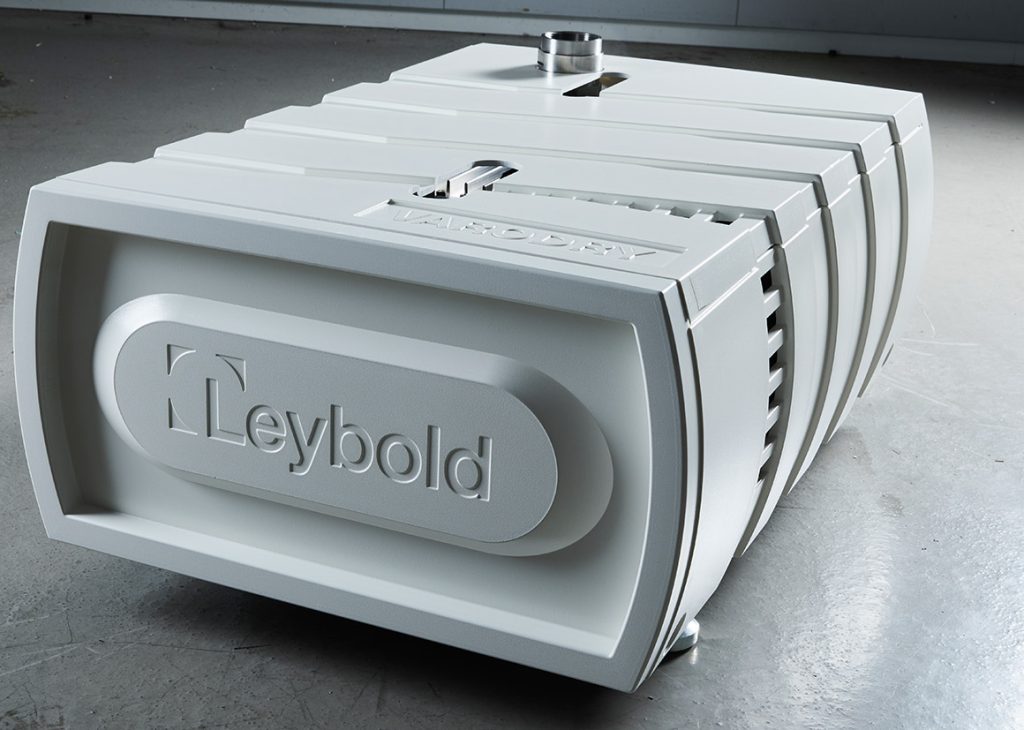
The need for energy-efficient, sustainable processes is increasing especially with regard to the frictions caused by high energy prices, increasing global warming and scarce resources. These requirements also have a direct impact on vacuum systems which are an elementary component in heat treatment plants and metallurgical processes. Leybold offers a wide range of highly innovative, already proven vacuum solutions especially for this requirement profile. The vacuum specialist will be presenting its portfolio to trade visitors at its stand (Hall 9 / D76) at METEC / Thermprocess 2019 in Düsseldorf from 25 to 29 June. State-of-the-art mechanical vacuum pump systems are powerful tools for efficient operation. They have a robust design that enables the pumps to withstand harsh production environments. No matter what type of vacuum systems are operated: Innovative vacuum solutions reduce operating costs and CO2 emissions while providing complete process control. Pump systems consisting of dry-compressing screw vacuum pumps of the DRYVAC type combined with RUVAC WH Roots pumps have proven themselves in use on secondary metallurgical VD, VOD or RH degassers. By using these standard pumps, even the highest demands on pumping speed can be met with the greatest reliability at competitive prices. In order to achieve high vacuum in VIM or VAR installations, Leybold offers the most modern oil booster pumps available on the market, which in combination with dry compressing DRYVAC screw pumps and RUVAC Roots pumps ensure maximum system availability at lowest operating costs. Leybold has an even larger product portfolio for use in vacuum heat treatment furnaces: Oil-sealed SOGEVAC rotary vane pumps have proven themselves in clean processes such as hardening or tempering. For more demanding processes such as soldering, sintering or carburizing, dry-compressing screw pumps are also available. Depending on size and process, pumps of the DRYVAC, SCREWLINE or VARODRY series can be used. From single pumps to complex steel degassing systems: As the components for vacuum systems are manufactured in large quantities, the delivery time is short, they are cost effective and provide proven high quality, thus contributing to the success of the customer. SOGEVAC NEO D – the emission-free rotary vane pump Nowadays, modern vacuum technology must convince its users with emission-free, smooth running and sustainability. With these requirements in mind, Leybold has developed the compact SOGEVAC NEO D, an innovative 2-stage vacuum pump with integrated oil mist separator on the exhaust side. The working environment remains clean and free of oil mist during pumping. Continuous operation is possible without an external filter at any inlet pressure. The robust SOGEVAC NEO D is optimized for applications requiring a pumping speed in the range of 1×10⁻² to 1mbar; perfect for small heat treatment furnaces or as a holding pump for diffusion pumps. The SOGEVAC NEO D offers a stable process vacuum but is less expensive than conventional alternatives and saves up to ten percent energy due to its significantly smaller rotating mass. Additional energy savings can be achieved by operating the pump by means of speed control with a frequency converter. DRYVAC DV 200 and DV 300 – the innovative dry pumps The dry-compressing screw vacuum pumps are designed for modern, intelligent production. They offer maximum energy efficiency, durability and future-proof network integration. Due to the optimized rotor geometry and the innovative motor design with efficiency class IE3, these pump types minimize power consumption and CO2 emissions. The bottom line is that DRYVAC pumps are cheaper and more environmentally friendly than comparable models. The new compact DRYVAC models DV 200 & DV 300 are designed for harsh industrial applications, just as the larger pumps of the same pump series. They offer a long service life, even under demanding conditions with high humidity, dust or other process particles. DRYVAC pumps also require minimal maintenance. VARODRY – the 100% oil-free, dry-compressing screw pump The 100% oil-free, dry-compressing and air-cooled VARODRY screw pump guarantees the required operating pressure and a short cycle time, especially in demanding processes. Thanks to its compact design and reduction to the essentials, the vacuum pump can be easily integrated into new or existing systems. Due to the integrated silencer, it is quiet and has a pleasant operational noise. The air-cooled VARODRY is absolutely dry and clean. This prevents particle or oil migrations into the vacuum chamber or the environment. A further process advantage is their resilience and efficiency. It can be operated continuously at any inlet pressure and is completely resistant to regular shock ventilation. Therefore, any number of cycles can be run without overloading. VARODRY pumps ensures uninterrupted operation without system downtimes. This qualifies it as the ideal vacuum pump for heat treatment applications and metallurgical processes. SCREWLINE – dry screw pump for extremely dirty applications In demanding applications such as sintering or carburizing, dry-compressing screw pumps are preferred as backing pumps. They are more efficient and reliable than oil-sealed pumps. Especially the SCREWLINE pumps have proven themselves in extremely dirty applications. Their main advantage: The pump chamber of this pump family can easily be cleaned by the customer on site, for example during process pauses by means of flushing. SCROLLVAC – low power consumption, high pumping speed With the air-cooled, oil-free SCROLLVAC plus, Leybold offers an uncomplicated, reliable backing pump. Its properties predestine it for a wide range of demanding applications, such as laboratory vacuum furnaces. This is also due to the low power consumption of the backing pump combined with high pumping speed. In addition, the SCROLLVAC plus, with its lightweight, compact design, takes up very little space. This enables integration into new and existing vacuum systems. Its functional and design features simplify daily handling of the backing pump. For example, the hermetic sealing of the rotating parts of the pump chamber reduces the risk of contamination. By dispensing with shaft seals that are susceptible to wear, developers have achieved higher integral tightness. DIP – DIJ – OB – Oil-jet steam pumps and systems for high-vacuum processes Oil steam jet pumps and systems are characterized by the highest pumping speeds in metallurgical industrial high-vacuum processes. These