


Industry 4.0: Why you need to invest in it to increase growth

Industry 4.0: Why you need to invest in it to increase growth : Manufacturers in the UK finished the year positively, with the strongest three months for growth since 2014. Markit/Cips UK Manufacturing Purchasing Managers’ Index figures showed that activity and new orders expanded throughout the past 17 months in the UK, with firms increasing production in response to new orders and the launch of new product lines. However, this is not the time for your manufacturing business to rest on its laurels. Investment in capacity and machinery is needed to take advantage of expected growth, with many leading manufacturers fast becoming “Industry 4.0” ready. What is Industry 4.0 and why does it matter to you? Industrial revolutions are huge, significant events and observers believe we’ve had four of them. The first was initiated by the introduction of the commercial steam engine and the birth of the textile industry. The second was sparked by electricity and mass production. And the third was triggered by the computer after World War 2. Professor Klaus Schwab, founder and executive chairman of the World Economic Forum, believes we’re well under way with the fourth industrial revolution. Also known as Industry 4.0, it refers to major innovations in technology that are coming into maturity at the same time, embedded by companies around the world, integrating the virtual and physical worlds to bring forth powerful new ways of working. Examples of this technology include: Internet of Things The fusion of physical objects such as software, sensors and electronic items with internet and machine-enabled data collection and transfer. IoT allows real-time communication, initiating physical systems and giving rise to smart cities. It offers you the opportunity to build digitised and connected supply chains – completely integrated ecosystems that are fully transparent to the contributing marketing, product development, manufacturing, and distribution departments. Big data and advanced analytics With the Internet of Things comes a huge amount of data – and the way your business reads and analyses that information is important. In manufacturing, the availability of data from product development, production and testing can add new dimensions to the way you manufacture goods, offering better innovation, marketing and decision making. Robotics and automation Robots are already used extensively in the manufacturing world – mechanical arms on assembly arms for example. Industry 4.0 could see the contribution of robots massively increasing, and consider the possibility of building “smart factories” where robots take ownership of manufacturing and bring goods to customers with limited human input, due to computing and communication systems linked with physical systems. Simulations, 3D printing and augmented reality Already commonplace today, goods can be virtually modelled and tested, saving time and reducing the materials, efforts and money spent. Through 3D printing, we can see the creation of customised, complex and lightweight designs at remarkable speeds, while augmented reality sees a future where employees can be trained on the job far more effectively than with paper or monitors. Why you should be investing in industry 4.0? Industry 4.0 isn’t a buzzword. In fact, businesses are already putting down investment – and organisations that aren’t are at risk of being left behind. PwC claims Industry 4.0 will revolutionise industrial production, with businesses generating on average 3.6% per annum cost reductions until 2021, driven by internal improvements and working more closely across value chains. They also expect to generate 2.9% p.a. in increased revenues by digitising products and services, as well as developing new digital service offerings. Meanwhile, 33% of industrial companies say they’ve already achieved advanced levels of digitisation, and 72% of companies expect to achieve advanced levels of digitisation by 2020. Increased competition is leading a focus on servicing customers, which requires your manufacturing business to explore new ways to deliver products and services – the change in processes and business models that Industry 4.0 is all about. Nick Castellina, research group director at Aberdeen, says: “Products may need to be more customisable, requiring a change in the ways production and delivery are handled. Many of these changes would be impossible in existing business systems. Therefore, manufacturers have prioritised modernising business systems as their second goal for the near future.” Manufacturing & Engineering Magazine | The Home of Manufacturing Industry News
PervasID Showcases RFID Capability Examples for Manufacturing
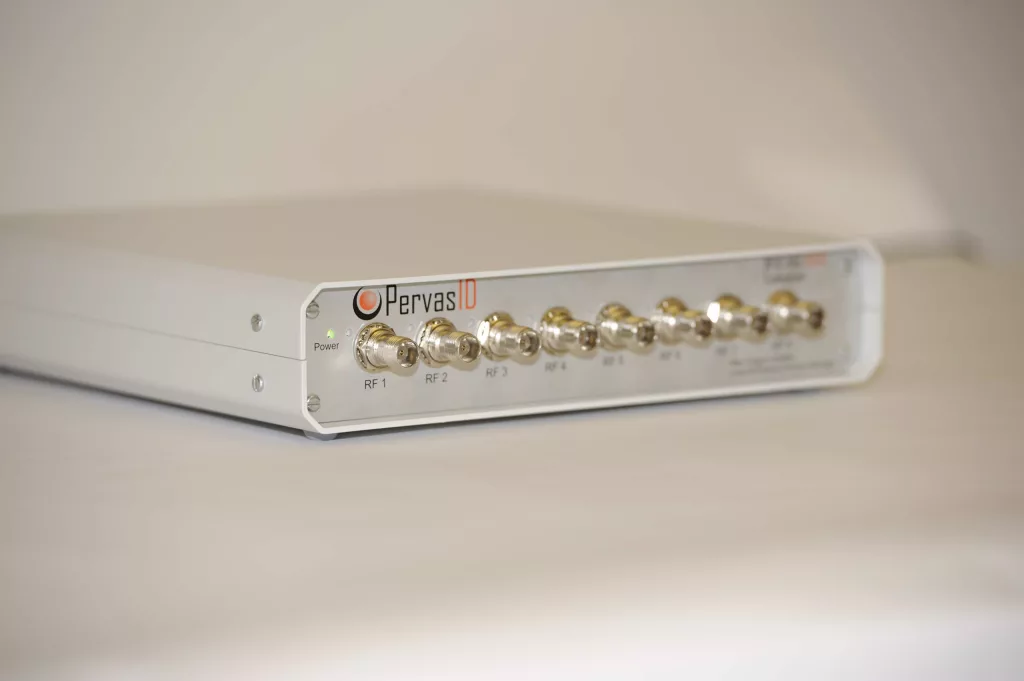
PervasID, an award-winning RFID (Radio Frequency Identification) technology provider, has announced the opening of its new Customer Experience Centre in St. John’s Innovation Centre which will showcase uses for RFID in the retail, healthcare and industrial sectors. The Customer Experience Centre will be aimed at customers, partners, system integrators and prospects to demonstrate the system’s capabilities in real situations and the technology’s 99 percent-plus tag detection accuracy. The Customer Experience Centre will house all PervasID products, including its latest Multi-Ranger, which combines all PervasID systems, namely Space Ranger (wide-area passive RFID system) Security Ranger (anti-theft RFID system) and Portal Ranger (a doorway RFID system), into a multifunctional reader system that is the first of its kind because it overcomes multiple challenges experienced by retailers and other industries from a single integrated solution. PervasID’s Space Ranger & Portal Ranger products address several issues facing the industrial sector. Efficient management of parts and tools, for example, is extremely important in manufacturing because their loss or misplacement can be costly from both a time and expenditure perspective The PervasID solution provides not only an audit trail of items used, by whom, but also the essential regulatory safeguard to ensure equipment is not left in site during maintenance. The Customer Experience Centre will demonstrate everything from where densely packed parts can be automatically booked in and out in real time, as well as tracking any asset, that might be lost or misplaced from warehouses. Dr Sabesan Sithamparanathan, co-founder and CEO of PervasID, comments: “The industrial sector is of huge importance to the UK economy and we understand that the equipment used in manufacturing processes is often business critical. If this equipment goes missing or is misplaced, there is a huge risk to productivity.” He continues: “The Customer Experience Centre will demonstrate the effectiveness of the PervasID products in an industrial settling and highlight the increase in efficiency, compliance and auditing the equipment.” Manufacturing & Engineering Magazine | The Home of Manufacturing Industry News
Helping Highlands Ranch Business Owners Find Local Painters to Help with Commercial Painting
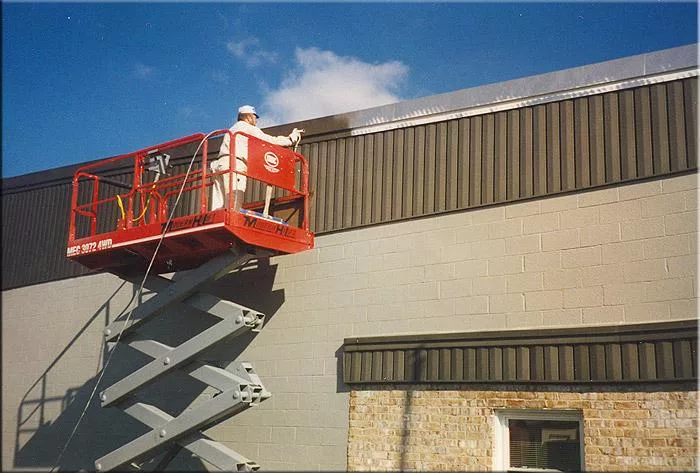
The process of painting a house is something that most folks have experienced at one time or the other. We see painting activities going on around us every now and again. What many of us may however not be aware of is that there are different types of painting jobs. To set a proper background upon which we will discuss our topic, we will first look at the different types of house or building painting jobs that we have. This is important as understanding the exact kind of painting job you need will help you find the right person or company to handle the job. Types of Painting Jobs There are three major types and these are: residential, commercial and industrial. Residential This is easily the most common type of painting jobs that we see. This has to do with regular residential buildings and is usually the least demanding. The major concerns here are the aesthetic value the job brings. Any protective value is usually just a natural by-product of the job. Commercial This type of job is carried out on buildings used for business purposes. The goal here is to achieve both the aesthetic and protective value that a good paint job can bring to a building. While this may appear to be similar to the goals in a residential building, the scope and scale of the job with a commercial building is usually way bigger. Aside from the fact that the physical structure is usually bigger than with most residential jobs, the human traffic and by implication human contact with the different surfaces is also usually way more. This means that a commercial building requires a greater level of protective painting than a residential building. You may also want to read a few additional points here. Industrial This is very similar to a commercial painting job. The main difference between the two is that while a commercial paint job aims to achieve both aesthetic and protective objectives, an industrial paint job will be mainly focused on achieving as much protection as possible. Examples of such locations include factories, warehouses and other such structures. What is a Commercial Building? Since our focus in this article is commercial painting, let us take a close look at what exactly we mean when we refer to a structure as a commercial building. Generally speaking, a commercial building refers to a building used for business purposes. This means that the building is opened to the public for one reason or the other. Examples of structures that fall into this category include: retail stores, box stores, grocery stores, warehouses, churches, restaurants, corporate offices, schools, medical offices, hospitality, industrial spaces, gas stations, automotive shops, auto dealerships and others. The painting of a huge apartment building can also be considered a commercial job because of the magnitude of the job. We are therefore looking at a business place or a huge project. How to Find Commercial Painters in Highlands Ranch Ask for Referrals If you know anyone who has recently had a commercial building in Highlands Ranch painted satisfactorily, asking such a person for the contact of the company that handled the job will be a good way of cutting down on the time you will spend searching. A direct referral from a very satisfied customer is worth a lot more than any advert that a company can put up. In the same vein, you can also be sure that if the company that did the work did not do a good job, your contact will not hesitate in the least to tell you so. You can therefore be sure of getting an honest view from those around you. Search Online Not everyone will have people who will be able to refer any companies that can handle commercial painting. If this refers to you, you can also find Highlands Ranch painters by carrying out a near me search. Simply search for “commercial painters in Highlands Ranch” and you will find a list of almost all such companies located in that area. This is a good option to go for if you really want to cast your net wide so as to be able to locate as many companies that can provide this service as possible. Check for Reviews After performing the search and finding a number of recommendations from search engines, how do you go about choosing one? The next thing you ought to do is check for online reviews. When you perform a near me search, a search engine like Google will bring a list of companies, their contact details and a link to reviews written by past customers of each company. It is important that you read these reviews as they will give you an insight into the quality of service that each company offers. The entire reviews are summed up into ratings with “5 star” being the highest rating. Investigate Capacity Capacity is something that is crucial in a commercial painting job. It is important that you carry out some investigation to ensure that the company you are considering has the capacity to handle the job you are planning to give them. This may involve visiting their offices, asking to know how many employees they have and what equipment they have for the job. The answers you get will help you determine if the company has the capacity to handle the job you have in mind for them. Compare Quotes Finally, everything boils down to money. Compare quotes from different companies to know how much they will charge for their services. Be sure to check out the services they would be offering so your comparison will be like for like. Know how to estimate here. Once you have done this, you will be in a better position to choose the one that offers you the best value. Knowing exactly what this job entails may actually help you choose the right candidate. Conclusion From everything we have discussed above, it should be pretty