


Make UK Launches Mental Health and Wellbeing Seminars

Make UK Launches Mental Health and Wellbeing Seminars : Mental health is becoming increasingly important in today’s workplace as companies work towards maintaining the right balance between productivity and the wellbeing of their employees. For this reason, Make UK, The Manufacturers’ Organisation, has launched a new seminar series for companies. Following on from the recent Mental Health Awareness Week, the series will draw on Make UK’s legal, HR and occupational health expertise and will provide clear, practical guidance on actively managing employee ill health in the modern workplace. The practical approach of the guidance offered by these seminars will the guidance will look at wellbeing strategies, stripping away the “fluff” and focussing on substance. By applying a targeted and common sense strategy, Make UK will explain how companies can improve employee wellbeing; increase productivity and drive down sickness absence. Case studies will be available for all the participants, which will teach them how to take the lead when an employee presents with a tricky health or absence issue. Then, they will be provided with straightforward, easy to implement strategies to help them actively manage employee ill health issues in your workplace, keeping control of the process. The seminar also takes into account legal obligations, the needs of the business and the sensitivities involved in managing employee health issues. At the same time, they will show attendees how the absence management procedures can be balanced, without being compromised, by a sensible, needs-based employee wellbeing programme. The seminar is aimed at HR Professionals, senior line managers and others with responsibility for managing those with ill health conditions and wellbeing programmes and will cover the following: How to proactively manage sickness absence How to deal with disability and make adjustments in the workplace Handling mental health and stress related problems Updating and monitoring policies and procedures for physical and mental ill health How to adopt a wellbeing strategy with a return for employers and employees Manufacturing & Engineering Magazine | The Home of Manufacturing Industry News
Smart Sticker Helps Monitor Health at Home

An electronic epidermal sticker that monitors health has been patented by researchers and it can be easily applied to a patient’s wrist. A team at Purdue University has designed the 2cm advanced sticker solution, which moves healthcare one step closer to the concept of personalised care and wearable devices. Wearable devices keep growing in popularity, from measuring UV exposure, to making off-site work safer and even soothing the effects of diabetes, and they seem to be integrated into many different sectors and markets. The stickers that monitor health are made of cellulose, which is both biocompatible and breathable, and they are used to monitor physical activity and alert a wearer about possible health risks in real-time. Since paper degrades fast when it gets wet and human skin is prone to be covered in sweat, these wearable stickers were coated with molecules that repel water, oil, dust and bacteria. Each sticker costs about 5p to produce, and can be made using printing and manufacturing technologies reportedly similar to those used to print books. Patterned in serpentine shapes to make the devices as thin and stretchable as skin, the stickers are comfortable to be worn. The low cost of these wearable devices and their compatibility with large-scale manufacturing techniques, could enable the quick adoption of these new wearable sensors in a variety of healthcare applications. The concept of personalised medicine is nothing new and experts have been working to personalise care to individuals’ needs for a while now. However, never before has it been possible to predict, examine and identify a patient’s requirements as extensively as is possible today. Experts can now carry out whole genome sequencing, use data and informatics and exploit wearable technology to cater to specific people. Personalised medicine moves away from the ‘one size fits all’ approach to one that uses new methods to better manage individual health. Embedding a personalised medicine approach into mainstream healthcare is the journey experts, scientists and healthcare professionals are broaching
PwC Admits New Partners to Health Practice

PwC, a multinational professional services network, has admitted seven new partners to its Government and Health Industries practice, reflecting the firm’s ongoing investment in supporting clients in this area. The promotions span a wide range of sectors and disciplines from Health to Aerospace and Defence to Transport and Cyber Security, reflecting a diverse range of specialisms within the PwC team. The new partners include: Ben Shepherd, who is a Consulting partner based in London. He works with government and transport clients on large infrastructure and transformation programmes, helping clients to procure, establish and manage the supply chains for their organisations. Jaymal Patel, who is a Transaction Services partner focusing on healthcare across the London and the South of England. Jaymal has over 10 years of deals experience working with private healthcare operators in sectors such as elderly care, dentistry, specialist care, hospitals and clinics. Further to this, he has also worked on a number of deals within the medical devices and pharma services sectors. Conor O’Hagan, who is a partner in the Aerospace & Defence practice and joined PwC in 2010. Over the last eight years he has provided strategic advice to clients on improving project and contract performance on complex, multinational programmes. Emma Cody, who is a Tax partner based in London, with a background in indirect taxes and technology. She supports a mixture of public and private sector clients, ranging from housing associations, charities, and local authorities to gaming providers, international retailers and property investment portfolios Danielle Perfect, who sits within the firm’s Office of General Counsel, focusing on the commercial and legal side of government and public sector engagements and leads PwC’s relationship with the Crown Commercial Service Andrew Miller, who leads a team helping organisations across the public sector to improve their cyber security. He has spent 18 years specialising in cyber security, including interim Chief Information Security Officer roles for clients. Amish Patel, a Consulting partner based in London, who works with national transport and broader infrastructure organisations. He specialises in digital focussed transformation projects, and has led a number of high profile industry change initiatives.
Historic Hospital Bed Maker Snapped up by US Firm
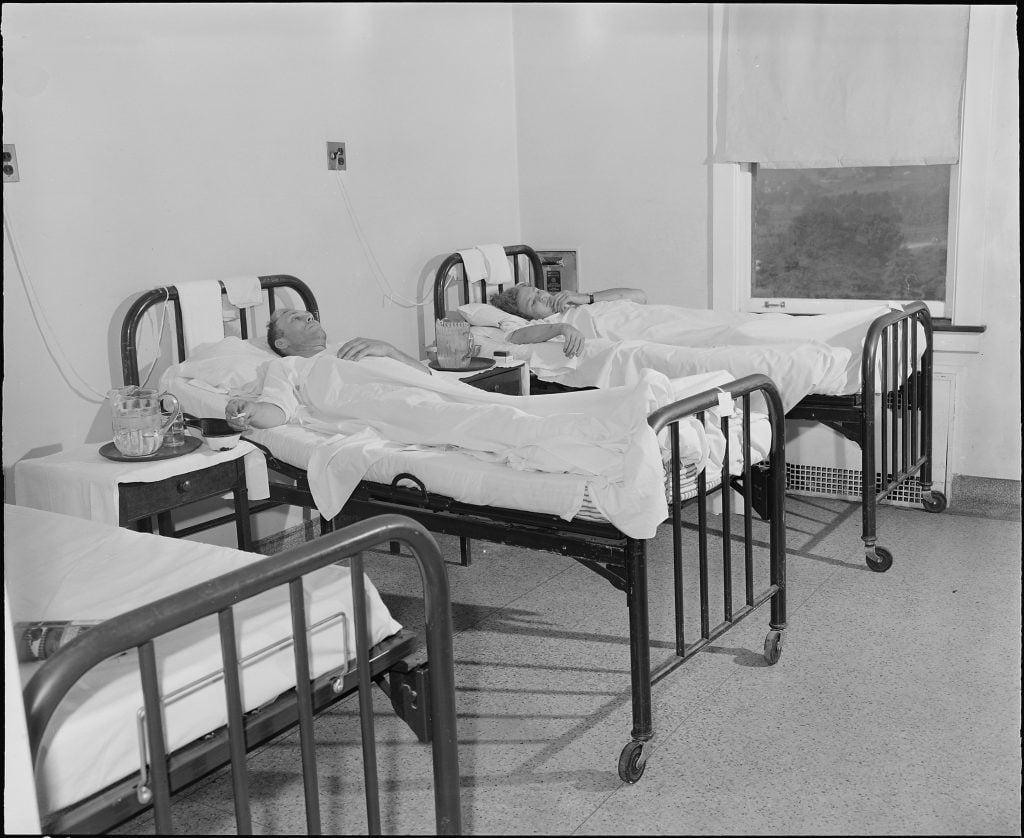
Historic Hospital Bed Maker Snapped up by US Firm : A designer and manufacturer of hospital beds which can trace its roots back 130 years has been acquired by a private equity-backed US counterpart. The £26m-turnover healthcare equipment specialist Sidhil, which is headquartered in Halifax, has been acquired by Drive DeVilbiss Healthcare in a deal supported by Clearwater International. The business makes hospital and home healthcare beds, furniture and accessories, serving national and international private and public healthcare markets. Peter Siddall, chairman of Sidhil Group said: “I’m very proud of what Sidhil has achieved as a family-run business. This acquisition creates fresh opportunities for the development of new products and services designed around the changing needs of the healthcare market.” Headquartered in New York, Drive DeVilbiss Healthcare manufactures a line of medical aids including mobility products, sleep and respiratory products, beds, bariatric products and wheelchairs. The business has recently undergone a recapitalisation with US private equity house Clayton Dubilier & Rice to fund continued international growth. Richard McGleenan, managing director of Drive DeVilbiss Healthcare, added: “Sidhil has established a leading reputation for providing high quality, innovative products and services to their customers. “With worldwide distribution and over 130 years of healthcare manufacturing in the UK, this is a key acquisition for Drive DeVilbiss Healthcare elevating us to market leader in the provision of beds and support surfaces into the UK healthcare sectors and also expanding our UK manufacturing footprint.” Interested in this article? Read more at Insider Media Limited. Manufacturing & Engineering Magazine | The Home of Manufacturing Industry News
MIP UK Snaps Up Cromptons Healthcare

Cromptons Healthcare, the historic Hampshire based manufacturer and supplier of healthcare garments, textiles and patient handling equipment, has been snapped up. MIP UK, The British subsidiary of Canadian healthcare products supplier MIP, has purchased the business for an undisclosed amount. Tor Lund, President and Chief Executive of MIP, said it was an exciting time for employees of the firm, along with customers and other stakeholders. Cromptonsâ history goes all the way back to 1926, with the company designing and supplying reusable and single use healthcare products, including patient positioning devices and garments, such as scrubs and patient gowns. Based in Basingstoke, the firm supplies healthcare facilities and outsources laundry service providers throughout England, Scotland, Wales and Northern Ireland. Martin Calhoun, Managing Director, said that MIP will serve the loyal employees and stakeholders of Cromptons well, and he has confidence that this combination will fortify their leading UK market position, while creating exciting opportunities for growth. MIP President and Chief Executive, Lund, commented: “This is an exciting time for our employees, customers and other stakeholders. Over the past several years, our UK business has experienced strong growth in revenue and market share and our acquisition of Cromptons accelerates the execution of our long-term strategy in the UK. “Cromptons is a well-recognized supplier in our market with a proud history of supplying quality products and providing outstanding service to its customers. We are very pleased to welcome the Cromptons’ team into the MIP family.” MIP is a manufacturer and distributor of high performance textile and related products to healthcare facilities and distributors and outsourced laundry service providers. The Company is a market leader in Canada and enjoys significant and growing market positions in the United States , United Kingdom and continental Europe. MIP has manufacturing facilities in Quebec , China and Germany . MIP is owned by Banyan Capital Partners, a Canadian private equity group, and its senior management team.
Clinical Research In Wales Gets Public Backing

Further public support for clinical research in Wales to the tune of 82% of respondents to a recent survey by YouGov reveals people want to be more involved in the research process and development of new medicines, therapies and procedures. This is an increase of 5% since 2014. The Wales NHS Confederation commissioned the survey to gain opinion from the people of Wales on how they feel about the health services they receive and the way in which treatments are administered. Supported by NHS Wales’ 1000 Lives Improvement Service and the ABPI, Richard Greville of the ABPI said the results showed a “staggeringly positive” reaction that must encourage the Welsh Government and associated partners including NHS Wales to ensure engagement with those who actively use the service. The ABPI’s director within its Senior Leadership Team said there had been great gains in engagement in recent years and that these positive changes had brought benefit to the overall operation. He highlighted a number of positives such as the Welsh Government’s investment in life sciences, which have encouraged stronger collaborations between the industry. He also singled out HealthWise Wales as what he called an “exciting” national initiative with the potential to engage a large number of local people within social and healthcare research. Greville is also eager to see better collaboration across various entities such as the Life Sciences Hub, an initiative set up by the Welsh Government to bring together the private sector with NHS and Government to advance research. He quoted Chris McGuigan, Life Sciences Hub’s Chair, as saying the initiative provides a “central pillar” in a vision to create a “life sciences eco-system” in Wales. The commercial benefits are also evident as Greville said the pharmaceutical sector was already well-aware of the clinical research taking place in Wales and that progress, particularly when coupled with patient engagement, would further improve the industry’s standing.
Artificial Fingertip Delivers Real “Feeling”

An artificial fingertip surgically connected to nerve endings in an amputeeâs arm is the first to deliver real touch sensation. Previous attempts to reconnect nerves and bionics after amputation had failed to simulate sensory stimulation in real-time. The pioneering research and technology was developed by Ecole Polytechnhique Fédérale de Lausanne (EPFL) in partnership with BioRobotics at the Institute Scuola Superiore SantâAnna (SSSA). The efforts of the French and Italian universities have allowed the patient to feel texture instantaneously, with no perceptible gap between touch and sensation. During research, the teams, led by Silvestro Micera and Calogero Oddo also found that nerves of non-amputees can also be stimulated to feel texture without intrusive surgery. Such a finding means that future technologies can be tested and refined on intact subjects. They also suggested that artificial tactile robotics might successfully be transferred to circumstances of rescue, as well to the manufacturing sector more broadly. Dennis Aabo Sørensen is reportedly the first person in the world to feel texture with the use of a bionic fingertip. The fingertip was connected to electrodes implanted above his stump to remaining nerves in the upper arm. Sensors on the bionic fingertip then perceived subtle differences in texture as a machine controlled the movement of the finger across a range of plastics with distinct patterns engraved on them. From the signal generated by the different textures, a series of electronic spikes were produced and relayed back through the nervous system of the patient. Sørensen was able to differentiate between rough and smooth surfaces at a phenomenal rate of 96%. When the pioneering testing was replicated on non-amputee subjects, the results remained promising; subjects could discern different textures in 77% of cases. Testing on non-amputees also allowed scientists to measure how much the bionic fingertipâs sensory perception correlated with that or innate brain function. EEG scans showed brain activity to be very comparable to that mimicked by the robotic fingertip. The results, published in eLife, could well revolutionise neuroprosthetics and pave the way for an increasingly state-of-the-art health care sector.