


To mark Net Zero Week 2026, Engineering Construction Industry Training Board (ECITB) Chief Executive Andrew Hockey stresses the important role the ‘behind-the-scenes industry that powers everything’ will play to help make Britain a clean energy superpower.
It was a privilege to be sat round the table representing the ECITB at the first meeting of the new Clean Energy Jobs Plan Steering Group recently.
Being invited onto the group shows the Government values the vital role of the engineering construction industry (ECI) in helping deliver its mission of making Britain a clean energy superpower.
Under its ambitious plans, the number of jobs supported by these industries could grow from around 440,000 jobs in 2023 to 860,000 across the UK by the end of the decade.
To deliver the pipeline of skilled workers needed to meet this demand, the Government launched its Clean Energy Jobs Plan in October 2025. This plan sets out how the Government will work in partnership with industry to support the existing workforce to find new opportunities and train up the next generation.
The steering group, convened by the Department for Energy Security and Net Zero (DESNZ) and made up of partners from across industry, unions, trade bodies, local and national governments, will work together to help identify critical skills gaps across sectors.
Why is it imperative the ECI is part of these collaborative efforts?
To answer this, it’s worth reminding people that engineering construction is the essential, behind-the-scenes industry that powers everything.
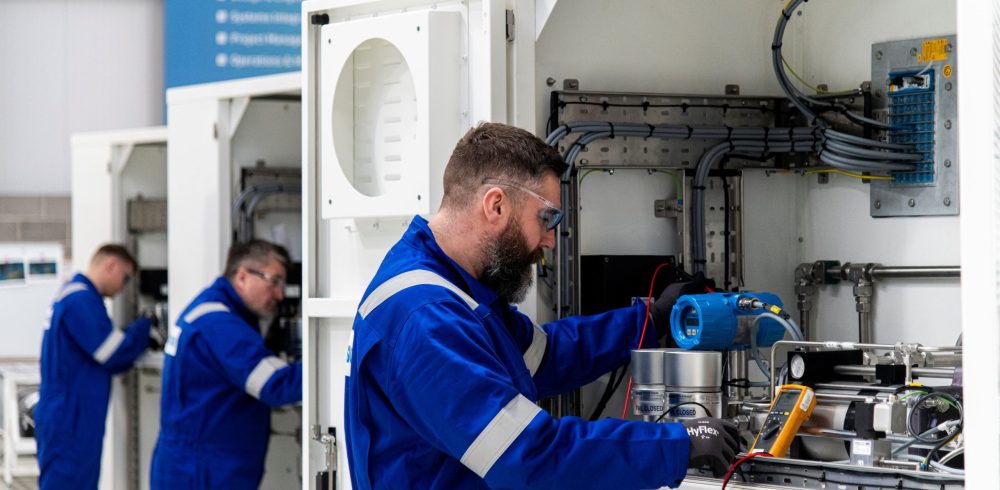
The industry and its supply chain companies design, engineer, project manage, install and maintain much of the critical infrastructure we all depend on in our daily lives – from the energy that warms our homes to the clean water we drink.
A specialised industry, the ECI spans sectors that focus on the construction, maintenance and decommissioning of heavy industry, including oil and gas, nuclear, power generation, renewables, chemicals, food and drink, pharmaceuticals and water treatment.
It also includes the hydrogen and carbon capture (CCUS) sectors linked to the decarbonisation of the industrial clusters. In a nutshell, the industry’s sectors have a crucial role to play in Britain meeting its net zero ambitions.
I believe though that terms like ‘clean energy’ or ‘green’ jobs can be misleading. They imply that the skills needed for the upcoming major infrastructure projects are somehow ‘new jobs’ or new roles. They are not.
The jobs needed for net zero have common transferable skills from other sectors like oil and gas. They just need to be supplemented with the specialist contextual knowledge for areas such as hydrogen and CCUS.
Being on the steering group will help us reinforce this point and stress the importance of delivering an integrated ‘all energy’ workforce.
Developing skills
As the industry-led skills organisation for the ECI in Great Britain, the ECITB’s Leading Industry Learning strategy 2026-30 sets out a plan to develop the skills needed for the delivery of critical infrastructure projects, energy security and net zero ambitions.
It was, therefore, welcome to see our work recognised in the Clean Energy Jobs Plan report, such as our Wind Turbine Cross Skill pilot programme which was cited as an example of how to “pave the way for a just transition”.
Working in partnership with Global Wind Organisation (GWO) and the Offshore Renewable Energy (ORE) Catapult, the programme supports worker transferability by providing existing oil and gas technicians with the technical training needed to work on wind projects.
Also referenced in the report was the Connected Competence scheme, which is supported and enabled by the ECITB. The industry-driven initiative assures an ongoing base level of technical competence for workers to create a safer, technically competent and transferable workforce to aid the energy transition.
And our Regional Skills Hubs funding initiative was highlighted for helping “address skill shortages in key industrial clusters central to the UK’s decarbonisation agenda”.
The ECITB has committed to investing over £3 million between 2023-2026 to help boost training provider capacity and grow new entrant numbers in these cluster areas, such as the £300,000 awarded to Humber-based CATCH to upgrade its welding, pipefitting and electrical training facilities.
Career attraction
Alongside work like this being delivered across the ECI, the ECITB has launched a Look closer: Engineering construction campaign to raise awareness of industry careers.
Our Workforce Census 2024 report highlighted that despite an encouraging increase in the number of workers under 30 now working in the industry, up from 14.7% of the workforce in 2021 to 16.8%, this is not yet sufficient to counterbalance the impact of the upcoming wave of possible retirements, with the share of workers over 60 increasing to 14.7%, up from 11.6%.
Furthermore, our 2024 career motivations study suggested that the image of the ECI is not attractive to new entrants, especially younger people and women, and that more needs to be done to address recruitment and retention challenges.
This campaign aims to promote career opportunities within the industrial clusters, but we recognise solving this problem will require a collaborative approach to ensure careers in industry are more attractive.
Campaigns like this and being included in the steering group will help increase the pool of people embarking on careers that help keep Britain running.
Manufacturing & Engineering Magazine | The Home of Manufacturing Industry News