

Achieving perfectly flat sheet metal isn’t always about what happens during cutting. In many cases, it’s what happens afterwards that determines how efficiently a component progresses through fabrication, welding, and final assembly.
While laser cutting remains the most common source of work for industrial metal levelling, Wrightform is seeing a growing number of enquiries from customers producing punched components. Unlike laser cutting, punching generates very little heat, but the repeated mechanical force of punching thousands of holes or intricate patterns can still introduce stresses into the material. These stresses can cause panels to bow, distort, or lose flatness, particularly on larger sheets or decorative designs where appearance is just as important as function.
From punching to precision
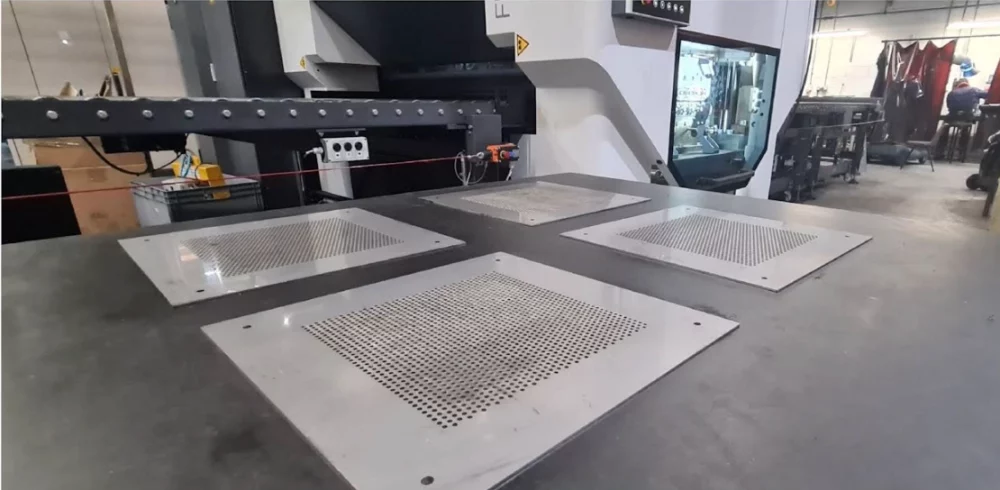
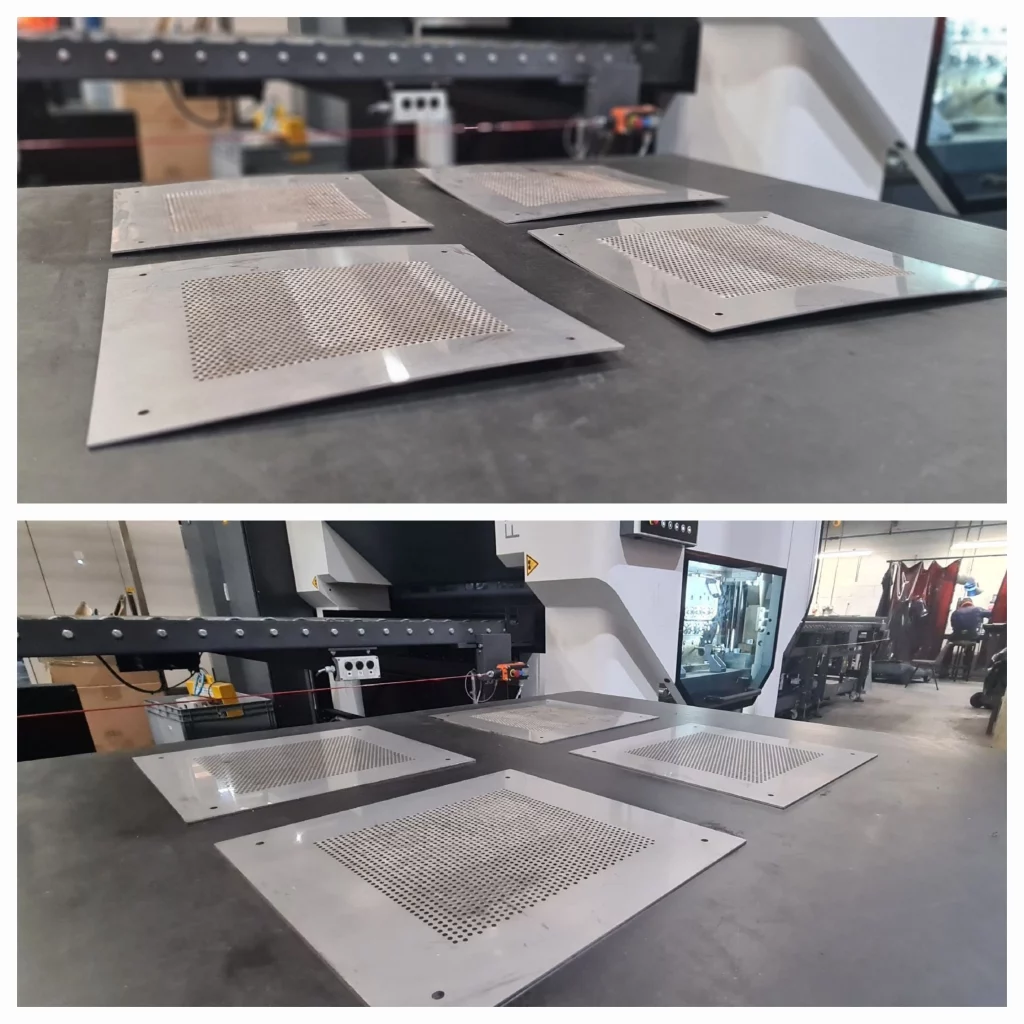
A recent project involved a customer manufacturing a series of extractor panels for an industrial ventilation system. The panels featured extensive punched detailing to achieve the required airflow characteristics while maintaining a high-quality finished appearance. Although the punching process produced accurate features, the panels developed a noticeable bow which would have made downstream fabrication and assembly more difficult.
To overcome the issue, the panels were processed through Wrightform’s industrial levelling machine. The controlled levelling process solved the issue of the internal stresses created during punching, restoring the panels to a flat, stable condition without compromising the accuracy of the punched features.
The benefits extended well beyond appearance. With flatter, stress-free panels, subsequent fabrication became more predictable, assemblies fitted together more consistently and the customer received components that behaved exactly as intended throughout production. By removing distortion before the next manufacturing stages, the risk of additional adjustment, rework and wasted production time was significantly reduced.
It goes beyond laser-cut materials
Projects such as this demonstrate that industrial metal levelling isn’t solely a solution for laser cut components. As more manufacturers specify punched, perforated and decorative sheet metal for architectural, industrial, and commercial applications, achieving flat, dimensionally stable material is becoming increasingly important.
Whether stresses are introduced by thermal processes such as laser cutting or by the mechanical forces generated during punching, industrial levelling provides a practical solution that helps improve bending, welding, fabrication, machining, and final assembly.
For manufacturers looking to improve downstream efficiency and product quality, producing stress-free metal before fabrication can make all the difference.
If you’d like to find out more, please visit https://www.wrightform.co.uk/services/metal-flattening/ If you are attending the UK Metals Expo this November why not pop along to stand F86 and come and meet the team. We’ll be on hand to chat about your requirements and to show you examples of before and after flattening and de-stressing projects.
Manufacturing & Engineering Magazine | The Home of Manufacturing Industry News