


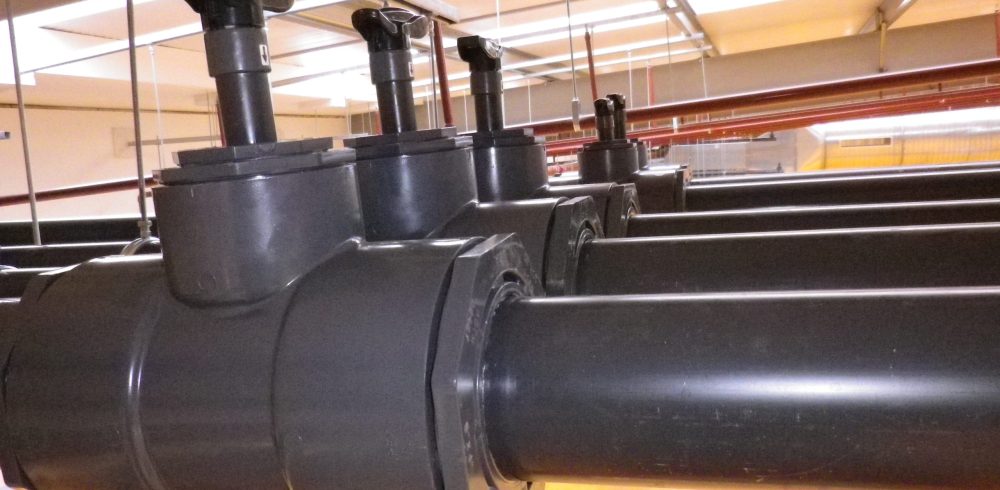
Specifying chemical pipework can present a myriad of obstacles that must be overcome in order to ensure it can withstand the specific chemical and operating conditions the project requires.
The material chosen must be durable and compatible with the chemicals it will carry in order to prevent premature degradation, costly failures and safety hazards.
In specifying, consideration must also be given to any ancillary agents that could come into contact with the pipework, as the wrong agent can lead to environmental stress cracking creating the potential for a leak path.
David Thomas, Head of Technical Support Services at Aliaxis UK, looks at the challenges faced when selecting the right material and how they can be overcome by using science to provide the answers.
Everyone knows of the safety risks of working close to chemicals that can be toxic and hazardous, which means the design and specification of a pipework system has to take into account multiple equations of what could undermine the integrity of that system.
One aspect that can have a costly and devastating effect on a chemical pipework system is the impact of ancillary agents. These are not always fully factored in when choosing the right materials for a project, but they can often contribute to pipework failure.
Ancillary agents, such as solvents, surfactants, and sealants, can contribute towards chemical stress that can trigger a variety of failure mechanisms.
Ancillary agents can directly attack the pipe material through environmental stress cracking, where a chemical is absorbed by the plastic pipe, causing the material to soften, swell and eventually rupture in a brittle failure fashion, this is even true for normally ductile materials. Corrosive chemicals can also degrade rubber seals over time, causing leaks.
Therefore, proper material selection, good installation, and a thorough check of chemical compatibility for all agents, including ancillary agents, is crucial to the correct running of a system and to prevent premature failures.
With so many pipework systems and materials on the market today, choosing the right one for an individual project can therefore be complex, especially with a raft of regulations and standards to meet covering industry safety.
Since the introduction of polyethylene (PE) in the 1950s, plastic pipes have cemented their place within our infrastructure and buildings. Materials such as PVC, C-PVC, PP, ABS, and composite materials such as HDPE, with an aluminium barrier layer, are specified according to their intended application.
It is the very existence of so much choice however, that makes selecting the correct pipework for an individual project such a challenging task.
Knowing the chemical properties is therefore essential in selecting a material that is resistant to degradation from the specific substances being transported.
It is why the expertise of an in-house chemist can make all the difference. Such technical support is important when scoping out a project so that the correct materials are selected.
Specifying the right materials can help to ensure the integrity, providing a durable pipework system which has a long operational life.
Technical teams and in-house chemists, such as our own Company Chemist, can provide project-specific advice, including consideration of any ancillary agents that could come into contact with the pipework, plus advice on initial designs and specifications, installation guidance and on-site support. They can also advise on more unique applications, as well as perform a material safety data sheet review to ensure the right solution is chosen.
A company chemist will also take into account real-world variables like pressure variations, temperature fluctuations, and chemical mixtures found in actual installations, and can provide guidance on complex material science and chemical interactions.
Chemical Resistance Guides also have a role to play in helping with the selection of the right pipework. Such a guide can help determine the compatibility of system materials with a multitude of chemical substances.
For our guide, we compared the chemical resistance of more than 20 pipe, fitting, valve seal and measurement and instrumentation materials with almost 500 common chemicals, which means engineers, specifiers and installers can find the right pipework solution for each individual job.
Chemistry is therefore essential when specifying chemical pipework to determine material compatibility with the conveyed fluid, ensuring the chosen pipe material won’t corrode, degrade, or react dangerously.
It requires an understanding of the chemical’s properties, such as pH, concentration, and temperature, potential reactions, and the specific material’s susceptibility to failure.
Using a chemist’s knowledge can promote longevity and stability for a pipework system, helping to prevent degradation and leaks, which can lead to costly emergency repairs, operational downtime, or even a complete replacement.
Manufacturing & Engineering Magazine | The Home of Manufacturing Industry News