

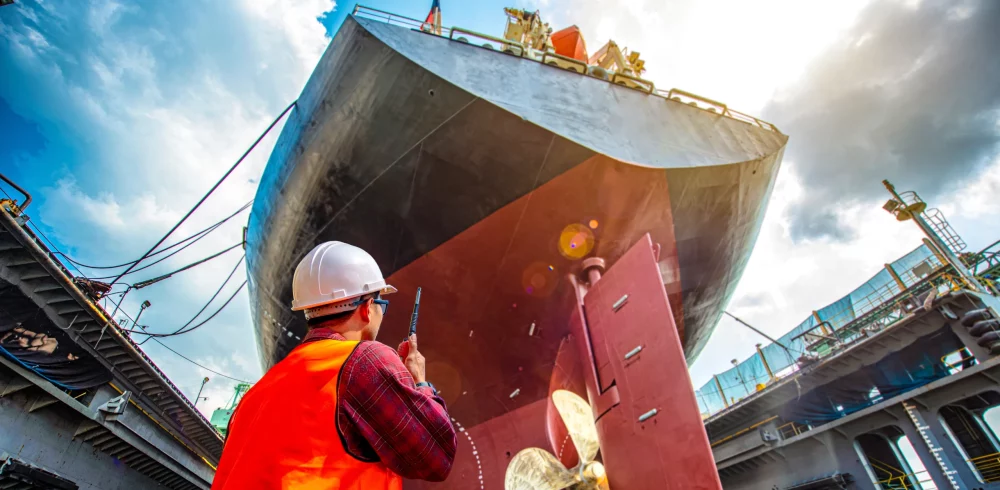
The traditional model where shipbuilders “deliver and depart” is challenged by several recent contracts where the shipbuilder acts as lifecycle partner and remains closely involved through the in-service phase. The shift places greater emphasis on delivering complete, mission-ready documentation and onboard knowledge systems, which enable crews to operate and maintain vessels autonomously even in low-connectivity environments.
New “shipbuilder-as-sustainer” models are spreading rapidly across the world.
In early 2025, MAESTRAL, the joint venture between Fincantieri and the UAE’s EDGE Group, secured a €500 million (around £425 million) contract to provide In-Service Support (ISS) for the entire United Arab Emirates Navy. Unlike traditional repair agreements, ISS contracts embed industrial teams within naval operations. Shipbuilder engineers provide continuous technical oversight and on-site support and may deploy alongside the fleet to maintain operational readiness.
Later in 2025, Fincantieri’s joint venture with Leonardo finalised OCCAR’s Through-Life Sustainment Management (TLSM 2) framework for Italy’s FREMM frigates. In Norway, Navantia signed a multi-year support agreement for the Fridtjof Nansen-class frigates that includes engineering assistance, repairs and continuous support for the ships’ Integrated Platform Management Systems and configuration baselines.
These are three examples of a broader trend, and of a sea change in the naval market: engagements increasingly move beyond ship delivery towards long-term lifecycle partnerships, with the builder becoming a strategic industrial partner responsible for fleet maintenance, technical authority and readiness over extended periods. The shift comes with wide-ranging implications on manufacturing, technology and risk management.
From “performance-based” arrangements to lifecycle support
In themselves, efforts to tie shipbuilders to long-term operational outcomes are not new. Beginning in the 1990s, the U.S. Department of Defense promoted performance-based logistics (PBL), in which contractors were compensated according to metrics such as availability and maintenance effectiveness rather than the volume of spare parts or repair work.
The goal was to correct what the Department of Defense (now: War) saw as a “fundamental misalignment” of incentives: under traditional procurement models, shipbuilders had little reason to optimise for long-term maintainability or lifecycle costs.
Classic PBL arrangements have lost some ground to broader lifecycle support strategies and industrial partnerships, partly because of the limits of a purely KPI-driven approach. The underlying logic, however, remains intact: Sustainment has become the central budget driver and a strategic capability that shipbuilders, with their detailed knowledge of the platform, are best positioned to deliver. Long-term partnerships also realign incentives while changing the financial model.
The operational visibility challenge
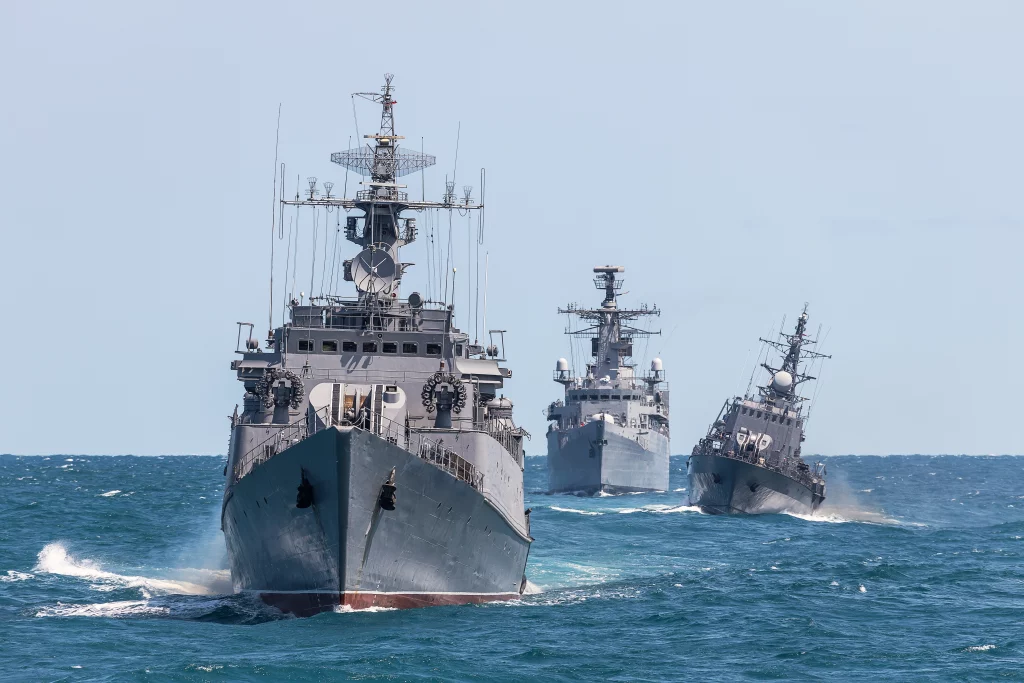
The 2026 context should amplify the trend. The war in Iran has so far highlighted the key role of naval ships as floating bases for military operations, but also the need for capabilities older ships do not have. It has also shown the fragmentation of international alliances, prompting many countries to increase defence spending to build sovereign capabilities.
For second-tier military powers, the lack of in-house maintenance roles and dockyard structures makes it necessary to rely on third parties while controlling long-term costs. This context makes long-term partnerships particularly suitable.
The greater consequences are on manufacturing operations. Production engineering now has to anticipate thirty to forty years of operation including shifts in mission profiles and evolving capability requirements, with the potential of changing how vessels are designed, assembled and documented. Every system must carry a digital configuration record, which becomes the backbone of maintenance planning, spare provisioning and modernisation cycles.
A lifecycle view, from sketch to sea
If shipbuilders are expected to remain responsible for sustainment, production cannot rely on fragmented tools, manual documentation or disconnected data sets. Design, procurement and fabrication must produce structured information that remains usable long after delivery.
This is the premise behind Octave’s Design-Build-Operate-Protect (DBOP) framework, which integrates design, production and sustainment into a single lifecycle model, rather than treating each phase as a separate engagement.
DBOP enables faster and lower-risk upgrades, proactive obsolescence management, cybersecurity and integrated logistics support. For navies, it creates a true lifecycle partnership that improves readiness, reduces costs and ensures ships remain effective throughout decades of service.
The “Protect” dimension is particularly relevant in the current threat environment: it encompasses cybersecurity, physical security measures, proactive obsolescence management and integrated logistics support, capabilities that become critical as warships age into a landscape of shifting threats and supply chain disruptions.
Digital thread: The example of Babcock
From a technology perspective, the DBOP view is increasingly supported by digital twins or digital threads, with Babcock’s digital transformation on the U.K. Royal Navy’s Type 31 frigate programme offering a case in point.
For its T31 programme, Babcock is assembling five Inspiration-class frigates at its Rosyth yard on the Firth of Forth, general-purpose warships that will replace the ageing Type 23s and sit alongside the eight Type 26s being built on the Clyde as the Royal Navy renews its surface fleet. Designed to be smaller, more affordable at roughly £250 million a hull and quicker to build than earlier frigates, the class has drawn interest well beyond the United Kingdom.
To support those vessels beyond delivery and maintain long-term operational readiness, the British shipbuilder relies on an integrated digital toolset built on Octave Forte 3D and OnSite Production. Together these connect ship design, material inventory, production planning, scheduling and CNC machine outputs within a single environment, consolidating design, modelling, nesting and revision control on one platform. The approach reduced manual processes, improved traceability and ensured that manufacturing data remains usable throughout the ship’s operational life, which is essential for maintenance, upgrades and engineering authority work.
For Babcock, the value reaches beyond any single tool. As Gavin Dormer, systems integration manager at Babcock, puts it, the company is ‘creating and driving the digital thread through advanced manufacturing’, overseeing everything from physical CNC machine tools to the software, IT architecture and wider manufacturing infrastructure behind the T31 programme.
The case of Babcock illustrates a key notion: a digital thread is not simply a system of record for every component and piece of equipment installed. It should be the outcome of a digital manufacturing process.
As shipbuilders take on more maintenance responsibilities, there is a strong business case for data-led approaches such as predictive maintenance, condition monitoring and asset performance management that go beyond “maintain on a fixed schedule and fix it if it breaks.” Having the data to pinpoint the cause and likelihood of failure shifts maintenance from reactive work to managed risk.
‘Twins of twins’
Platforms such as Octave InConcert and Attune extend this capability into information and asset management. InConcert governs the structured lifecycle information backbone, ensuring that configuration, documentation and engineering changes remain consistent and accessible. Attune supports asset performance, maintenance planning and operational decision-making, linking field data back to engineering models. Together, they anchor the lifecycle model in usable, actionable data.
The model we increasingly see is a “twin of twins”: lifecycle support relying on multiple specialised and interoperable digital twins rather than a single monolithic model. The key notion is data continuity across disciplines and phases.
Such tools are ushering in changes in practices. Shipbuilding has traditionally depended on manual processes, paper-based documentation and disconnected systems. This persistence is linked to the deliver-and-depart era: if you are not maintaining the ship, scanned PDFs and large data dumps as documentation are acceptable. In the era of the shipbuilder as “lifecycle partner,” however, there is a financial interest in having clean, contextualised and predictive data handed over. Done well, it is groundwork that pays dividends across the decades a modern warship now spends in service.
https://www.octave.com/industries/defence

John Parker
Senior Account Manager, EAM UK&I
Octave
Manufacturing & Engineering Magazine | The Home of Manufacturing Industry News