



As global markets navigate technological shifts, FIA 2026 brings the aerospace world together to address critical challenges in defence, aviation and space.
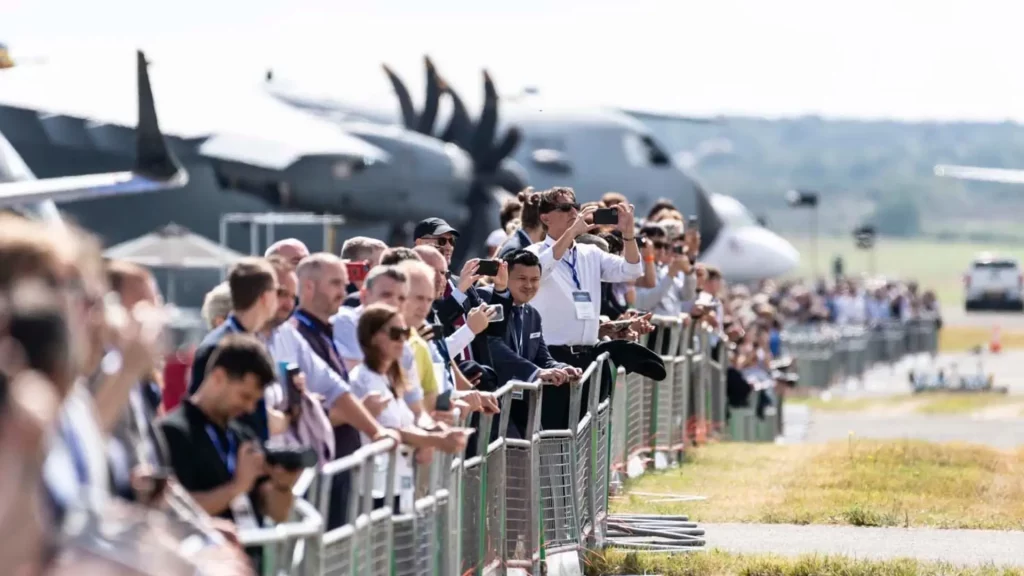
With complex geopolitical challenges and rapid technological evolution as the backdrop, this year’s Farnborough International Airshow (FIA) takes place at a very interesting moment for global aerospace. Once again showcasing the latest breakthroughs in civilian and military aircraft, 2026 nevertheless sees key themes focus on national security and industrial sovereignty.
From the presence of multinational giants like Airbus and BAE Systems to homegrown manufacturing initiatives backed by the UK government, the event underscores that the future of flight relies as much on supply chain resilience and defence alliances as it does on aviation engineering.
BAE Systems Accelerates Next-Gen Combat Infrastructure
Many visitors will be fascinated to find out what BAE Systems has in store for FIA 2026, particularly because so much attention will be placed on the Global Combat Air Programme (GCAP). With the partnership between the UK, Italy, and Japan now having progressed past the concept stage into development, a move that was accelerated by the formalisation of design contracts through their Edgewing joint venture, BAE Systems is utilising the exhibition to display its latest engineering milestones, digital twin advancements and radar innovations destined for the next-generation stealth fighter.
There’s increased urgency in these programmes, particularly as uncertainties elsewhere, like in rival programmes such as continental Europe’s Future Combat Air System (FCAS), turn global eyes toward the progress achieved by the GCAP alliance. BAE Systems is also keen to highlight innovation in autonomy and multi-domain integration.
Beyond combat air frames, it continues to advance its Battlespace Management and Intelligence System (BMIS), underlining the theory that military superiority will be achieved by integrated, software-first platforms. Its latest suite of uncrewed aerial systems engineered to act as autonomous “loyal wingmen” alongside crewed fighters will be on show, for example.
BAE Systems’ complementary software, communication and intelligence products, which work in tandem with BMIS, include the pioneering NetVIPR™ network that delivers intelligent, secure communication links from tactical reconnaissance drones directly to carrier strike groups and command hubs. This networking infrastructure is bolstered by Falcon, a fully deployable, tactical military communications system that facilitates secure voice, data, and video sharing over a single common platform. Additionally, the integration of BAE’s Cyber and Electromagnetic Activities (CEMA) capabilities exploits electronic warfare and protects data integrity.
In terms of reconnaissance and protection, BAE has developed Longreach70, a rapidly deployable small uncrewed aerial system configured for precision target acquisition and real-time ISTAR operations, working alongside the BAE Systems Anti Threat System (BATS), a modular counter-UAS decision engine built to neutralise rapid drone incursions using automated multi-sensor data fusion.
Finally, to ensure maximum operational readiness, BAE’s Digital Intelligence division has recently been spotlighting its asset management tools, including the trilogi® S1000D Viewer for navigating complex interactive technical documentation and the scalable PropheSEA® predictive analytics suite, which synthesises siloed legacy data to dramatically elevate through-life fleet availability.
To support these deployments, BAE will be demonstrating advanced synthetic environments and software-led defence systems at FIA 2026. The products compress development timelines for complex military hardware by leveraging cloud-based digital twins. This approach directly complements its showcase of integrated intelligence, surveillance and reconnaissance (ISR) capabilities, which are essential for securing space-based and atmospheric communication networks.
Multi-Mission Tactical Readiness and the Push for Net-Zero with Airbus
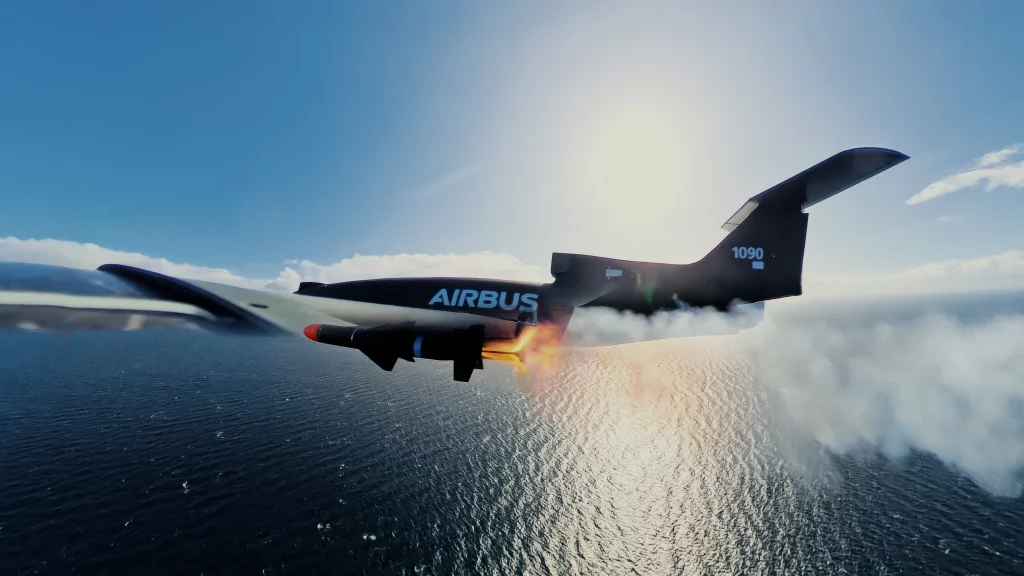
Like BAE, Airbus is keen to highlight its own advances in defence infrastructure. Indeed, Airbus Defence and Space is spotlighting the A330 Multi-Role Tanker Transport (MRTT), as the new benchmark for strategic transport and aerial refuelling across NATO and allied air forces.
In parallel to the UK’s defence systems, Airbus is using FIA 2026 to emphasise continental Europe’s progress on its own next-generation combat air solutions. And concluding its tactical showcase will be an exhibition of space-based security assets, spotlighting secure satellite communications and earth observation technologies critical for modern military intelligence sharing.
The European aviation giant arrives at FIA 2026 buoyed by the recent delivery of the first H145M helicopter to the Kingdom of Belgium. The aircraft is part of a wider procurement contract signed in 2024 via the NATO Support and Procurement Agency (NSPA) to equip both the Belgian armed forces and the Federal Police. The country will also welcome another three H145M helicopters. This brings the nation’s total fleet on order to 20 aircraft.
As the military derivative of the twin-engine civil H145 platform — whose global fleet has amassed more than 8.5 million flight hours across demanding defence and law enforcement contracts — the H145M represents a shift in operational flexibility.
Powered by dual Safran Arriel 2E engines with full authority digital engine control (FADEC) and regulated by the advanced Helionix digital avionics suite, the platform delivers optimised flight data management and a high-performance 4-axis autopilot that severely minimises pilot workload in congested battlespaces.
Designed with an incredibly low acoustic signature that renders it the quietest helicopter in its class, the platform can be reconfigured within minutes from a light attack asset armed with axial ballistic and guided weapons into a specialised operations configuration equipped for fast rappelling, external cargo hoisting and multi-domain connectivity. It is now active in fleets across the US, Hungary, Serbia, Luxembourg, Thailand, Ecuador and Honduras. Elsewhere, Germany has an 82-aircraft delivery schedule.
In terms of civilian aerospace, Airbus is capturing headlines with daily flight demonstrations of its flagship widebody, the A350-1000, alongside its ultra-efficient, narrowbody workhorse, the A321XLR. Central to Airbus’s civil showcase is its commitment to decarbonisation, with its featured aircraft flying on high-blend Sustainable Aviation Fuel (SAF) to prove the viability of net-zero flight paths directly to global operators.
Moog Aircraft Group Seeks to Drive Regional Productivity and Advanced Defence Integration
Bridging both the commercial and military sectors, Moog Inc. arrives at FIA 2026 through the Moog Aircraft Group, based in Wolverhampton. Because senior management from the group maintains influential representation on the board of the Midlands Aerospace Alliance (MAA), the Tier-1 specialist is heavily integrated into the show’s programming.
Moog executives will feature at the Aerospace Supply Chain Conference, a forum dedicated to accelerating technology development for SMEs and unlocking new market access. The forum will also look at driving regional manufacturing productivity as the focus targets how established companies can mentor and integrate smaller firms within the tier-supplier network.
On the technical front, Moog is utilising its exhibition space to display global capabilities in primary and secondary flight control systems, targeting the industry’s massive transition toward digitalisation and electrification. The showcase highlights advanced hydraulic, electromechanical and electro-hydrostatic actuators (EMAs/EHAs) designed to reduce weight and optimise power management in addition to improving maintenance cycles for next-generation commercial and defence airframes.
Alongside these flight controls, Moog is presenting its newest advanced defence integrations, which are currently being promoted across Europe’s premier military exhibitions to meet modern, contested battlespace requirements. These include the highly adaptable Reconfigurable Integrated-weapons Platform (RIwP) turret system and the Flexible Mission Platform (FMP). Both have been engineered to provide tactical military platforms with multi-mission versatility and enhanced short-range air defence capabilities.
Record UK Investment
The UK government has confirmed its largest-ever institutional commitment to FIA 2026, specifically targeting long-term supply chain resilience and sovereign manufacturing capabilities.
At the centre of this state-backed push is a drive toward Industrial AI and Automation. Industry-leading facilitators, including the Manufacturing Technology Centre (MTC) and the High Value Manufacturing (HVM) Catapult, are actively collaborating on the Aerospace Technology Institute (ATI) pavilion to demonstrate how factory floor realities can be overhauled.
By providing concrete frameworks to help suppliers integrate artificial intelligence, machine learning and advanced robotics directly into active production lines, the initiative shifts the sector’s focus away from conceptual innovations and onto the hard mechanics of high-volume, net-zero aircraft assembly.
This push toward self-sustaining technology is highly visible across advanced mechanical systems, notably within Electro-Mechanical Actuation (EMA). Industry innovators like Regal Rexnord are leveraging the heightened profile of the show to debut entirely new motor lines, backed by live demonstrations of integrated EMA systems engineered for both commercial airframes and advanced defence platforms.
By consolidating high-performance motors, gearing and motion control within single, lighter structures, these displays offer an efficient blueprint for the industry’s rapid electrification. This systems-level engineering is heavily supported by British component builders, including Hewland Engineering and Carter Manufacturing, who are leveraging the Midlands Aerospace Alliance hub to showcase breakthroughs in aerospace transmissions and precision tool services as well as custom gearboxes.
Hewland, for example, is directly translating its high-performance motorsport heritage into rugged, safety-critical eVTOL and defence drivetrains. It highlights how UK engineering has the expertise and technical capability to secure the foundations of global aerospace delivery.
Looking Forward to FIA 2026
Beyond the flagship displays at FIA 2026, visitors can explore a diverse array of talks and networking events, including the Delegations Programme for connecting with VIP officials, and the face-to-face buyer matching of the Business Connections Exchange.
In the exhibition halls, the brand-new Defence SME Zone highlights agile international security startups, while the dedicated Space Zone unites the global orbital community, and the UK Government Hub offers holistic consultancy for domestic businesses.
Elsewhere, knowledge-sharing and strategy are driven by a jam-packed keynote agenda at the Aerospace Global News Theatre alongside the collaborative toolsets of The Enterprise Gateway. Finally, the iconic flying and static displays bring next-generation aircraft directly to the skies, while the Pioneers of Tomorrow initiative bridges the industry’s workforce gap by connecting prospective employers with the next generation of aerospace talent.
Manufacturing & Engineering Magazine | The Home of Manufacturing Industry News