

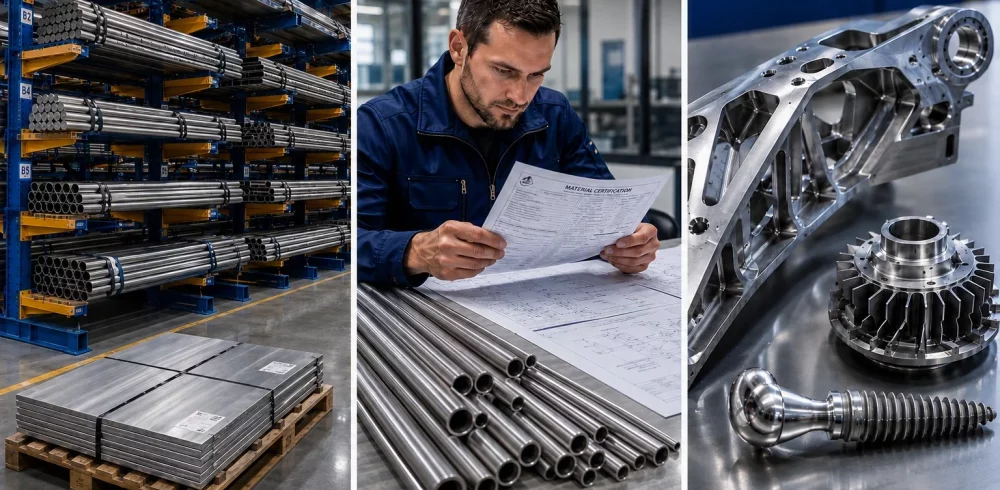
In regulated industries, material is not truly available because it is sitting on a warehouse rack. It is available when Quality can release it, Production can use it, and the customer’s requirements have been satisfied. Increasingly, the real value of a metals supplier lies in making that happen. By Ben Wood, CEO (UK), Hempel Special Metals
Material availability starts at approval, not at the warehouse rack
Two batches of material can meet the same specification and still produce very different outcomes.One moves directly into production. The other sits waiting for approval because of source-control requirements, origin restrictions, certification gaps or unresolved traceability questions. Both appear available. Only one is usable.
In highly regulated industries, material availability is no longer defined by what is sitting on a warehouse rack. It is defined by what can be approved, released and used without delay. That distinction between physical availability and usable availability is changing how specialist metals should be bought.
For many years, procurement teams have quite rightly focused on price, availability and lead time. Those factors remain important. What has changed is the number of conditions material must satisfy before it can be released into production.
Export controls, customer-approved mill lists, country-of-origin restrictions, supplementary testing requirements, traceability expectations and programme-specific approval routes now sit behind the figure shown on a quotation. A price saving may be noticed once.A rejected lot, failed audit, production interruption or missed programme milestone will be remembered for much longer. A metals buyer is not simply buying material.
The four gates between stock and production
A metal buyer is buying confidence that the decision will withstand scrutiny from Quality, Engineering, Production and the customer.
For specialist materials, availability should be measured through four gates. If one of them fails, availability was theoretical rather than real.
1. Material fit
The correct alloy, specification, product form, condition, tolerance and manufacturing route for the application.
2. Approved source
A producing mill, country of origin and supply route accepted by the customer and appropriate for the programme.
3. Release-ready evidence
Certification, heat and lot traceability, test results and supporting documentation that satisfy both specification and customer-specific requirements.
4. Execution into production
Processing, marking, packaging, logistics planning and delivery performance that put material where Production needs it, when it needs it.
The best supplier is not necessarily the one you speak to most often. It may be the one you only need to speak to at the scheduled review because every delivery, document and action between reviews happened as promised.
Availability is no longer simply about whether the material exists. It is about whether the material can move through all four gates without delay.
When meeting specification is only the starting point
Titanium Grade 5 illustrates this challenge well. A bar may comply fully with the required AMS or ASTM specification and still be unsuitable for a specific programme because of the producing mill, origin, testing route or missing customer-specific evidence. The alloy can be correct. The specification can be correct. The delivery date can be achievable. Yet the material may still fail the test that matters most:
Can it be released into production without delay?
The same challenge exists across nickel alloys, stainless steels, aerospace materials and many other specialist grades. Specification defines what the material should be. Approval and evidence determine whether that particular lot can be used.
The value of a specialist supply partner
As supply chains become more complex, manufacturers increasingly need more than a supplier capable of shipping material. They need a partner capable of absorbing complexity before it reaches Goods In.
That may mean:
- Confirming approved-source requirements before the order is placed
- Identifying origin restrictions before material is shipped
- Verifying certification and traceability
- Arranging supplementary testing
- Processing material closer to the required form
- Holding programme stock
- Creating contingency routes if supply changes unexpectedly
For many organisations, the question is no longer “Who has the material?” It is “Who can help us get the right material approved, released and delivered with minimum risk?”
What Hempel means by Metals & MORE
For Hempel, stock has always been the starting point rather than the entire proposition.
M | Mill and Material Assurance
The right alloy, form, condition and manufacturing route.
O | Origin and Approval Control
The right source, origin and customer-approved route.
R | Release-Ready Evidence
Certification, traceability, testing and quality documentation.
E | Execution into Production
Processing, logistics, call-offs, contingency planning and dependable delivery. By combining strategic stockholding, approved-source relationships, technical expertise, processing capabilities and quality accreditations including AS9100 and AS9120, Hempel helps customers reduce complexity before it becomes programme risk.
A better definition of value
This is not an argument that price no longer matters. It is an argument for pricing the right thing.
The meaningful comparison is not simply cost per kilogram.
It is the total cost of material that moves from specification to approval and into production without creating avoidable programme risk.
The cheapest quotation can still become the most expensive material.
At Hempel Special Metals, the job is not finished when the metal is delivered.
It is finished when the customer can release it with confidence.
Hempel Special Metals
www.hempel-metals.com
Manufacturing & Engineering Magazine | The Home of Manufacturing Industry News