

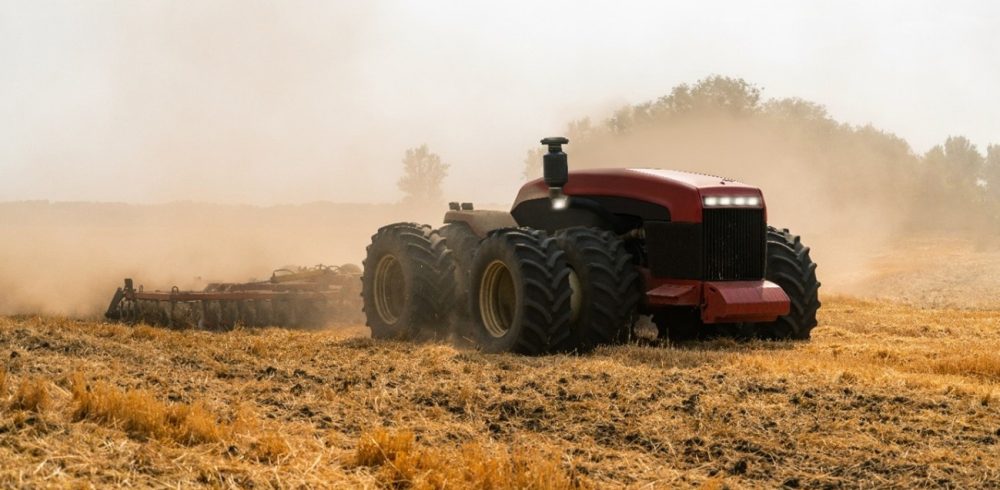
The agricultural equipment industry is entering a period of transformation. Faced with a push for increased electrification and automation, manufacturers are rethinking how power is delivered, controlled, and monitored across every aspect of modern machinery. From compact vineyard robots to hybrid tractors, the off-highway sector is rapidly adopting smarter, cleaner technologies designed to improve everything from efficiency to sustainability.
For Regal Rexnord, this shift represents both a challenge and an opportunity – one that plays directly to the company’s strength as a leader in power transmission, motion control, and system integration. With a portfolio spanning mechanical, electrical, and digital solutions, the business is helping OEMs bridge the gap between traditional drivetrains and the fully electrified, automated machines of the future.
Electrification and hybridization
Electrification is one of the major trends in the off-highway market. While full battery-electric systems are gaining traction in smaller autonomous platforms, hybridization is increasingly viewed as the practical next step for larger agricultural vehicles. By coupling a downsized diesel engine with electric drives or generators, OEMs can reduce fuel consumption, emissions, and noise without having to compromise on effective power delivery.
“Hybrid systems are allowing manufacturers to get more out of their existing architectures,” explains Peter Mills, Global Market Sales Director at Regal Rexnord. “By integrating electric drives for auxiliary functions, you can downsize the engine, reduce hydraulic demand, and make the system more efficient across the board.”
This is somewhere that Regal Rexnord’s broad range of capabilities can deliver real change. Across brands like Thomson™, Warner Electric™, and CENTA™, the company provides critical components that enable electrified motion, from actuators and clutches to advanced couplings and brakes. In many cases, these solutions directly replace hydraulic or mechanical systems, offering higher precision and lower maintenance requirements.
“Hydraulics, are good in delivering brute force but with our new high-power actuators we are closing the gap” says Robert Johansson, Industry Manager at Regal Rexnord. “The largest cylinders are difficult to replace but for smaller, intermittent functions – things like steering systems, lifting platforms, irrigation arms – electric actuators can provide greater controllability and efficiency. They’re also cleaner, with no risk of fluid leaks in the field or on valuable crops.”
Efficiency through smart engineering
Over recent years efficiency has become a key target across virtually every industry you can think of, and agricultural machinery is no exception.
Rising fuel and material costs – particularly for copper wiring – mean OEMs are under pressure to optimize every element of the drivetrain. For manufacturers of advanced equipment such as harvesters and combines, even seemingly modest improvements in actuator or brake performance can yield significant savings over the lifetime of the vehicle.
Regal Rexnord’s engineering teams are responding with a new generation of high-torque, compact, and energy-efficient components designed for demanding field conditions. The CENTAFLEX-TIR coupling, for example, allows machines to idle at lower speeds, reducing fuel consumption and emissions without affecting performance. Similarly, the latest electric actuators from Thomson are engineered for higher force output, faster movement, and improved functional safety.
“Efficiency isn’t just about saving fuel,” Johansson adds. “It’s about simplifying systems, reducing cable size, and improving overall control. When you combine those benefits, you get machines that are lighter, more precise, and easier to maintain.”
Automation and autonomy
Alongside electrification, one of the big changes sweeping across the sector is the push for automation. New technology is already reshaping how agricultural equipment is designed and operated, and the impact it makes is only likely to get more significant over the coming years.
From self-steering vehicles to autonomous robots, the goal is to enable machines that can run longer, work more accurately, and reduce the strain on a shrinking agricultural workforce.
Automation also ties closely with precision farming, where GPS-guided systems control every input, from seed distribution to pesticide application. By replacing hydraulics with electromechanical motion control, machines can achieve the fine repeatability and positional accuracy that precision agriculture demands, helping farmers do more with fewer resources and tighter margins.
According to Jon Volk, Global Product Manager – Electrification, automation brings its own engineering challenges.
“Traditional hydraulic or mechanical systems aren’t always well suited to autonomous operation,” he says. “To enable full electronic control, we need braking, actuation, and clutch systems that respond instantly and predictably to digital commands.”
These systems provide precise, variable braking that can be seamlessly integrated with an autonomous control architecture. “For OEMs,” Volk explains, “that means fewer valves, solenoids, and relays. This, in turn, makes for a simpler, cleaner system that’s easier to maintain and safer to operate.”
Connected intelligence and predictive maintenance
As electrification and automation evolve, connectivity is becoming a natural next step. Machine manufacturers are increasingly equipping vehicles with sensors that monitor component condition, energy use, and system performance in real time. This data can be used to predict failures, reduce downtime, and optimize operational efficiency.
Regal Rexnord is supporting this shift with its Perceptiv™ platform; a suite of connected technologies that enable predictive maintenance at the component level. Sensors integrated into bearings, couplings, or gearing provide continuous insight into system health, allowing operators to plan maintenance before costly failures occur.
“Knowing when a component is operating outside its expected range is invaluable,” says Mills. “For agricultural machinery, which often runs in short, critical time windows, avoiding unexpected downtime can make the difference between success and lost yield.”
Building a bridge between mechanical and digital
As the off-highway sector continues to evolve, Regal Rexnord’s strength lies in its ability to support both legacy and next-generation technologies. Its portfolio spans everything from proven mechanical systems, such as bearings, gearboxes, and couplings, to advanced electrification and digital solutions that enable smarter, more connected machines.
“Our role is to help OEMs manage that transition,” explains Mills. “We work closely with customers to understand their roadmaps, identify performance gaps, and co-develop solutions that fit their long-term vision. Whether that means integrating electric actuators, brake-by-wire systems, or predictive maintenance technologies, we have the expertise to bridge the mechanical and digital worlds.”
By combining time-tested reliability with forward-looking innovation, Regal Rexnord is empowering manufacturers to build the next generation of agricultural machinery – one that is more efficient, sustainable, and ready for the challenges of tomorrow.
Manufacturing & Engineering Magazine | The Home of Manufacturing Industry News