

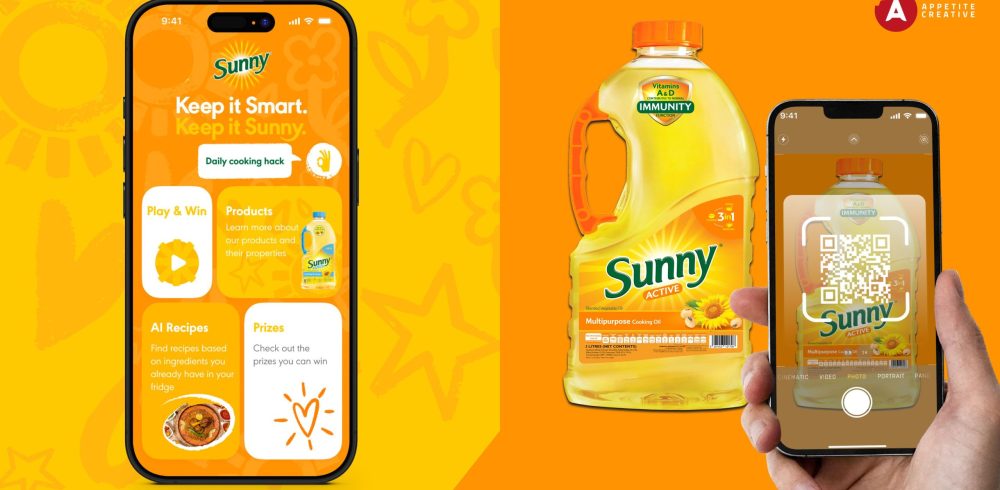
With Packaging Innovations & Empack 2026 fast approaching, Jenny Stanley, Managing Director of Appetite Creative, author of Connected Packaging: The Game-Changing Marketing Tool, shares why brands can no longer afford to ignore the evolution of packaging from static billboard to dynamic digital channel.
Connected packaging has long promised an exciting new kind of brand-consumer relationship, but 2025 has seen that potential start to truly take form. From Tesco’s GS1-powered trial launch in the UK to rising adoption of AI, the past year has turned hype into action. It has given brand owners a lot to think about.
“When we spoke back in February, there was still a sense that this was an emerging opportunity. Now, it’s here,” Jenny says. “The GS1 Tesco test is huge because it brings something substantial to the UK market. We’ve talked about pilots and potential impacts, but this is real. And brands are finally asking, ‘What does this mean for us?'”
For years, connected packaging has proved clever and creative, but often limited in scale. That changed when UK retailer Tesco became the first major player to trial GS1-powered on-pack QR codes at scale.
Unlike generic QR links, GS1 digital links connect to a globally recognised standard, unlocking everything from product data and marketing content to traceability and digital product passports. “It’s a major shift,” Jenny explains. “This is not a gimmick, it’s infrastructure.” As more retailers explore GS1 adoption, the conversation is moving fast.
A channel that’s already in your customers’ hands
According to Jenny, brands are waking up to the idea that connected packaging is not a novelty; it’s an important media channel. “It’s becoming better understood that the purchase isn’t the end of the journey; it’s the beginning. The product in your customer’s hand is the most direct line you have.

Executed well, it’s a win-win. Brands unlock first-party data, consumer insights and campaign ROI, while customers get access to tailored content, education, and brand storytelling. Recent campaigns tell the story: Etika hit 218,000 unique visitors with 120% goal achievement. Suntop delivered over 1 million visitors with a 1% bounce rate. KDD achieved 100,000 scans across two markets. These results are leagues ahead of digital ad click-through averages and, on average, deliver a 20% increase in sales.
“But if you do it badly, it’s worse than not doing it at all,” Jenny warns. “If you just link to your homepage with no value for the user and nothing distinct to offer, don’t bother. You’re training people to be disappointed. Every scan should be an opportunity to surprise, inform, or delight.”
Education, trust and transparency
Jenny points to areas like product authentication, digital product passports, and sustainability messaging as key growth areas for 2026 and beyond. As regulation continues to evolve around EPR, PPWR, and transparency mandates, brands will need to provide proof points and traceability. And consumers, she says, are ready.
“People want to know where their product came from. Was it ethically sourced? Is the packaging sustainable? Can I reuse it or recycle it? Brands don’t need to shout these things; they need to show them, clearly, simply, and honestly.”
She adds that while some sectors like food and drink are less affected by DPP right now, others such as textiles, pharma, and luxury, are moving fast. “It’s a case of asking: what does this mean for me, specifically? There’s no magic bullet or one-size-fits-all.” Appetite Creative’s consultancy arm supports clients with exactly that kind of tailored strategy.
A modern marketing superpower
The opportunity to use connected packaging goes way beyond regulatory compliance, it’s deeply creative. Jenny champions connected packaging to inject the spark of humanity into the digital journey: “Behind every scan is the opportunity for personalisation. Whether it’s a gamified experience, storytelling, heritage, or usage tips, these are unmissable chances to create emotional connection.”
And while some see digital and crafted packaging as opposites, Jenny sees alignment. “It’s not about replacing creativity with code; it’s about enhancing what’s already there. For example, a hand-illustrated label can trigger a scan that shares the story of the illustrator. A cardboard toy can link to an AR build guide. It’s retro and futuristic in one.”
A rare moment of focus
Most digital interactions today vanish faster than a blink, a fleeting flick of the thumb, a scroll, or a skip. But connected packaging breaks that rhythm.
“The time needed to grab attention used to be seven seconds,” says Stanley. “Now we’re down to just two.” That’s the average time a consumer might pause before swiping past your message. In that high-pressure, high-speed environment, the two-minute average interaction time connected packaging can deliver is nothing short of extraordinary.
“This is an uninterrupted channel,” Jenny explains. “No ads competing for space and attention, no distractions, just a direct, intentional engagement.” It gives brands a chance to educate, inspire, or entertain. Whether it’s sustainability stories, how-to guides, or personalised rewards, those two minutes become a meaningful exchange a way most marketing channels can only dream of.
The data speaks volumes
For Appetite Creative, the ROI case is clear. Brands see up to 20% sales uplift through connected packaging campaigns, plus gold-dust first-party data. “You’re not just getting a click. You’re getting the time, location, engagement, repeat scans. It’s marketing that listens as much as it speaks.”
That feedback loop feeds everything from flavour launches to marketing messaging. “We’ve had clients completely reposition a product after listening to what consumers told them through connected packaging. At the heart, it’s a consumer intelligence platform.”
Interestingly, Jenny highlights the printing industry as both a challenge and a key opportunity. “Sometimes the biggest barrier is the print house. They might not have the digital capabilities, or some of the more traditional businesses may be resistant to change. But that’s shifting. Companies like Koenig & Bauer are moving in, with platforms like AURAVEO that bring storytelling and transparency into the printing process itself. That’s an absolute game-changer in today’s market.”
She believes printers have a vital role in enabling connected packaging’s success: “Digital print has been waiting for its moment. It’s here. This is it.”
What’s next?
As we look ahead to Packaging Innovations & Empack 2026, Jenny predicts key themes will include:
- Greater uptake of GS1 codes
- Dual QR code strategies for DPP and marketing
- Growth in authentication tools for anti-counterfeit and consumer trust
- Expansion of accessible packaging initiatives like NaviLens
“I think we’ll definitely see more maturity,” she says. “Not just ‘should we do it?’ but ‘how do we do it well?’ That’s when things really get exciting.”
Packaging Innovations & Empack 2026 this February offers brands a roadmap to navigate the fast-evolving world of connected packaging, regulation, and data-led creativity. For brands looking to get ahead, the time to scan in is now. Register for your free visitor pass today and be ready for what comes next.
Manufacturing & Engineering Magazine | The Home of Manufacturing Industry News