


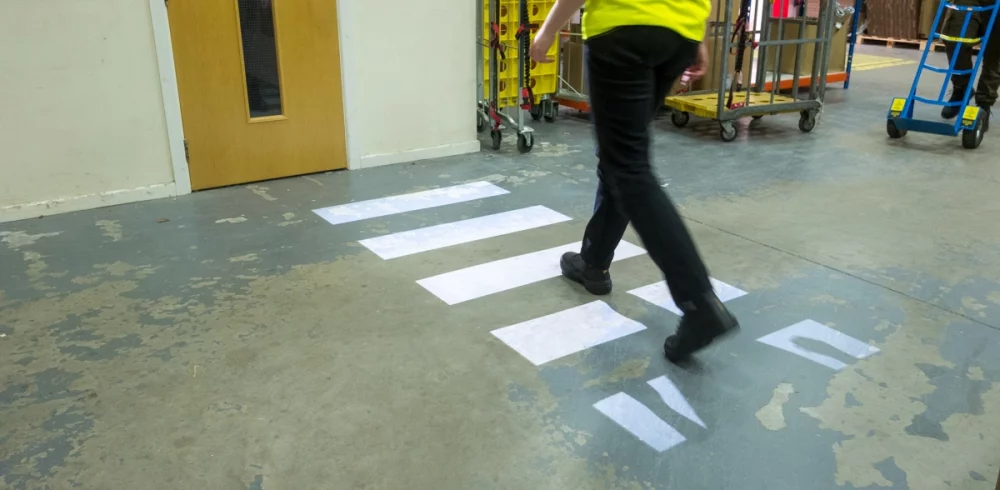
North East based Projected Image offers a compelling alternative to traditional safety signage. Using LED gobo projectors, projected floor markings are helping warehouses to cut costs, improve sustainability and increase safety.
Painted and printed signage is a common safety solution used in busy environments like warehouses and manufacturing facilities across the UK. But traditional signage does come with issues in busy warehouses, such as chipping, fading and causing ‘sign blindness’. Projected signage is a cost-effective, adaptable and sustainable alternative to traditional safety signage. Newcastle based Projected Image are the only UK business supplying both powerful, IP-rated LED projectors and the bespoke gobos which go in them.
The company provides projected safety signage: high-powered LED projectors that shine bright, clear safety messaging directly onto surfaces, with no paint and no physical markings to wear away. A solution they say is becoming adopted rapidly across warehousing, logistics and manufacturing, for both financial and environmental reasons.
“The ongoing costs of painted signage can quickly add up. A typical 20m² area featuring two zebra crossings and a green walkway can cost between £400–£800 to paint. In busy environments, it could require repainting twice a year and that doesn’t include the cost of downtime,” says Ian Spoors, Managing Director of Projected Image.
Traditional painted signage requires areas to be closed for hours, creating operational disruption and lost productivity. In a busy warehouse or manufacturing facility, where every hour of downtime has a direct impact on output, repainting floor markings every six months can have a significant impact on your turnover.
The environmental toll is just as significant. Making painted and printed safety signs typically relies on binders, pigments, solvents and additives, many of which are energy-intensive to produce, contribute to VOC emissions and hazardous waste and expose workers to chemicals. Disposal of these materials can have its own regulatory and environmental requirements, repeated every time a marked area needs refreshing.
In contrast, projected signage uses bright, clear LED light to shine safety messaging onto floors, walls and doors, eliminating the need for paints and coatings and helping to avoid use of hazardous chemicals, as well as the disposal issues associated with conventional floor markings.
The installation process reflects that simplicity too. Projected signage can be installed or updated in as little as one hour, with minimal impact on day-to-day operations.
“Speed of installation makes a real difference to the cost benefits of projected signage. Instead of shutting down part of a warehouse for half a day, you can install a projector in about an hour
and the signage is immediately live. That’s a major advantage in fast-moving environments,” adds Ian.
The financial case becomes even clearer over time. On top of environmentally-harmful materials, traditional painted and printed signs often require regular reapplication due to wear, leading to repeated material use, transport and labour emissions, making it a more carbon intensive process over time. Forklifts, pallet trucks, machinery and footfall all take their toll, and in the heaviest-traffic areas the deterioration can be rapid.
“Repainting twice a year could cost around £6,000 over five years. In comparison, LED projected signage offers a significantly longer lifespan of 50,000 hours or five years, costing around just £3,400 over the same period and beyond (for three 80W projectors and three gobos),” Ian adds.
That is a saving of more than £2,600, before factoring in the cost of downtime, repeat site visits and time associated with scheduling regular repainting programmes. Projected Image say that their LED projected signage can deliver a return-on-investment in around one year, particularly in high-traffic environments, due to reduced maintenance needs and avoiding disruption.
The environmental savings follow the same logic. Projected signage has a long operational life, reducing material waste and the need for repeated replacements.
“Painted signs typically need repainting twice a year in heavy traffic areas, whereas our projected health and safety signage lasts approximately 50,000 hours with minimal maintenance. This means fewer site visits, less waste and a significantly lower carbon footprint over the lifetime of the installation — on top of no materials that are harmful to the environment,” adds Ian.
According to Projected Image, the LED projectors used in projected signage are highly energy-efficient, requiring around 75–80% less electricity than incandescent bulbs and 30–50% less than many fluorescents. Coupled with low-carbon electricity or renewable energy, this efficiency reduces environmental impact further still.
“With less energy usage over time, projected signage significantly lowers the environmental burden associated with manufacturing, applying and disposing of traditional signage. For those focused on their sustainability measures, it’s certainly the more suitable choice,” Ian says.
Lower running costs, reduced business downtime and non-hazardous materials makes a strong case to opt for projected signage, particularly for businesses looking to reach their sustainability targets. With health and safety requirements tightening, the need for clear, consistent and reliable signage is as important as ever.
“The combination of durability, energy efficiency and reduced environmental impact makes projected signage a fantastic alternative for modern facilities. It helps businesses improve safety standards while supporting their wider sustainability goals,” adds Ian.
“In many warehouses, painted or printed floor markings simply don’t last and it costs more than many people think. Projected signage is a cost-effective alternative that provides consistent visibility over many years, reducing repeated maintenance and excessive health and safety costs for businesses,” concludes Ian.
Manufacturing & Engineering Magazine | The Home of Manufacturing Industry News