


BRITAIN’S ports have a golden opportunity to increase productivity and strengthen the nation’s supply chains by embracing autonomous transport, according to a new report by global consulting firm, WSP.
The ‘Barriers and Opportunities for Automation in UK Ports report – produced by WSP on behalf of Zenzic – has called on the nation’s ports to help build more competitive and resilient supply chains by embracing and deploying Connected and Automated Mobility (CAM) solutions.
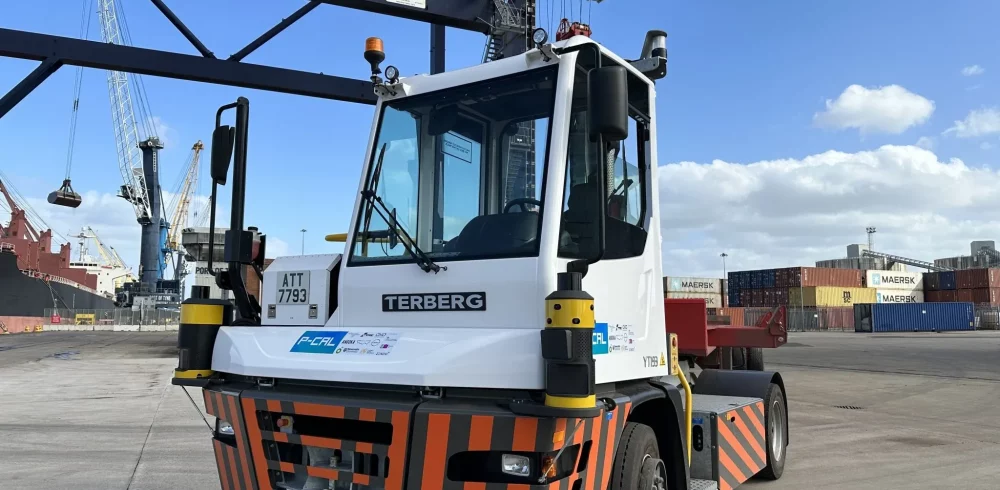
The report comes just weeks after PD Teesport announced a landmark US$5.1million deal with Westwell for a fleet of autonomous vehicles to carry out horizontal container transport at Teesport Container Terminal 2. The deal will see electric autonomous terminal tractors and an automation system for moving containers integrated into the terminal’s existing operations to make the port more efficient and sustainable.
Increasing numbers of UK ports have embraced CAM solutions over recent months and years, from autonomous container handling vehicles at Port of Tyne and Port of Felixstowe to the nation’s first Digital Trade Testbed (DTT) at the Teesside Freeport and a self-driving shuttle at Belfast Harbour.
The report from WSP and Zenzic however has highlighted that despite the success of these early pilot projects and studies, the UK maritime industry has yet to match the scale of automation seen in parts of Asia and Northern Europe when it comes to moving from studies and trials to full-scale, commercially viable deployments.
The findings also highlight how the UK can harness its established and emerging strengths, most notably in R&D, software, AI, robotics, data analytics and cross-sector collaboration between industry, academia and government, to help accelerate the deployment of CAM in UK ports and increase competitiveness.
Sam Boyd Williams, Director, WSP, said: “The UK already has many of the ingredients needed to become a leader in port automation, including world-class expertise in engineering, software, AI and connected mobility technologies. What is needed now is a concerted effort from industry, government and technology providers to move beyond successful pilots and demonstrations towards long-term deployment at scale.”
“The opportunity for the UK is not to replicate every aspect of larger international ports, but to build on its strengths in retrofitting and modernising complex, brownfield environments. Doing so can help strengthen productivity, supply-chain resilience and competitiveness while supporting wider decarbonisation ambitions.”
Several priorities emerged from the report, including developing integrated terminal operating systems, advancing AI-driven port applications, expanding pilot demonstration programmes and leveraging wider UK expertise in adjacent advanced technology sectors.
Among the report’s key findings is that the UK has an opportunity to become a leader in the deployment of mixed-mode automation, where autonomous and manually-operated systems work safely alongside one another in complex existing port environments.
Zenzic, which commissioned the report, was set up by the UK Government and industry to champion and grow the UK’s CAM ecosystem and has provided funding and support to several port-related CAM projects over recent years.
The organisation is also one of the founding members of the UK’s Port Automation Group alongside the likes of Thames Freeport, Amazon, WSP, Oxa and the UK Major Ports Group, which was set up to create maximum leverage from CAM solutions being deployed portside.
Mark Cracknell, Programme Director at Zenzic, said: “The report lays bare the challenges and opportunities facing the nation’s ports as increasing numbers of shipping hubs across the globe continue to reap the benefits of incorporating connected and automated mobility solutions into their operations.
“Over recent years, programmes such as CAM Pathfinder have made great inroads when it comes to helping UK ports conduct CAM studies and trials, however if we are to continue building on this momentum, then the industry must start turning these early successes into permanent, full-scale deployments.
“From readying brownfield sites for autonomous vehicles to increased collaboration and government support, the report presents a roadmap for ports seeking to embrace CAM, as well as setting out how industry, academia and government can better work together to drive the sector forward. It is an essential read for anyone involved with the sector.”
Manufacturing & Engineering Magazine | The Home of Manufacturing Industry News