

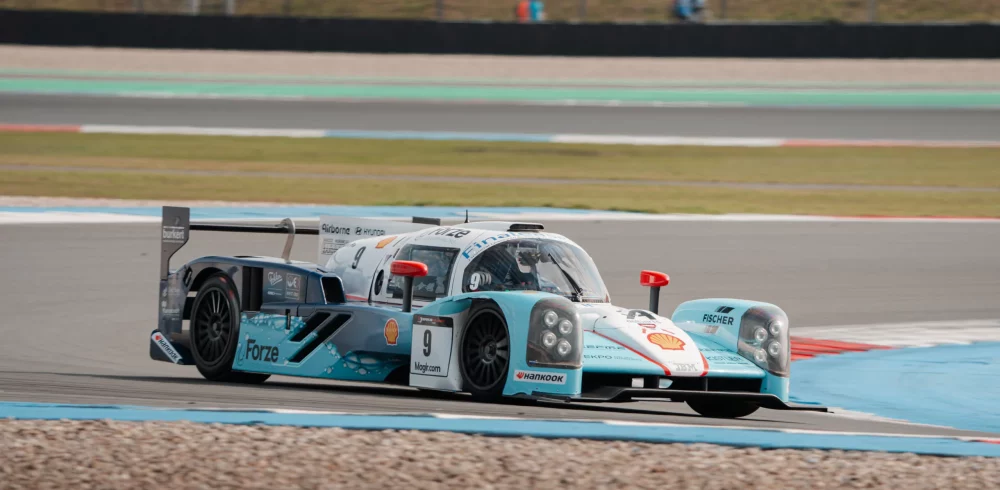
Forze Hydrogen Racing is using telemetry and cloud-based monitoring technology from ODOS to analyse critical vehicle systems before its hydrogen-powered race car returns to the pits, enabling faster engineering decisions, improved safety and accelerated vehicle development.
Hydrogen-powered race cars generate vast volumes of operational data, with teams required to monitor fuel-cell performance, cooling systems, energy storage and powertrain behaviour alongside traditional vehicle systems. Managing these complex technologies under high-speed, high-load racing conditions makes real-time data analysis essential for improving performance and supporting safe operation.
To support the development of its competitive hydrogen-powered race car, Forze Hydrogen Racing integrated ODOS’ compact Minilog telemetry and data-logging system into its vehicle architecture.
The system captures and processes high-rate telemetry from key systems, including the fuel-cell stack, cooling loops, energy storage system and powertrain, providing engineers with continuous visibility into vehicle performance and system health.
Unlike traditional approaches that require data to be manually downloaded and analysed after a test session, ODOS streams information directly to cloud-based dashboards in real time. Engineers can begin reviewing vehicle performance while testing is still underway, often before the car has returned to the pits. Because data is streamed automatically, engineers no longer need to wait for manual data downloads at the end of a session, further accelerating analysis and troubleshooting.
The platform also enables trackside and remote engineers to access live telemetry simultaneously, improving collaboration across disciplines and allowing teams to monitor operating limits, investigate anomalies and optimise performance in real time.
Maurits de Sousa Nascimento of Forze Hydrogen Racing said: “Motorsport generates huge amounts of data and with hydrogen technology, it’s even more complex. The Minilog has given us the ability to analyse multiple systems in real time, helping us make faster, smarter decisions during tests and races.
“The compact design with simple interfacing handles our data rates easily, and the built-in OTA configuration and cloud tools have changed how we collaborate as a team. We can even start analysing data before the car comes back to the pits, which speeds up our workflow and allows us to focus on improving performance.”
By providing continuous visibility into fuel-cell stack health, thermal management systems and other critical operating parameters, the ODOS platform enables the team to safely extend testing programmes while maintaining confidence that the vehicle is operating within defined performance and safety limits.
The project also demonstrates the growing role of advanced telemetry and cloud diagnostics in the future development of hydrogen-powered transport. As hydrogen technologies continue to mature across automotive, commercial vehicle and industrial sectors, access to reliable, real-time operational data is becoming increasingly important for improving performance, efficiency and safety.
Umesh Patel, Business Director at ODOS Solutions, said: “Hydrogen-powered vehicles introduce a new level of engineering complexity, with multiple systems needing to operate together under demanding conditions. Real-time visibility is essential.
“Our work with Forze Hydrogen Racing demonstrates how cloud-connected telemetry, remote diagnostics and live data analysis can help engineering teams make faster, more informed decisions, accelerate development cycles and improve both performance and operational safety.”
Manufacturing & Engineering Magazine | The Home of Manufacturing Industry News