

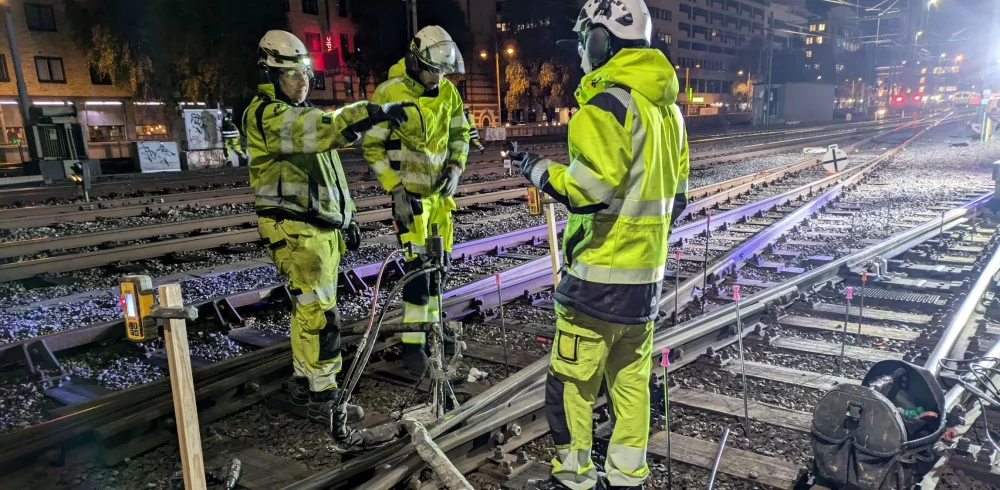
The Department of Transportation pledged to increase rail freight 75 per cent by 2050 to support the transport of goods across the country over the next few decades. Many tracks, tunnels or bridges must undergo essential remediation to ensure safety of the network and support the increase in rail usage. Here, Steve Farr, UK rail manager from geotechnical expert Geobear, discusses how advanced ground engineering techniques can support upgrades to Britian’s rail network without increasing costs or train delays.
Infrastructure issues such as track failures contributed to 27 per cent of train cancellations in 2022/2023. Contractors who are tasked with addressing rail remediation face pressure to complete projects to strict deadlines to avoid extending rail closures and worsening cancellations or delays. Despite essential maintenance required, the Office for Rail and Road identified a £488 million funding gap for Network Rail, suggesting key maintenance may be delayed.
Limitations of traditional rail remediation
Rail maintenance and remediation is typically addressed with large-scale ground engineering techniques such as ballast replacement and grouting. With these techniques, defective tracks or embankment material is removed via excavation and replacement with newer materials.
Traditional methods require heavy machinery and large on-site teams for excavation, which can lengthen project timelines as contractors work phased shifts to complete projects. If one aspect of the project is delayed, this can cascade disruption across the wider transport network.
Large-scale excavation and remediation also require long-term planning as rail lines or tunnels must be closed and trains rerouted to avoid congestion and delays. Coordination with wider transport networks can delay projects, increasing pressure on contractors to work more quickly to meet deadlines.
Keeping trains moving with geopolymers
Bridge and tunnel remediation can often mean limited access for contractors on site, diminishing the value of large machinery for excavation techniques. In these cases, contractors must find alternative, non-invasive solutions to complete works.
Geopolymer techniques bypass limited access issues as no heavy machinery is required; only a small team of on-site technicians that inject specialised resin into specific drill points from the surface. The resin expands once injected, filling underground voids and stabilising foundations.
Geopolymer resin hardens once injected, reaching full strength and remediating ground issues faster than traditional grouting techniques, which require a stabilising period. Because of quicker project completion, railway lines can be reopened sooner than traditional remediation, shortening overall project timelines and reducing long-term cancellations and delays for railway users.
Case study: Shugborough Tunnel
Built in 1846-47, the Shugborough Tunnel is beneath the National Trust estate and carries the West Coast Main Line (WCML), linking London to the Northwest as one of the busiest mixed-traffic corridors.
Several issues with the tunnel, such as fragile brick lining and wet grout, risked contamination of ballast and track drainage. Remediation required sensitive methods with ecological safeguards as access was limited through the National Trust estate and project work had to be planned to avoid disruption to WCML services.
Geobear designed a bespoke geopolymer solution with two formulations: a lightweight resin to stabilise tunnel lining and a closed-cell resin to fill shafts. The project was completed in stages over 40 Saturday night shifts, allowing the WCML to remain operational with minimal disruption.
Advanced ground engineering techniques such as geopolymers offer contractors an opportunity to complete remediation even with limited in-situ access. “The mainline rail network is at a turning point,” said chief executive of the Office of Road and Rail John Larkinson. “We are presented an opportunity to do things differently, working together to improve railways.”
Less invasive geopolymer methods allow railway operations to be maintained, supporting passenger trains as well as the scheduled increase in freight transport.
To discover more about how geopolymer remediation techniques can assist remediation across bridges, tunnels and tracks, visit Geobear’s website here.
Manufacturing & Engineering Magazine | The Home of Manufacturing Industry News