


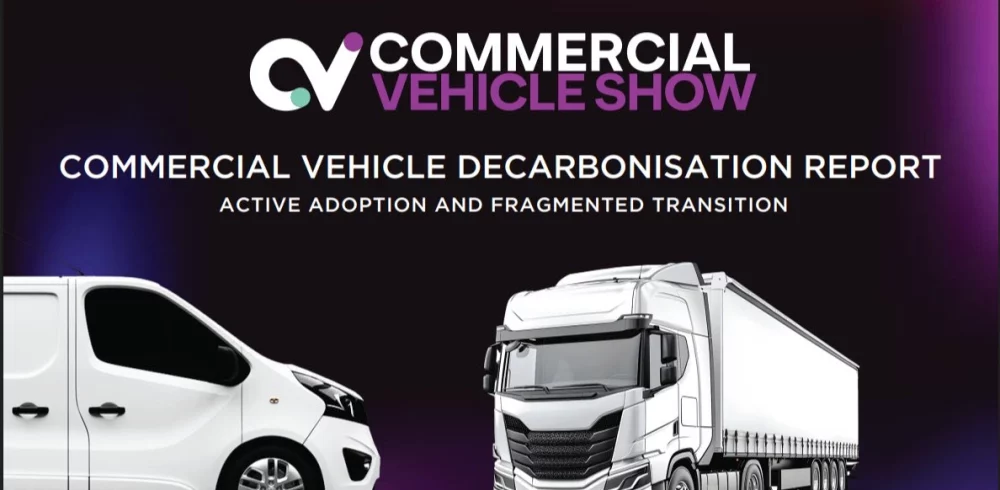
The Commercial Vehicle Show has published its new Decarbonisation Report, bringing together insights from both the LCV and HGV sectors into one comprehensive overview of the UK’s transition to zero-emission transport.
Drawing on responses from a combined 171 fleet operators, the report provides a clear cross-sector analysis of decarbonisation progress – including the barriers and drivers impacting the transition, and the industry’s confidence in hitting UK government targets.
The findings reveal a sector moving at two very different speeds.
For the LCV sector, the transition is now in active deployment. Operators are increasingly finding clear pathways to electrification, with many moving directly from diesel to full electric – bypassing hybrid technology altogether.
In contrast, the HGV sector remains at a much earlier stage. Diesel continues to dominate and operators have yet to settle on a single long-term alternative, whether HVO, gas, electric or hydrogen.
Infrastructure stands out as the defining challenge across both sectors. Operators cite charging availability, depot capacity and grid readiness as the biggest constraints on progress – alongside concerns around range, payload and vehicle supply. Confidence in meeting 2040 targets remains mixed, reflecting the uneven pace of transition across operational requirements.
Across both sectors, the consistent theme is that the challenge is no longer about whether operators want to decarbonise – but how quickly the practical barriers can be overcome.
“This combined report gives the clearest picture yet of where the commercial vehicle sector stands on its journey to net zero. What we’re seeing is not a lack of ambition, but a need for the right infrastructure, clarity and support to unlock progress at scale. Operators are clearly ready to move – the challenge now is removing the barriers that slow them down.”
Nick Davison, Event Director, CV Show
Manufacturing & Engineering Magazine | The Home of Manufacturing Industry News