



Part 1: Winning More Defence Work through Digital Manufacturing
By Ian Weston, Managing Director, Mark3D UK
The UK defence sector is entering one of its most significant periods of investment in decades. Increased defence spending, evolving security priorities and a renewed focus on strengthening domestic manufacturing capability are creating opportunities for engineering businesses across the country.
For many precision engineering companies, machine shops and specialist manufacturers, this presents an exciting opportunity to diversify into the defence supply chain or expand existing customer relationships.
However, winning defence work today is about far more than demonstrating machining capability or available production capacity. Increasingly, defence customers are looking for manufacturing partners who can respond quickly, adapt to changing requirements and provide long-term engineering support throughout the lifecycle of their products.
The manufacturers that thrive in this environment will be those who combine traditional engineering expertise with modern digital manufacturing capabilities.
A Changing Defence Supply Chain
Defence programmes have always demanded exceptional standards of quality, reliability and traceability. Those expectations remain unchanged.
What has changed is the pace at which manufacturers are expected to respond.
Engineering changes can occur rapidly. Prototype programmes often require low-volume production before moving into larger manufacturing runs. Legacy platforms remain operational for decades, requiring ongoing engineering support long after the original production programme has finished.
At the same time, global supply chains have highlighted the importance of resilience and manufacturing flexibility.
For suppliers, this means demonstrating far more than the ability to manufacture a component. Customers increasingly want confidence that their suppliers can respond to changing priorities, solve engineering challenges quickly and continue supporting programmes throughout their lifecycle.
Manufacturing Agility is Becoming a Competitive Advantage
One of the clearest trends we see when working with manufacturers is the growing importance of manufacturing agility.
Whether responding to a design revision, producing a new production fixture or supporting a prototype programme, the ability to move quickly has become a genuine competitive advantage.
This is where digital manufacturing technologies are making a significant impact.
Industrial 3D printing enables manufacturers to produce production tooling, jigs, fixtures and inspection equipment in-house, dramatically reducing the time traditionally required to source these items externally.
Rather than waiting weeks for production tooling to arrive, engineering teams can often begin manufacturing within days – or even hours.
The result isn’t simply faster tooling. It is a faster, more responsive manufacturing business.
Supporting Traditional Manufacturing
There is sometimes a misconception that additive manufacturing is intended to replace conventional machining or fabrication. In reality, the opposite is true.
Across many successful engineering businesses, digital manufacturing complements existing production processes by removing bottlenecks and improving engineering workflows.
Machined components remain essential.
Fabrication remains essential.
Casting remains essential.
Digital manufacturing simply enables manufacturers to support these processes more effectively by producing the tooling, fixtures and engineering aids that keep production moving efficiently.
For many companies, the first return on investment comes not from manufacturing production components, but from transforming the way production itself is supported.
Building Capability Through Digital Engineering
Manufacturing capability today extends beyond the workshop.
Modern engineering increasingly relies on connected digital workflows that bring together design, manufacturing and inspection.
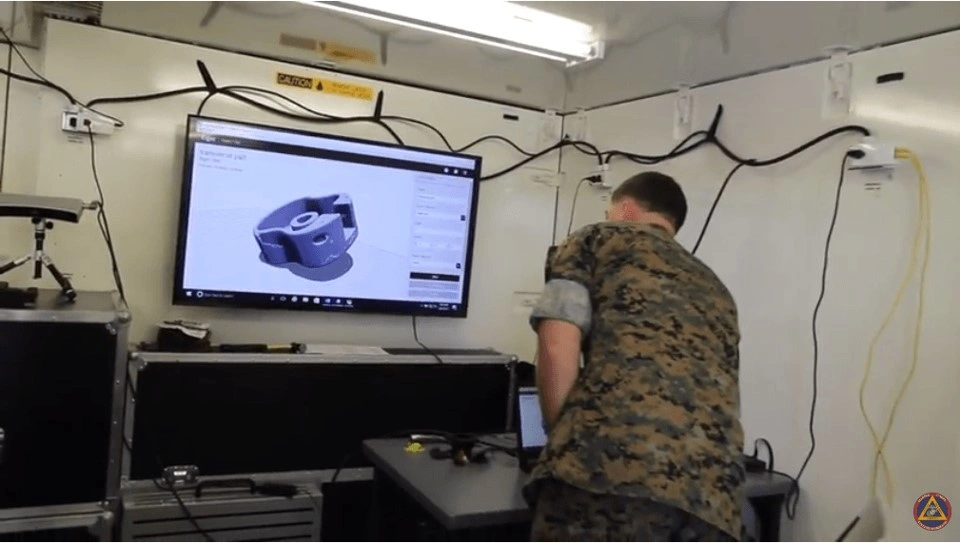
Technologies such as industrial 3D scanning, reverse engineering and digital inspection allow manufacturers to capture existing components, recreate legacy designs and validate finished parts more efficiently than traditional manual processes.
Combined with industrial additive manufacturing, these technologies create a highly agile engineering environment capable of responding quickly to customer requirements.
This isn’t about replacing skilled engineers. It’s about giving those engineers better tools to solve problems faster.
Preparing for Future Defence Opportunities
Many engineering businesses are now actively pursuing opportunities within aerospace, defence and autonomous systems.
Those opportunities will increasingly favour suppliers who can demonstrate innovation alongside manufacturing excellence.
The ability to prototype quickly, manufacture production tooling in-house, reverse engineer legacy components or introduce digital engineering workflows all strengthen a manufacturer’s value proposition.
Digital capability is becoming another reason for customers to choose one supplier over another.
Looking Ahead
The future of defence manufacturing will continue to rely on outstanding engineering.
Digital manufacturing does not replace that expertise – it enhances it.
Manufacturers that invest in greater agility, stronger engineering workflows and modern production technologies will be well positioned to respond to the evolving needs of defence customers while improving their own competitiveness.
Ultimately, success will belong to businesses that can solve engineering challenges quickly, deliver reliably and continue supporting customers throughout the lifecycle of the products they manufacture.
That is where digital manufacturing delivers its greatest value.
To explore these opportunities in more detail, Mark3D is hosting a free webinar:
Winning and Delivering More Defence Work – Practical digital engineering for defence suppliers
Discover how industrial 3D printing, 3D scanning and digital engineering workflows are helping manufacturers reduce lead times, improve manufacturing agility and strengthen their position within the defence supply chain.
Manufacturing & Engineering Magazine | The Home of Manufacturing Industry News