


From Europe’s first Circular Factory to building the 2026 GR Corolla, Toyota is bringing together sustainability with elite motorsport engineering in the UK.
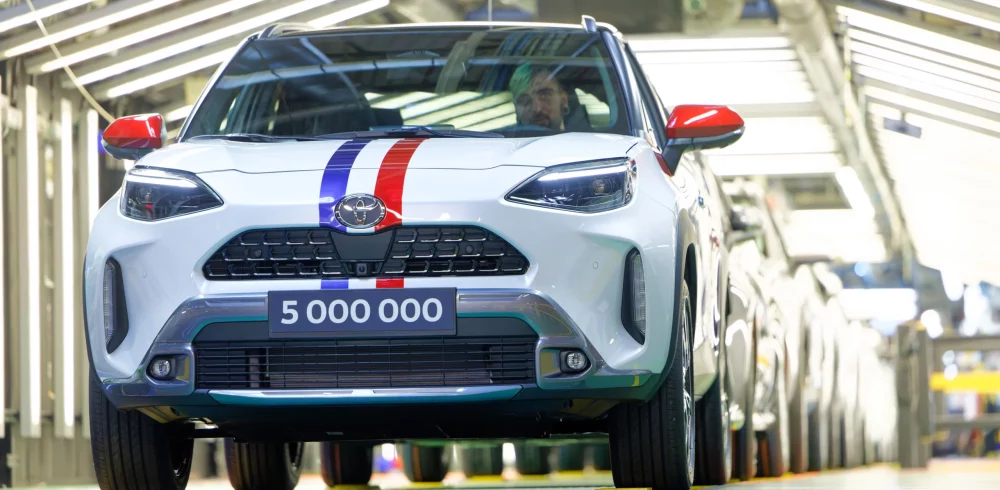
From its incorporation in December 1989 as Toyota’s first fully owned European manufacturing operation, Toyota Motor Manufacturing UK (TMUK) has evolved from a bold multi-billion-pound investment into a leader in global automotive innovation. Operating across Burnaston in Derbyshire and the North Wales town of Deeside, TMUK has spent over three decades embedding the lean efficiencies of the Toyota Production System (TPS). This commitment to kaizen (continuous improvement) has seen the plant achieve major milestones, from pioneering full hybrid manufacturing outside of Japan in 2010 to celebrating its five millionth built vehicle in 2025.
Today, TMUK is as forward-thinking as ever. Indeed, it is demonstrating immense versatility this year with the UK workforce gearing up to apply its expertise to the production of the Toyota Gazoo Racing GR Corolla. Simultaneously, Burnaston is leading Toyota’s environmental evolution as home to Europe’s very first Toyota Circular Factory. By applying TPS principles in reverse to dismantle end-of-life vehicles, TMUK will channel recovered aluminium from scrap wheels directly back into Deeside’s engine production.
Inside Europe’s First Toyota Circular Factory
For over a century, car manufacturing has operated on a strict, linear concept where raw materials and components flow into a factory and new vehicles roll out. When those vehicles eventually reach the end of their usable lifecycles, they traditionally head toward a fragmented scrap and disposal ecosystem. That’s about to change at Toyota. At its Burnaston plant, TMUK’s newly established Toyota Circular Factory (TCF) is pioneering a new way of thinking that treats the end of a vehicle’s life as the beginning of new manufacturing opportunities.
The first facility of its kind for Toyota in Europe, TCF Burnaston serves as a blueprint for a future regional network of circular hubs, with a second facility already scheduled to open in Poland. By establishing new industrial standards for recycling, re-use, and repurposing, this initiative continues the company’s efforts towards environmental targets set out in 2015 to achieve carbon neutrality by 2040. More specifically, it tackles the challenge of building a recycling-based society and systems.
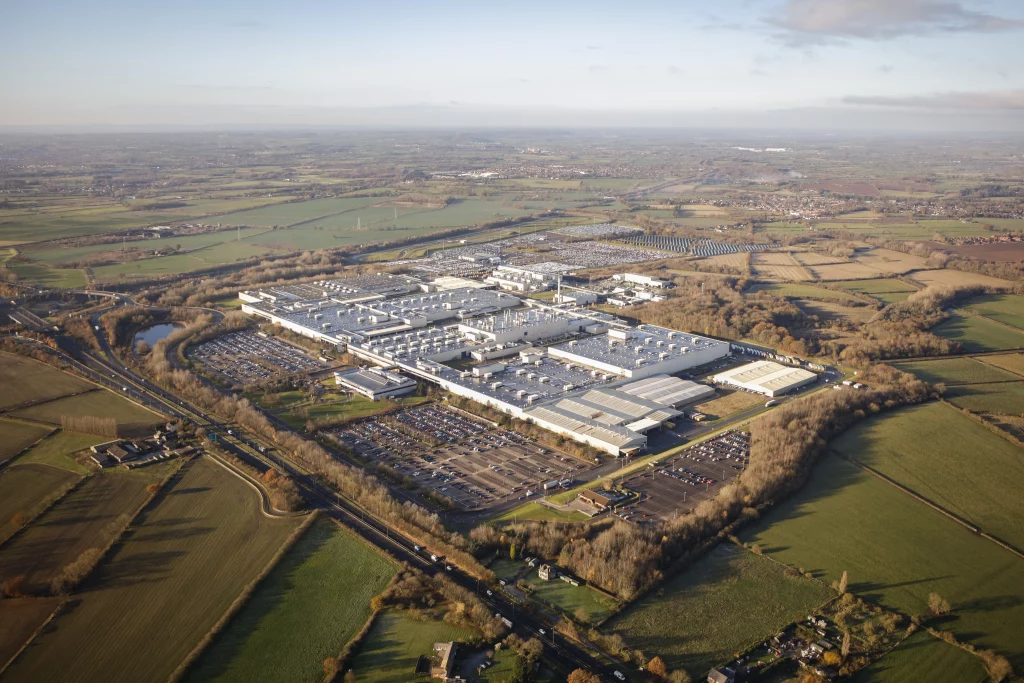
Toyota strategically selected the Burnaston plant to pioneer the TCF concept, in part, due to the UK representing one of Europe’s largest end-of-life vehicle markets. Because it is one of the continent’s few right-hand-drive nations, the vast majority of cars sold here remain within the country for their entire lifecycles, which has fostered a strong, localised dismantling infrastructure. The expertise Toyota possesses in Derbyshire is also a big reason why TCF was set up. Burnaston has been pioneering environmental shifts for many years, underlined by becoming Toyota’s first European plant to manufacture full hybrid vehicles 16 years ago.
At TCF, instead of using the lean methodologies of TPS to assemble a vehicle efficiently, technicians apply them in reverse. This standardised dismantling process ensures that vehicles from multiple brands can be systematically stripped with maximum efficiency and safety. Processing models from various competitors also gives Toyota broader insights into alternative dismantling methods and diverse component wear. This will be complemented by its work with varying material compositions across the wider industry. The operation begins with the deployment of airbags and the rigorous, monitored extraction of all fluids and gases, before technicians use assembly logic in reverse to smoothly dismantle components and classify the recovered feedstock into metals, plastics, and mixed items.
“Toyota has a proud history of establishing the Toyota Production System, principles that have become the global standard for manufacturing efficiency,” notes Leon Van Der Merwe, Toyota Motor Europe (TME) Vice President, Circular Economy and Energy Business. “Now we are applying the same concept to circularity, designing systems that will help ensure the maximum benefits are realised from end-of-life vehicle feedstock. Ultimately, the ambition is to progressively establish a circular economy model, where resources flow through multiple lifecycles, reducing environmental impact, improving material security and supporting Toyota’s long-term environmental commitment.”
Exemplifying the potential of this closed-loop process is the fact that, within the first year of operation, TCF Burnaston has successfully recovered aluminium from scrap alloy wheels, processed it, and shipped it to TMUK’s sister plant in Deeside. Here it is melted down into new engine components, which are then sent back to Burnaston to be installed in brand-new Toyota Corolla models. The first vehicle utilising this exact circular loop rolled off the line in March, demonstrating a tangible reduction in the company’s reliance on virgin materials.
Umit Sengezer, TME Head of Toyota Circular Factory, noted the “excellent results” already achieved, while acknowledging the “valuable insights” that are being garnered. “Not just in how we handle vehicle end-of-life processes, but also how we can build circularity into the planning and design of future vehicles,” he said. “This will enable us to secure even stronger rewards, helping us maximise the potential of the materials, resources and parts we use.”
Furthermore, what’s noteworthy is how the benefits of the TCF framework extend far beyond recycling. For one, it drastically reduces the reliance on volatile global supply chains for virgin raw materials. It also introduces an advanced vehicle refurbishment arm where cars are assessed, repaired, and graded to rigorous factory quality standards to safely extend their road life. However, perhaps most importantly, by analysing how various materials age and degrade, the TCF acts as a live research laboratory that provides a direct feedback loop to Toyota’s future vehicle designers.
Technicians are gathering vital data on how different materials behave over time. They’re also witnessing their real-world durability and exactly how easy or difficult they are to physically access during teardowns. This will allow them to engineer future generations of cars that are significantly easier to repair, dismantle, and recycle from day one.
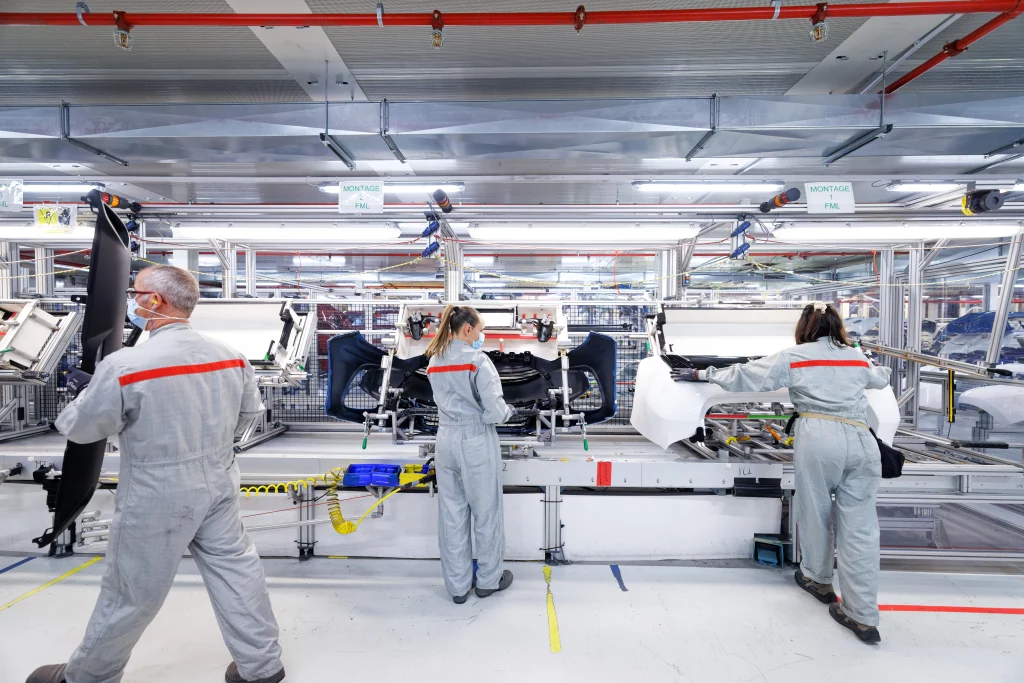
The GR Corolla Comes to the UK
Not only is TMUK solidifying its position as a leading pioneer of sustainability through its circular economy initiatives, but it is also now gearing up to manufacture the high-performance Toyota GR Corolla in Burnaston. A response to growing global market demand for specialised performance vehicles, the move secures the UK’s position at the heart of Toyota’s forward-thinking global strategy.
The GR Corolla’s production in Burnaston marks a new chapter in the story of Toyota Gazoo Racing, which was originally established in 2009 under the guidance of Akio Toyoda. Initially a passion project developed to introduce track-tested cars, Toyoda’s vision has transformed into a fast-growing brand. Following the successful rollouts of the GR Supra, the rally-inspired GR Yaris, and the agile GR86, the GR Corolla has seen consumer enthusiasm consistently outstrip global supply since its initial debut.
Choosing TMUK as the newest production location for one of the company’s racing vehicles is a vote of confidence in the facility’s flexible workforce and infrastructure. Significantly, it also represents the very first time a Toyota plant outside of Japan has been selected to build a GR-branded vehicle. The decision reflects an effort to optimise Toyota’s global production footprint, ensuring that high-demand vehicles can reach markets across the continent as swiftly as possible.
Crucially, the move honours the manufacturing capability of TMUK and the resilience of its localised supply chain. It is also telling of the motorsport heritage that’s embedded in the UK. Preparations for this massive shift have been quietly underway behind the scenes since 2024, when internal teams and primary supply chain partners were first briefed on the project. With industrial tooling and logistical frameworks well into development, the first official UK-built GR Corolla is scheduled to roll off the production line in 2026.
As Yoshihiro Nakata, President and CEO of Toyota Motor Europe, noted, the company takes immense pride in seeing its historic first European plant take on this global expansion project for Toyota Gazoo Racing worldwide. “We really appreciate the historical support and recognition of the United Kingdom and would like to continue to contribute to UK society as a ‘Best In Town’ company,” he said.
Manufacturing & Engineering Magazine | The Home of Manufacturing Industry News