


As aerospace programmes evolve toward lighter structures, higher operating temperatures and increasingly demanding performance expectations, the role of special metals has become more critical than ever.
Across both commercial aerospace and defence sectors, manufacturers are balancing multiple pressures simultaneously: weight reduction, thermal performance, corrosion resistance, mechanical consistency, compliance requirements and increasingly complex global supply chain risks. In this environment, material selection is no longer simply an engineering decision – it has become a strategic component of programme reliability.
Titanium, nickel alloys and aerospace steels continue to form the backbone of critical aerospace applications because they offer the performance characteristics required for highly regulated, safety-critical environments. From aero engine systems and structural components to landing gear, fasteners and precision-machined assemblies, these materials support applications where failure is not an option.
Beyond Material Capability
However, the challenge facing the aerospace industry today extends beyond material capability alone. Supply continuity, traceability and process control are now equally important considerations.
Modern aerospace manufacturing relies upon highly controlled ecosystems capable of maintaining qualification integrity across increasingly international supply networks. Material provenance, certification management, tolerance discipline and conversion consistency all play a significant role in ensuring downstream manufacturing success.
As next-generation aerospace platforms continue to develop, supply partners are increasingly expected to contribute not only material availability, but also programme resilience. This includes supporting shorter lead times, managing volatile raw material markets and maintaining qualified inventory strategies that reduce operational risk for manufacturers and subcontractors alike.
“Material selection is no longer simply an engineering decision – it has become a strategic component of programme reliability.”
Manufacturing Pressure and Programme Continuity
As aerospace production rates continue to recover and expand across both commercial and defence sectors, manufacturers are facing increasing pressure to maintain programme continuity while meeting uncompromising quality expectations.
Large-scale aerospace programmes depend upon tightly coordinated global supply chains where delays, inconsistencies or qualification issues can have significant downstream consequences. In many cases, material availability is no longer simply a procurement consideration, but a factor capable of directly influencing production schedules, operational efficiency and delivery commitments.
At the same time, machining complexity continues to increase as aerospace components become more
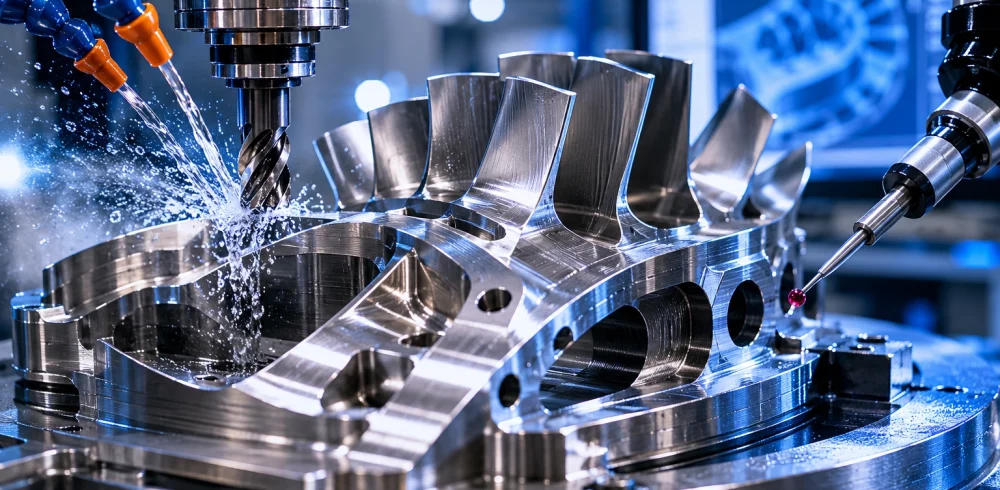
advanced and performance-driven. Titanium and Nickel Alloys, while essential for high-performance applications, can also present significant processing and conversion challenges requiring specialist handling, dimensional control and manufacturing expertise.
This places additional importance on suppliers capable of delivering not only certified material, but also dependable conversion support, consistency between batches and responsive logistics capable of supporting time-critical production environments.
For aerospace manufacturers and subcontractors alike, maintaining programme momentum increasingly depends upon supply partners that understand the operational realities of modern aerospace manufacturing – not simply the material specifications themselves.
“Material availability is no longer simply a procurement consideration – it can directly influence aerospace production continuity.”
Performance, Efficiency and Sustainability
At the same time, demand for light-weighting and higher efficiency continues to accelerate the use of advanced Titanium and Nickel Alloy solutions, particularly within engine technology and high-performance structural applications. These materials enable improved strength-to-weight ratios, enhanced corrosion resistance and the ability to perform reliably under extreme operating conditions.
The aerospace sector’s growing focus on sustainability is also influencing material strategy. Longer component life cycles, improved fuel efficiency and reduced maintenance requirements increasingly depend upon materials capable of delivering consistent performance over extended operational periods.
Building Resilient Aerospace Supply Chains
In response, globally connected supply ecosystems are becoming essential to aerospace manufacturing continuity.
Companies operating within this environment must combine technical understanding with disciplined quality management, international logistics capability and dependable programme support.
Qualification and Traceability Requirements
In aerospace manufacturing, maintaining material qualification integrity remains a critical requirement throughout the entire supply chain. Beyond mechanical, traceability processes capable of supporting highly regulated programme environments.
Precision machining and material consistency play an increasingly important role in maintaining aerospace programme continuity.
As supply networks become more globalised and operational pressures continue to increase, maintaining confidence in material provenance and process consistency becomes essential to reducing downstream manufacturing risk. For aerospace manufacturers and subcontractors alike, dependable traceability is no longer viewed simply as a compliance exercise, but as an important contributor to quality assurance, production efficiency and long-term programme reliability.
This is where organisations such as Hempel Special Metals are helping to strengthen the aerospace supply chain. Through a globally controlled network supporting Titanium, Nickel Alloys and Aerospace Steel supply, Hempel works with manufacturers and subcontractors operating in highly regulated, performance-critical sectors where traceability, consistency and security of supply are essential.
By combining qualified material availability with conversion capability, kitting support and time-critical programme responsiveness, the company reflects the wider direction of the aerospace industry itself: greater integration, greater accountability and greater emphasis on long-term supply resilience.
As aerospace platforms continue to evolve, special metals will remain fundamental to enabling the next generation of performance – but equally important will be the strength, reliability and discipline of the supply ecosystems behind them.
Manufacturing & Engineering Magazine | The Home of Manufacturing Industry News