


Offshore blasting is one of the most demanding surface preparation processes in industrial maintenance. On oil and gas assets, offshore wind structures, vessels and marine infrastructure, surface preparation affects coating life, corrosion control, operator safety and project uptime.
The difficulty is that the offshore environment works against the process. Salt, moisture, wind, access restrictions and tight maintenance windows all increase the chance of rework or delay. Managing those risks requires preparation, equipment, abrasive, containment and support strategy.
Harsh offshore environments
Salt spray, high humidity and fluctuating steel temperatures can quickly compromise a blasted surface. Chlorides left on the substrate may affect coating adhesion, while condensation can form if steel approaches dew point. ISO 8502-4 guidance is commonly used to assess condensation risk, with steel surface temperature generally kept at least 3°C above dew point before painting, unless otherwise agreed.
Good practice starts before blasting. High-pressure fresh water washing can help remove soluble salts and chlorides. Environmental readings should then be monitored through the shift, not treated as a one-off check. In enclosed areas, dehumidification can help stabilise conditions and reduce flash rusting.
Abrasive choice also matters. Garnet, chilled iron grit, steel grit, Aquagrit and other media all behave differently in terms of profile, cutting speed, recyclability, dust and waste. SurfacePrep UK supports this decision through abrasive supply and technical guidance, helping contractors match media to substrate, coating system, access conditions and recovery method.
Access, safety and working conditions
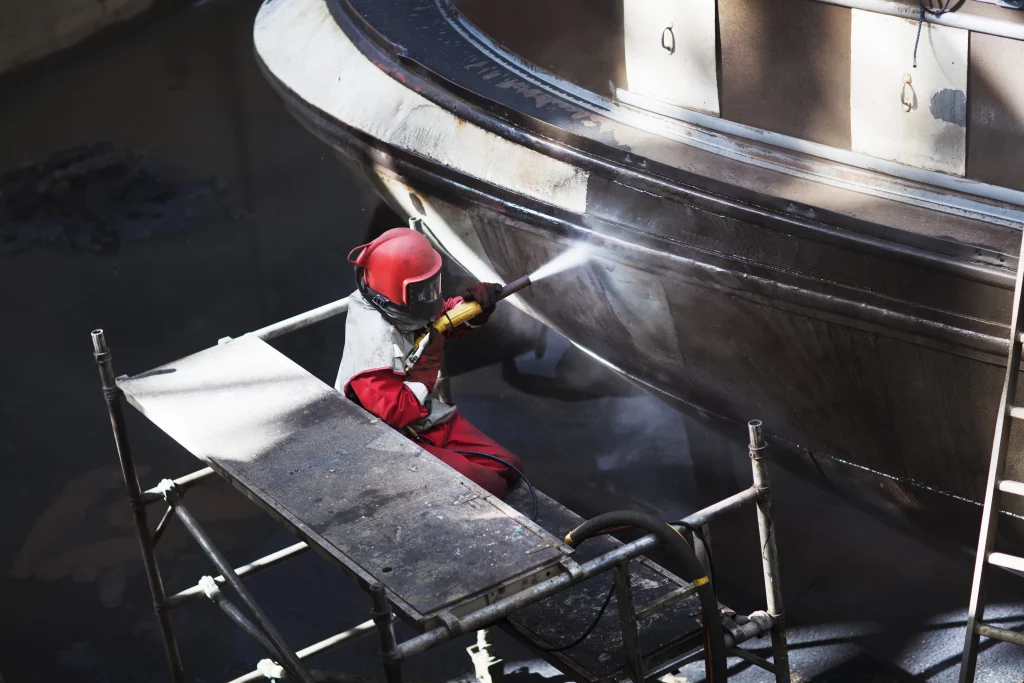
Offshore structures are rarely easy places to blast. Operators may be working in tanks, holds, decks, jacket structures or confined areas where visibility, fatigue and communication are serious concerns. HSE guidance on direct pressure blasting highlights dust, noise, respiratory protection and hearing protection as key control areas.
This is where equipment selection becomes a safety and productivity decision. Compact systems such as IBIX/IBIMAR-style portable machines can support local corrosion, touch-up work and restricted access areas. For larger areas, portable blast machines such as 1440, 2040 and 2452 models allow capacity to be matched to the scale of work.
Operator protection should be treated as part of the blasting system, not an accessory. Air-fed helmets, blast suits, gloves, hearing protection, lighting and communications all affect how safely and consistently work can be completed. SurfacePrep UK supplies PPE such as Apollo and RPB blast helmets, flame retardant blast suits for wet and dry blasting in petrochemical and offshore environments, and breathing air testing and purification equipment aligned with EN12021 requirements. Training in blast cleaning, PPE/RPE awareness and equipment maintenance helps reduce avoidable risk.
Environmental compliance and waste control
Abrasive, coating residues and contaminated waste cannot be treated casually offshore. Poor containment can create environmental risk, clean-up cost and project delay.
Where practical, closed-circuit blasting, vacuum recovery, shrouds, curtains and controlled work areas can reduce the spread of dust and debris. Wet blasting and slurry blasting can also reduce airborne dust. SurfacePrep UK’s Aquagrit wet and dry blast machines are suited to heavy industrial and marine cleaning applications, while EnviraSponge is designed to capture dust at source and reduce waste.
For longer-term control, recyclable abrasives, recovery systems and planned waste handling should be considered from the start. SurfacePrep UK can support abrasive reprocessing, recycling and disposal, helping contractors reduce landfill dependence and manage spent media responsibly.
Efficiency, logistics and reliability
Offshore downtime is expensive. Limited deck space, transport restrictions and equipment failure can quickly turn planned maintenance into a schedule problem.
The answer is not simply more equipment. It is better planning. Compact and multi-functional systems reduce the amount of kit moved offshore. Wet and dry machines can limit duplication. Correct abrasive selection can reduce media consumption, improve cleaning speed and lower waste volume. Spares planning, pressure testing, breathing air checks and equipment inspection reduce avoidable stoppages.
SurfacePrep UK’s TotalCare servicing, MOT machine checks, breakdown support, compliance testing, hire equipment and spares supply help contractors approach offshore blasting as a controlled process rather than a series of reactive fixes.
Successful offshore blasting depends on preparation as much as blasting power. The contractors who control surface condition, access, containment, operator protection and equipment reliability are better placed to protect asset integrity, keep projects moving and deliver coatings that perform in service.
Manufacturing & Engineering Magazine | The Home of Manufacturing Industry News