


We all know that protecting workers from hazardous noise is an essential part of workplace safety. But what if the very hearing protection designed to keep people safe is actually putting them at risk? This is the paradox behind a significant concern known as hearing overprotection, a situation where earplugs or earmuffs block out too much sound, creating new hazards instead of preventing them.
When hearing protection goes too far
The Health and Safety Executive (HSE) defines hearing overprotection as a scenario where hearing protectors reduce noise levels below 70 dB(A). Below that level, workers may no longer be able to hear instructions, alarms, warning signals, or even the approach of vehicles and machinery. The result is a dangerous drop in situational awareness that can lead to accidents, communication failures, or feelings of isolation on the job.
Despite clear guidance from the HSE to avoid selecting hearing protectors that reduce sound below this threshold, overprotection remains a surprisingly common issue. In fact, HSE inspections have found that 95% of employers had not checked whether their workers could still hear essential warning signals while wearing their hearing protection.
Understanding the legal requirements
Under the Control of Noise at Work Regulations 2005, employers are legally obliged to assess noise risks and take steps to control exposure. If workers are exposed to noise levels exceeding 85 dB(A) (averaged daily or weekly), hearing protection must be provided. However, it’s not enough to simply hand out PPE. Employers must also ensure that hearing protectors are correctly fitted, compatible with other equipment, and, crucially, that they don’t prevent workers from hearing warnings and essential sounds.
Overprotection is considered a breach of these regulations, and employers who fail to address it may face enforcement action. In short, “more protection” is not always “better protection”, and failing to strike the right balance can leave your workplace non-compliant as well as unsafe.
Why overprotection happens
So why do so many workplaces fall into the overprotection trap? One common reason is the assumption that the highest level of noise reduction is always the safest choice. Many organisations select hearing protection with the highest SNR (Single Number Rating) by default, without fully understanding the noise environment in which it will be used. Without accurate noise assessments, it’s easy to overshoot the level of protection required.
Another contributing factor is the use of blanket PPE policies. Mandating hearing protection in all areas, even where noise levels are well below harmful thresholds, can lead to unnecessary isolation and reduced awareness. In some cases, hearing protectors are issued as a “catch-all” solution rather than being carefully matched to the conditions of the specific worksite.
The hidden consequences
The dangers of hearing overprotection go beyond missed conversations. Workers who can’t hear alarms or verbal instructions may be unable to react quickly to hazards, increasing the risk of accidents and injuries. A lack of situational awareness can also make it harder to identify and respond to dynamic changes in the work environment, such as moving vehicles or machinery.
Beyond physical safety, overprotection can have a psychological impact too. Workers who feel cut off from their surroundings or isolated from their colleagues may experience lower morale and decreased engagement. This can affect teamwork, productivity, and even staff retention.
A practical approach: The CUFF system
The HSE recommends a simple framework to help employers evaluate and improve their hearing protection programmes. Known as the CUFF system, it encourages regular checks to ensure that PPE is effective without being excessive. Employers should ask: Is the hearing protection in good Condition? Are workers Using it when and where it’s needed? Is it Fitted correctly and compatible with other equipment? And finally, is it Fit for purpose – meaning, is the protection level appropriate for the noise levels present?
By regularly reviewing these factors and including practical checks, such as verifying that workers can still hear warning signals and alarms, employers can significantly reduce the risk of overprotection.
Smarter technology, safer outcomes
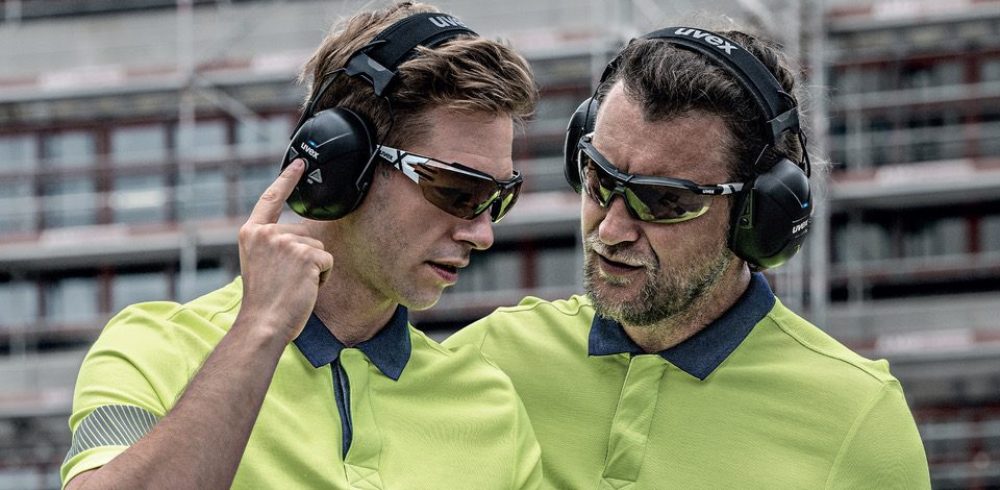
Fortunately, advances in hearing protection technology are helping employers overcome the overprotection problem without compromising safety. Suitable for both high and low noise environments, where communication remains essential, products like the uvex aXess one earmuffs with Real Active Listening (RAL) technology are designed to strike the right balance. Not only are they designed to adapt instantly to sudden, high-impact noises, e.g. hammering or metalwork, reducing harmful noise to a safe level, the built-in surround microphones capture ambient sounds like speech and warning signals, safely amplifying them for the wearer. This feature is vital for clear communication and detection of warning signals to ensure situational awareness and the avoidance of feeling isolated from coworkers, which can impact well-being and teamwork. With a passive SNR of 31 dB (RAL switched off) sound level limiter, and EN 352-1:2020 compliance, these earmuffs provide robust protection across a number of industrial sectors.
Other hearing protection options are available in a range of SNR values. For workplaces where noise levels are between only marginally above the HSE’s lower exposure action value (80 dB(A)), and where communication is critical, lower-attenuation earplugs are recommended to avoid overprotection. For low to mid noise areas, the uvex hi-com earplugs have been specifically engineered, offering an SNR of 26 dB. This level of attenuation protects the wearer from harmful noise while allowing speech perception and warning signals to be heard, in line with HSE advice to avoid reducing noise at the ear below 70 dB. Their ergonomic design also minimises inner-ear sound build-up, supporting comfort and awareness throughout the workday.
Getting protection right
The key to preventing hearing overprotection is a thoughtful, evidence-based approach to noise management. Every hearing protection programme should begin with a comprehensive noise assessment and follow through with careful PPE selection tailored to the specific needs of the workplace. Protection should always be sufficient to prevent hearing damage, but never so strong that it cuts workers off from the world around them.
Overprotection is a common but entirely avoidable problem. With the right technology, training, and ongoing checks, you can keep your workforce safe from noise-induced hearing loss and the hidden dangers of excessive attenuation.
Need help choosing the right hearing protection? Contact the uvex solutions team for expert advice on creating a safer, more effective hearing protection programme.
Manufacturing & Engineering Magazine | The Home of Manufacturing Industry News