

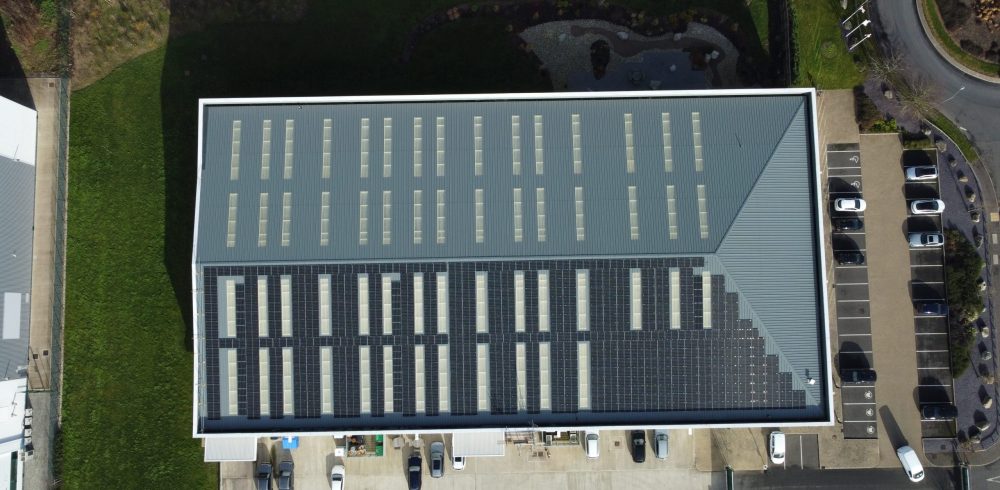
The UK manufacturing sector is currently navigating a “perfect storm.” Whether operating in automotive, aerospace, food processing, or pharmaceuticals, businesses are grappling with a volatile energy landscape that looks radically different from just five years ago. Today, Geo Green Power – leaders in industrial solar installation claim energy decisions are no longer just about utility bills; they are strategic manoeuvres that dictate profit margins, market position, and long-term resilience.
The Energy Challenge in Numbers
Manufacturing remains the UK’s most energy-intensive non-domestic sector. In 2021 alone, the industry consumed over 83.8 TWh of electricity – more than any other non-domestic sector and nearly enough to power every home in the UK. Within this, three sub-sectors – chemicals, rubber and plastics, and food processing – account for over 40% of the total demand.
This high demand is coupled with extreme price instability. UK manufacturers face some of the highest industrial electricity prices in Europe, sitting 46% above the median of International Energy Agency (IEA) member countries. Between 2021 and 2023, average industrial electricity prices spiked by over 70%, turning energy into one of the largest and least predictable overheads on the balance sheet.
Beyond the Price Spike: Grid and Policy Pressures
Even if wholesale prices stabilise, underlying pressures on the grid remain. The National Grid projects that the rapid electrification of heat and transport will significantly strain local infrastructure. Manufacturers in areas nearing grid capacity risk operational delays or the inability to expand if they do not secure local generation capacity now.
Furthermore, unavoidable policy and carbon levies – such as Contracts for Difference (CfD) and Renewables Obligation (RO) charges – continue to add weight to energy bills. While some relief for 7,000 British businesses has been announced, these changes will not take effect until 2027, leaving an immediate need for self-generation to reduce exposure.
The Business Case for Solar PV
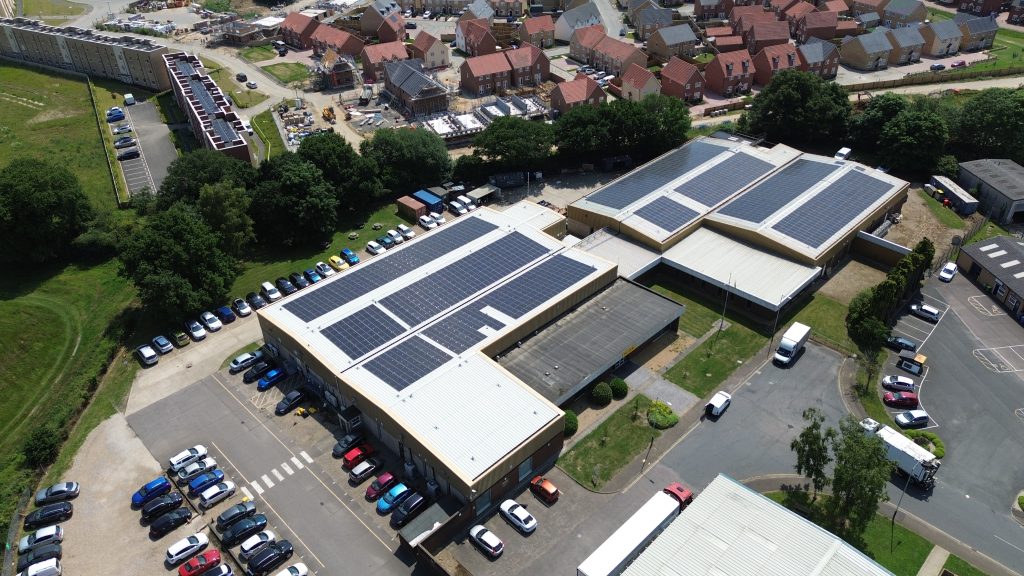
If the challenges are daunting, the solution has become remarkably more accessible. Solar PV technology has evolved from a peripheral “green” initiative into a core strategy for operational certainty. Consider these hard-hitting advancements:
Efficiency Gains: Solar panel efficiency has increased by more than 100% in the last decade. Modern panels now routinely achieve 20% efficiency or higher, meaning a 1MWp array that once required 7,000 m² of roof space can now be installed in approximately 5,000 m².
Crashing Costs: While efficiency has doubled, installation costs have plummeted by over 80% over the same period.
Decarbonisation: Every kWh generated onsite is a kWh that does not come from the grid, providing a clear and reportable reduction in Scope 2 emissions. This is critical for the growing number of large businesses required to report under Task Force on Climate-related Financial Disclosures (TCFD) recommendations.
Building Long-Term Resilience
Investing in solar is not just about the next price hike; it is about the next 20+ years. By generating a portion of their own electricity, manufacturers can lock in stable energy costs for over 25 years. For many, the financial barrier to entry has also disappeared; funding options like Power Purchase Agreements (PPAs) allow for the installation of systems with no upfront capital investment, delivering immediate operational savings that can be redirected into machinery upgrades or automation.
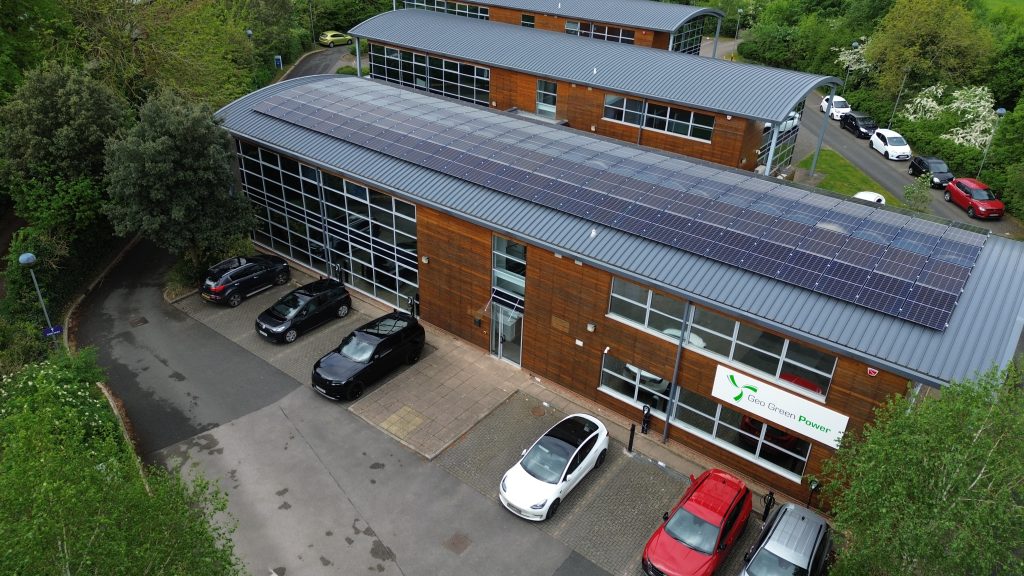
Expert Guidance: The Powering Production Investment Guide
Navigating the complexities of solar investment requires more than just a general understanding of the technology. It requires a strategic approach tailored to the unique energy profiles of manufacturing facilities. This is where the Powering Production investment guide becomes an essential tool for decision-makers.
Developed by industry leaders Geo Green Power who have over 15 years of experience in delivering commercial solar systems, this guide brings together deep technical knowledge, data-led insights, and real-world case studies. It is specifically designed to help operations managers, finance leads, and sustainability teams negotiate and understand their options more effectively.
The guide provides manufacturers with the “real numbers” needed to build a robust business case, moving beyond generic advice to address site-specific constraints and commercial goals. By using this resource, businesses can move from a “future-focused sustainability discussion” to a “firm boardroom priority,” ensuring that any investment delivers measurable value in cost reduction and long-term energy planning.Download the Powering Production guide to access the expertise of solar industry leaders and start building resilience into your operations today. https://www.geogreenpower.com/solar-guide-for-commercial-sectors/
Manufacturing & Engineering Magazine | The Home of Manufacturing Industry News