


HMS SPEY Named at Official Ceremony in Glasgow

HMS SPEY, the last of five River Class Offshore Patrol Vessels (OPVs) designed and built for the Royal Navy by BAE Systems, was named today in front of gathered VIPs and employees at an official ceremony in Glasgow. In keeping with naval tradition, guests watched as Lady Johnstone, HMS SPEY’s sponsor, named the 2000 tonne vessel by releasing a bottle of special blend Spey whisky from Speyside Distillery that smashed against the ship’s hull. HMS SPEY is the last in a class of five vessels that have been built in Glasgow. With construction starting on the first ship in late 2014, these vessels have provided an important opportunity to maintain essential design, construction and systems integration skills, while introducing new processes and technologies that are already being used in the production of the UK’s Type 26 frigates. David Shepherd, OPV Programme Director at BAE Systems said: “Today’s ceremony is a truly significant milestone for the River Class Offshore Patrol Vessel programme and builds on our proud heritage of British shipbuilding here in Glasgow. There has been fantastic momentum on this programme and the naming of HMS SPEY serves as a great reminder of the importance of the capability and skills of our employees who are working together with the Royal Navy and partners to deliver these important ships.” Defence Minister Anne-Marie Trevelyan said: “Our Offshore Patrol Vessels play a pivotal role in patrolling our coastline, protecting our domestic waters, and supporting maritime interests from anti-smuggling to fisheries protection. The naming of HMS SPEY is an exciting milestone for the OPV programme, demonstrating our commitment to UK shipyards while bolstering the Royal Navy’s capabilities.” HMS SPEY will aid in a range of operations from counter-terrorism and anti-smuggling, to securing the UK’s borders to help keep Britain safe, making her a valuable addition to the Royal Navy fleet. HMS FORTH and HMS MEDWAY, the first two ships in the class, are now in service with the Royal Navy.
Resistor Choice Is Plain Sailing

Productivity in the UK maritime sector has rapidly increased over the past five years. Choosing the correct components to include when building or refurbishing a ship is essential to ensure productivity and efficiency remain elevated. Here, David Atkins, project director at power resistor manufacturer Cressall explains how to choose the right resistor for your marine application. Power resistors, able to withstand and dissipate large amounts of power, have a wide range of applications within the marine sector. Resistors are required for many purposes including dynamic braking, ship stabilisation and improving power quality using harmonic filters to protect delicate machinery on board. With so many applications for resistors, there are some important considerations to bear in mind when choosing which resistor is suitable for the job at hand. Cooling As power resistors dissipate energy as heat, marine requirements such as ingress protection (IP) ratings for enclosures can reduce airflow, modulating the resistors’ ability to work effectively. However, water and oil cooling systems are already present on the majority of large ships. Some resistors on the market including Cressalls’ water-cooled range are able to use these cooling systems, but careful planning is required prior to installation. Resistance and power rating Each application that requires a power resistor will have unique requirements, including electrical resistance and power rating. The resistance, measured in ohms (Ω), determines how effectively the resistor transforms the electricity into heat energy, whereas the power rating, measured in watts (W), is the amount of power that can safely pass through the resistor without risking damage. While their practical applications are distinctly separate, the properties are intrinsically linked as power is equal to the current squared, multiplied by resistance. As the power rating is measured and defined at standard conditions and is extremely dependent upon the final operating conditions, changes should be expected when used in the marine sector. Therefore, it may be wise to install a resistor with a power rating in excess of what is expected. For example, Cressall’s EV2 resistor, when operating at 0.22 bar as a single module has a power rating of around 5 kW when operating at a temperature of 10°C, compared to 7.5 kW at a temperature of 14°C. Choosing a resistor that meets the required power and resistance rating is essential. If the power passed through the resistor exceeds its rating at any given time, both the resistor and connected machinery could become damaged, which could be very costly and cause dangerous faults. Resistors with an insufficient power rating may become overloaded, carrying a risk of fire, which is extremely dangerous on ships. In addition to damaging the ship structure, the confined space makes it immediately dangerous for workers and equipment on board the vessel. On the flipside, resistors with higher power ratings are typically made of more expensive materials, meaning the cost of the resistor is higher. Size and weight Cressall has the expertise to produce bespoke resistors, specifically designed to meet electrical needs while fitting into tight areas. Space is often particularly restricted in ship machine and engine rooms, where resistors are usually installed, so small off-the-shelf resistor solutions are often installed. For some situations, such as braking resistors used on thrusters, a small compact resistor with a comparatively low power rating is the perfect fit. This is why, in addition to its bespoke resistor capabilities, Cressall has produced the EV2 range of advanced modular watercooled resistors. Able to operate as a single module, or a combined unit, the EV2’s 25kW continuous rating means power input can range from 10kW to over 1MW, while remaining space-efficient. Choosing the correct resistor is essential to ensure productivity is as high as possible, by meeting the specific requirements of the project alongside demands of the ship.
PowerVision : You Won’t Believe This Futuristic Under Water Drone!
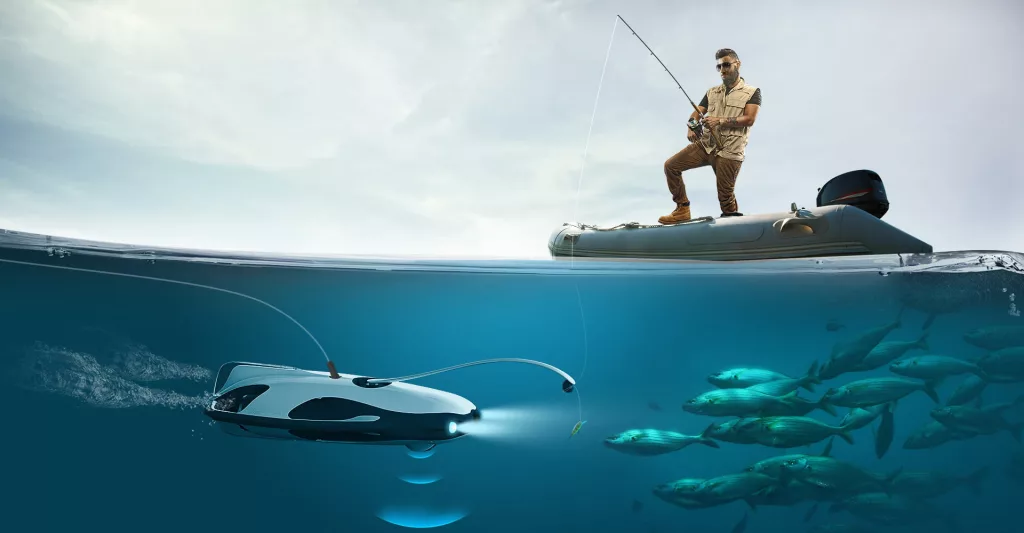
PowerVision have released details on their upcoming PowerRay submarine drone. The drone is designed with the goal of revolutionising fishing, the device has a number of cutting edge features to take the tedium out of the leisure activity and ensure the most fruitful catch possible. The droneâs extensive list of features includes a powerful 4k camera. The device sends crystal clear imagery to your smartphone from which you can control the direction of the drone and scout out fish, all from a safe anddry distance. The device promises to take much of the frustration out of fishing. Perhaps the coolest feature of the device is the ability to link it up to a Virtual Reality device, allowing you to see in 3D and control the drone as if you were in the water yourself. This truly futuristic device. The Power Ray even features a detachable LED luring light that is used to attract fish.The drone comes with a detachable PowerVision scanner, the scanner sends detailed information on fish distribution, underwater temperature, depth, under-water landscape, and fish alerts that are all transmitted to a mobile app. The PowerRay is made by Chinese developers PowerVision, the company are renowned drone designers and have previously released the PowerEgg, PowerBee and PowerEye. The PowerRay however represents the cutting-edge developers first venture into underwater technology. The device promises to vastly improve the efficiency of recreational fishing, the device is controllable up to 70 meters away so a fair amount of exploration is possible. As well as this the drone packs 32GB of internal memory, meaning you will be able to capture a decent amount of high definition underwater footage before you are required to export.Aesthetically the PowerRay features a sleek, modern design. Of course, the inspiration for its aesthetic is the body of a Ray but the metallic finish makes it look like a futuristic metal ray-robot hybrid. The device is available in two colours, a clean and minimal white as well as an eye catching bright red. The PowerRay underwater drone will be available to pre-order from March 27th although a price point has not yet been revealed. Manufacturing & Engineering Magazine | The Home of Manufacturing Industry News
London Shipping Practice to Dock at Hill Dickinson

Hill Dickinson has reached an agreement that will bring the shipping practice of Swinnerton Moore to the law firm. The deal is expected to be finalised by the end of February and involves founding partners Tony Swinnerton and Lewis Moore joining Hill Dickinson’s City of London office. The pair will bring an established roster of clients from across the international marine market with them. Swinnerton specialises in all aspects of contentious dry shipping and has extensive experience of conducting arbitrations and High Court cases where he has acted predominantly for ship owners and their insurers, traders and charterers. Moore, meanwhile, specialises in ship sale and purchase, ship finance and all shipping related contentious matters. Hill Dickinson chief executive Peter Jackson said: “Tony and Lewis are both respected in the marine world, with an excellent track record and bring in expertise that will complement our existing shipping team and further bolster our presence in the international market. “We are committed to growing and investing in our core business and this deal provides significant opportunities and benefits for ourselves and importantly our clients.” The move follows the announcement that Julian Clark will be joining the firm as global head of shipping in January. Article taken from http://www.insidermedia.com/insider/northwest/london-shipping-practice-to-dock-at-hill-dickinson
Featuring Actisense: Interview with Phil Whitehurst, CEO

Actisense – Underwater Engineering Expertise (The Following is a Promoted Article) With fourteen years of life behind it, Actisense has become a key player in the marine electronics industry and has supplied products to over 30 countries around the world. It’s with a dedication to quality and reliability that the Dorset-based company has acquired a competitive edge over others and is now the go-to in intelligent sensors and interfaces. Thanks to Actisense’s keen eye for detail and emphasis on making the little things count, the marine electronics sector, in particular, now stands in good stead to become a springboard for the industry as a whole. Recognising how the sector was held back by the electrical components and software in use, Actisense set about stimulating change â starting from the bottom. Principal was securing a reliability and technical refinement previously unseen in marine electronics. As Phil Whitehurst, CEO of Actisense details, We started off with some fairly conventional products in the first few years with a view to encouraging better practice at a very initial level. We’d noticed several limitations with the use of standard microprocessors and so set about making use of things like the ARM 32-bit processor range. While they’ve become widely-used in mobile phones now, we were amongst the first to introduce them to the marine electronics sector. It was a move which meant its products had, in fact, more processing power than they needed; were effectively over-engineered, and yet allowed the company to supplement additional features more easily. In view of its aptitude in design and engineering development, Actisense is preparing to diversify into the commercial marine market â a move for which it will certainly require versatility and adaptability. Already successful in the leisure marine market, the company has witnessed soaring demand in the commercial sector owing to the gains in reliability its products are able to provide. With a view to facilitating its new popularity, Actisense has driven the optimisation of its interfacing products, as Whitehurst makes clear, We’ve listened to our customers and taken the opportunity to re-engineer some of our equipment in order to better provide for that market: making our interfaces bigger and more robust while retaining the internal technology we’ve worked hard to perfect. Within marine technology, there are various points where interfacing needs to connect materials and processes together. Problematically, at each point of linkage, there are various different standards, making it hard for these things to talk to each other. One of our strengths is being able to unite each of those different processes, and our products allow for data to be effectively distributed between operations. An expert in state-of-the-art interfacing and data servicing, Actisense is also able to refurbish existing software by supplementing the old with the new. While it’s often the case that innovative technology renders all else obsolete, the company is adept at joining the dots between its highly-engineered solutions and those already in place on marine vehicles. It’s an ability that qualifies the company’s claim to being an NMEA specialist in view of it adherence to standards put forth by the National Marine Electronics Association (NMEA) in the US. The company’s membership within the association has been pivotal in keeping abreast of changes in legislation, technical requirement and technological development. Attending the innumerable conferences, committees and events NMEA holds, Actisense stays on top of its local and global responsibilities. Because NMEA standards feed directly into the International Electrotechnical Commission’s (IEC) certification and are subsequently ratified by the International Maritime Organisation (IMO), the company remains ahead of the pack, and has achieved something of a pioneering reputation in the marine industry. It’s with unrivalled competence that Actisense continues to secure contracts with some of the world’s most high profile clients, including the United States Coast Guard (USCG) and the Royal National Lifeboat Institution (RNLI). It was a real honour to win the contract with RNLI, enthuses Whitehurst. Whilst it’s not seen us supply huge volumes of kit, they’re an incredibly discerning customer and for our interfaces to meet their criteria was a real accolade. All of their new series lifeboats now feature our interfacing technology. Enjoying a close relationship with the horde of associations of which it is a member, Actisense extends that ethic of communication to its partnered distributors, electrical installers and manufacturers. While housing a close-knit team of just seventeen employees â a third of which are graduate-qualified engineers â the company’s virtual presence is infinitely bigger. By contracting out sub-assembly works, the company is able to concentrate optimisation at the stage of design and final assembly, an operational capacity deemed vital by Whitehurst. As he explains, Because the majority of our work is so niche and specialist, it’s just as quick to complete all design work in-house as it would be to try and explain it to another party. We have design and engineering expertise that simply can’t be matched elsewhere. And so, as the company prepares to move to new premises, four times the size of its existing home, Actisense looks set to experience further growth in the coming years. Taking great pride in the quality of its products has seen it attract an increasingly diverse client base and, with that, the company is on track to attain an ever-more global presence.
Doughnut Tank System Makes Comeback

The Cubic Doughnut Tank System got its patent 40 years ago this year. The principle design underpinning the early design concept saw construction of an almost prismatic shape utilising twelve identical cylinders that interconnected to one another in order to have structural efficiency akin to a spherical tank with volumetric efficiency akin to a membrane tank. A problem arose at the time, however, as the US broke off its diplomatic relations with its source country – Algeria – cancelling contracts on the importation of LNG. Interest dwindled and the technology waned. About 10 years ago, Altair Engineering was working with the University of Michigan to provide analysis of advanced structural engineering systems. This resulted in a renewed interest in long forgotten techniques seeing new developments for the marine sector based around the Cubic Doughnut Tank System (CDTS). The use of LNG in the marine sector is not a new one. In fact, it’s been around for decades. But it’s in need of updating. The CDTS offers an improved volumetric efficiency of 0.85 over a Spherical Tank (0.52). It is also close to the membrane system at 0.88. This volumetric efficiency along with CDTS’s offering of an independent tank construction alongside the ability to self-stand allows for better utilisation of space both above and below deck. This results in a dramatically smaller length of ship but with the same cargo capacity. Benefits of the system can be measured thus: for the same LBP, CDTS provides 35% improved capacity over Spherical with a 24% improved capacity over a Membrane or IHI SPB ship. Within a reduced ship length, capacity of 12% is achieved when compared to Spherical and 6% when compared to the membrane. Yet, additional advantages can also be gained such as reducing gross tonnage, overall construction times when compared to a membrane tank, and a cut in the costs of the LNG carrier. It also eliminates restrictions evolving from partial filling of the tanks for sloshing. This allows a number of discharge locations.
Aqua Cooling Boosts UK Oil Rigs With State-Of-The-Art Technology

Innovation comes with the territory when it comes to Fareham-based Aqua Cooling. The leading specialist in the provision of cooling and associated products has supplied state of the art technology to help the world’s latest oil rig pumps reach their potential. The Queen’s Award-winning business, which last year took home the prize for Enterprise after developing a new leak prevention system, has installed its latest piece of kit at Hayward Tyler’s Centre of Excellence in Luton. The deal with Hayward Tyler is worth £200,000. The South of England specialist has established an enviable reputation for its suite of industrial chiller products which boast cooling potential up to 3,564kW. Its latest innovation is the design of a cost-effective, energy-efficient alternative to historically proven but costly, less efficient cooling methods. Removing as much as 2 megawatts of energy waste, Aqua’s bespoke product drastically reduces costs and energy use when new and prototype fluid-filled performance-critical pump motors are tested. The pump motors in question – which utilise as much as 8 megawatts of power and thus generate extremes of heat – will find their use tested on offshore oil-rigs where environments can, at times, be some of the most testing. Extensive research by Hayward Tyler has revealed the success of Aqua’s product at maintaining a maximum temperature of 25 degrees when the pumps are in operation. Heat is dissipated as it is produced. The product has enabled Hayward Tyler to increase its test capability in its Centre of Excellence where global leaders such as GE and FMC sees motors developed. For Hayward Tyler, Aqua’s solution is a real boost. Aqua’s sales director Simon Davies has noted his happiness at the successful collaboration between Aqua and Hayward Tyler. He noted not only the qualities of the product and the success it can bring Hayward Tyler in its overall operation but the cost and energy-critical savings it provides.
International Success For Viktor Lenac
For Viktor Lenac, which enjoys an extensive client base in the UK, 2015 was an exceptional year. Sometimes businesses hit a sweep spot and last year couldn’t have gone better for the Croatian-based company which enjoys a reputation as one of the world’s leading ship repair providers in Europe. Founded in 1896, the company’s well-established tradition goes back more than 100 years with conversion and offshore services enhancing its offer to customers. In fact, Viktor Lenac has been innovating for years: it was one of the first companies to carry out ship lengthening. Over the decades Viktor Lenac has completed many complex projects both within conversion as well as offshore and is one of the few businesses capable of completing gas platform construction and ship conversions thanks to its dedicated shipyard. Last year, the business saw its dockyard up to full capacity, with all roles employed. 85 projects were carried out on vessels needing repair – equating to the highest number ever completed in a single 12-month period by the company. Viktor Lenac’s clients, many of which come from the UK but are spread across Europe including Cyprus, Greece, Germany and Norway, tasked the company to work on some extensive repair jobs throughout the year. Most significantly, perhaps, was its work on the US 6th Feet’s USS Mount Whitney. Viktor Lenac worked on the vessel between January and late summer 2015 carrying out extensive ship repairs alongside docking works. Other notable jobs included working on board AF Francesca, an Italian ferry, after it was disabled by a fire, and carrying out ballast tank anti-corrosion projects on a pair of chemical and oil product tankers. Its successful work saw it acquire contracts from one of Greece’s leading tanker operators to carry out work on six vessels. Viktor Lenac has also acquired new customers this year with Norway-based KG Jebsen Skipsrederi adding its vessels Glory Tellus and Glory Ocean to its portfolio of ship contracts.
Hyperbaric Rescue to Become Naval and Commercial Best Practice

Long-standing naval and defence expert, James Fisher Defence (JFD) has suggested that the commercial sector could learn a thing or two from its hyperbaric rescue service. The naval and marine industry have each kept sternly abreast of emerging technologies, practices and standards, fast-becoming exemplars of innovation. Despite having the connection of the sea, however, the two have remained relatively separate and, though the naval sector has adopted many of the regulatory frameworks of the commercial side, cross-pollination has not worked both ways. Tides look set to turn however. In case where a vessel is damaged and has to be abandoned, personnel have to be rescued with the use of lifeboats. For operatives under the water, engaged in saturation diving, evacuation can prove difficult. To mitigate risk of injury, divers have to be removed from the water using a pressurised compartment. The container can take one of many forms and can be launched or floated into the sea. The process requires a great deal of planning and has to take into account the need for controlled decompression and safe relocation. While both commercial and naval sectors incorporate the technique, there is not currently a standardised practice of subsea evacuation. Brian Redden, Director of Global Hyperbaric Rescue Services at JFD, recently commented on the lack of consistency in the sector, saying that the sector lacked credible, safe and timely SPHL recovery methods. The practice of saturation diving is split between technologies and has yet to decide on a model of best practice. It is currently made of a combination of self-propelled hyperbaric lifeboats (SPHL) or hyperbaric rescue centres (HRC). Guidance and regulation is also divided, leaving businesses at a loss as to how to manage health and safety while providing the most rapid evacuation. In the absence of a dedicated best practice framework, the company suggested its davit-based launch and recovery system (LARS) is a tool from which both naval and commercial marine industries can benefit. An alternative to the A-frame currently used, JDFâs system has the capacity for side recovery, and has on board a two-point lift and adjustable cradles for up to 24-man SPHLs for direct offload. JFDâs davit LARS SPHL recovery method is currently the safest one around, Redden added. A vessel of opportunity is stationed within four hours of bases at any one time and its position is monitored via AIS. The company guarantees 32 hours to first rescue. For JFD then, the message is one of collaboration. Sector-wide progress, the company insists, depends on businesses talking and co-operating with one another.