


UK Export Growth Slows Amid Global Trade Tensions

Growth in UK manufacturing export orders weakened to a three year low in Q1 2019, according to the latest Lloyds Bank International Trade Index, compiled in partnership with IHS Markit. In the first three months of 2019, the Index posted a reading of 50.4 for new manufacturing exports, down from 50.8 in Q4 2018. A reading of above 50 indicates growth, while one below 50 signifies contraction. Despite the drop, the number of UK manufacturers exporting reached a record high, in Q1 2019, of 81.3 per cent of firms participating in IHS Markit’s Purchasing Managers (PMI) Survey. Meanwhile, new overseas services sales dropped at the sharpest rate since the index began in 2014. The index posted a reading of 46.8 for services exports, a fall of two points since the final quarter of last year. Consumer goods bright spot amid weakest rise in manufacturing exports since 2016 Despite Q1 2019 seeing UK manufacturers continuing the longest period of sustained new export order growth since 2008, it was the weakest rate of growth since Q2 2016. The weak rate of UK growth coincided with a drop worldwide, with data showing the largest downturn in international trade volumes for more than six years during Q1 2019. Asia and Europe posted particularly sharp declines in manufacturing export sales. Consumer goods was the best performing export category for UK manufacturers in the first three months of 2019, posting a reading of 54.4. Textiles and clothing was the strongest performing consumer goods sub-category, posting 63.1, its highest reading since 1997 and significantly up from 55.4 in Q4 2018. But the strong outing for consumer goods was offset by a drop in new export orders for intermediary goods (semi-finished goods used to produce other products), which posted a reading of 47.1. US demand for tech offers respite amid decrease in service export sales UK service exports fell two points in Q1 2019 to 46.8. This is the second consecutive quarter of contraction of exports for the UK services sector and follows a four-year run of growth. Driven by demand from the US and Ireland, technology services exports bucked the trend rebounding to 51.0 from 45.7 in Q4 2018. Accounting for this, firms cited that Sterling’s relative weakness had positively affected their competitiveness. Global slowdown in economic growth reduces opportunities for UK exporters Amid the global economic slowdown, growth in international demand for British goods and services slowed in Q1 2019, from 53.1 in Q4 2018 to 52.5. During the first quarter of 2019, economic growth was seen in key UK export markets, with the UAE posting its highest reading since the end of 2017 (61.7). The US posted a reading of 54.8 (vs. 54.6 in Q4 2018), thanks to an uptick in services sector activity. This positivity was offset by weaker economic growth in other export markets. Namely, subdued growth in China continued in Q1 2019 (51.5 in Q1 the same as in Q4 2018), largely thanks the manufacturing sector output plateauing. Closer to home, there was growth in Spain and Italy in Q1 2019, while demand conditions in France, the Netherlands, Ireland and Germany weakened thanks to a downturn in manufacturing outputs. Conditions in Germany have spread to Poland and the Czech Republic, where sharp contractions in manufacturing growth were measured. Pressure on UK freight capacity increases amid historic stockpiling The UK manufacturing PMI index for stocks of purchases increased by over 11 points from the end of 2018 to 66.2 in March reaching a 27 year high. Further research from Lloyds Bank analysing just over 100 of the UK’s largest publicly traded companies showed a nine per cent rise in the levels of stock held, worth over £5 billion.
UK Manufacturers Plan to Create New Jobs in 2018

Lloyds Bank Business in Britain report shows that many manufacturers in the UK are confident about their growth prospects and plan to invest more and create jobs. According to the survey, a third of the 204 British manufacturers that took part in it expect to step up investment this year, while one in four manufacturers are expected to create jobs. This confidence comes from the strong order books, which is thought to grow during the next six months. There is also evidence to suggest that manufacturers firms are continuing to target more efficient growth, with 41% planning to automate part of their business so that it boosts productivity. The picture painted by our latest Business in Britain survey is a reassuring one, with manufacturers in buoyant mood, said Dave Atkinson, UK head of manufacturing at Lloyds Bank Commercial Banking. Over the past six months, many have grown their order books and this is giving them the confidence to make investment plans. Uncertainty remains but there is every reason to believe the sector will continue to be resilient during 2018 and beyond. Among the issues highlighted in the report were recruitment, currencies, and input costs. Half of the firms said that they had struggled to recruit skilled workers in the past six months and 52% said they fear that commodity prices had increased. Also, 71% of exporting manufacturers mentioned the challenges they will face once the UK leaves the EU. However, Atkinson said that these challenges are broadly the same ones that have been affecting the manufacturers for the past 18 months: fluctuating currencies and rising input costs as well as the ongoing challenge of finding the right people with the right skills. What is expected is that many firms will actually see an opportunity to use Brexit as the springboard to sell their goods and services further afield, added Dave. Manufacturing & Engineering Magazine | The Home of Manufacturing Industry News
Boosting Productivity in the Manufacturing Industry
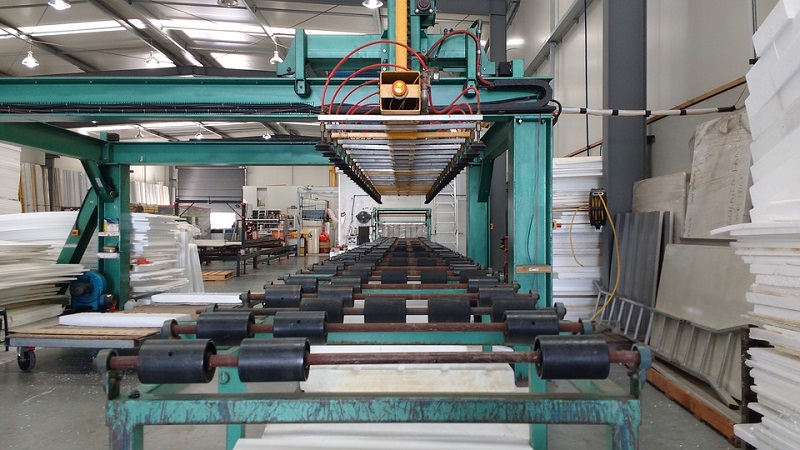
A report that has been released by Lloyds Bank has shown that the UK could be left behind by the other G7 countries in terms of productivity. The report published by Lloyds Bank is called âUnderstanding the Puzzleâ and demonstrates that they lack of investment being made by the UK into technology, people or innovation is having a knock on effect on productivity of the manufacturing industry and could see us being left behind by the other countries in the G7 who are. Productivity is a vital marker for the economic issues, and the UK has recorded low levels in comparison to the other G7 members. It is of great importance that a solution to this low productivity level is found in order to resolve any issues. Manufacturing firms in the UK understands that productivity is a challenge faced by the wider economy. A number of firms have implemented plans that will lead to a boost in productivity, however it is felt that there is still not enough investment to overcome barriers in productivity growth. A lack of investment has been found as a common factor in the report, and is the most common in terms of preventing productivity. 47% of the companies involved in the research has planning on freezing spending levels, with 12% planning cuts, and only 41% aiming to boost investment. From these mixed responses it would appear that investment is a main concern for the manufacturing industry. The Government investing more into science innovation and skills would help improve productivity levels, and it has also been suggested that tax incentives to promote levels of investment would also be beneficial. In terms of manufacturing, skills and infrastructure would still require investment, however it is thought that the largest part of any investment would go into new production machinery.
UK Automotive Industry is Remaining Strong

The UK Automotive Industry is remaining strong despite current economic uncertainty. With the future of the UKâS connection with Europe being negotiated the outlook for the global economy appears unsure. The UKâs exit of the European Union is seen as the biggest threat to the automotive industry. Research released by Lloyds Bank Commercial Banking shows that despite the current market investments by manufacturers are still going ahead as planned. The study conducted by Lloyds is an annual occurrence and aims to understand the position of the sector today as well as plan for any complications in the future. The research has revealed that investment in the Automotive industry is expected to remain at the 19% turnover over the course of the next two years. The study has also predicted a growth in turnover over the next two years as long as there are no unforeseen political or economic shocks. These shocks would then have the potential to harm supply and demand within the industry. Lloydsâ study has uncovered that nearly 4 out of 10 businesses, or 39%, expect to see growth in their company due to new product development. Other businesses plan to increase their growth through the use of investments over the next two years. 29% of those who participated in the study suggested that the UKâs decision to leave the EU is one of the largest obstacles facing the sector over the next two years. The weakness of the sterling was also cited as a possible obstacle for automotive companies to negotiate. Despite the gloomy economic forecast Automotive companies still plan on expansion, with 77 percent of firms asked expressed their interest in engaging with international customers, and are planning to invest in this expansion. 87% of manufacturers within the automotive industry intend on creating new jobs over the next two years. This has the potential of creating almost 85,000 new jobs if the results of the study were reflected across the entire sector. Manufacturing & Engineering Magazine | The Home of Manufacturing Industry News
Robot Manufacturer Secures New Funding Source

Cornwall-based robot manufacturer Engineered Arts has secured funding from Lloyds Bank to purchase new machinery. The company, established in 2004, featured in the recent Channel 4 documentary âHow to Build a Humanâ and has worked for the NASA Space Centre in Florida. Established in 2004, Engineered Arts (www.engineeredarts.co.uk) makes humanoid robots that are used for social-interaction research and entertainment. The machines are able to tell stories and interact with guests, and they are often used at visitor attractions. Among the companyâs customers are the national science museums of Australia, Spain and Thailand, as well as the University of North Carolina. Engineered Arts has an annual turnover of £1 million and employs a team of 14 people, including designers, electronic and mechanical engineers and software developers. The funding from the bank will be used to purchase a new CNC machine. Gill Spencer, Finance manager, commented: Experts predict that robots and artificial intelligence will be integrated into nearly every aspect of our daily lives by 2025. While a number of our robots are used by universities researching the science of human and robot relationships, more than 80% of our robots are already in the public sphere, interacting with people at science museums around the world. We have seen an increased interest in our products both for research and visitor interaction purposes. The support from Lloyds Bank has allowed us to meet this new demand by improving and modernising our production capacity, which is vital as we look to expand both domestically and overseas. Tim Williams, relationship manager at Lloyds Bank Commercial Banking, said: “As businesses become more aware of the positive impact robots can have on their operations, it leaves Engineered Arts well placed to capitalise on these new opportunities. “We’re committed to supporting small to medium sized businesses like Engineered Arts. To underline this, we have grown our net lending to SMEs by 29 per cent, while the market has contracted by 12 per cent.”