
LEGO Have Teamed up With Engineering Students To Nurture Creative Minds
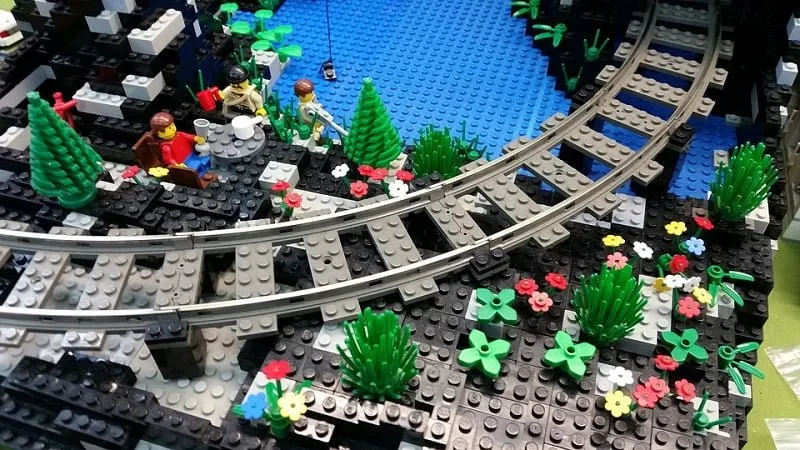
LEGO have developed a scheme in the hope of helping parents to understand the tangible impact of empowering children to be creative builders. To bring this concept to life LEGO have been matching the power of a childâs imagination with the skills of engineering students from the School of Aeronautical Engineering at Singapore Polytechnic. The campaign is called: #LegoBuildAmazing and initially began by LEGO asking children to design something that could fly out of LEGO bricks, the result was as imaginative as it could be showing a flying rainbow cloud that dropped sweets. This design was then taken to the students who brought it to life! The mission of the project is to try and reframe the emphasis of successful building by highlighting different routes of success to children and parents. The campaign allows children to feel successful while remain as imaginative as they wish, for eighty years LEGO have been the building block catalyst of a generations creativity and now they want to nurture that creative concept. By revealing to parents how nurturing a creative mind could unleash a childâs future potential for success, it is hoped new light can be shed on what it means to be builders, designers, engineers and architects and how imagination can aid the next generation to leave their mark on the planet. #LegoBuildAmazing will soon be taking place in India, Indonesia, Thailand, Vietnam and The Philippines. For the 50th birthday of Singapore (in 2015) LEGO tasked children with imagining what Singapore would look like in another 50 years, using LEGO bricks of course and these schemes are said to become both more popular and frequent. LEGO are taking over youngsters creativity more now than ever and slowly but surely these projects could be the keys that unlock the future generation of creative thinkers! Manufacturing & Engineering Magazine | The Home of Manufacturing Industry News
Saab Australia Uses HoloLens to Explore The Potential of Holographic Manufacturing

The Australian arm of the multinational aerospace, defence and security leader, Saab, has initiated a partnership with Microsoft in a bid to pioneer the use of hologram technologies and LEGO-esque practices of assembly across various manufacturing sectors. Together, the hope is that the firms will create a range of novel training and development platforms, as well as finding other useful applications for the ground-breaking technology. It comes in response to Microsoftâs continued prominence within both the hologram and wearables sectors; back in March, the technology giant began development of HoloLens â the first holographic, fully-untethered computer which provides users with unrivalled interactivity via goggles, presenting them with HD holograms. The focus of Saab Australia has typically lied within the defence and security sector, specialising in state-of-the-art control and command systems for use in anything from traffic management to civil or national defence. Despite such emphasis on control systems technology, the firm nevertheless has two further strands to its agenda, chiefly â enterprise and innovation, and internal development. This new project falls within the second defined ambition, enterprise and innovation, and yet the firm has stressed that it remains committed to its traditional defence and security market in which Saab Australia has been so successful. Inger Lawes, Head of Training and Simulation at Saab Australia suggested that Microsoftâs HoloLens could support the development of increasingly sophisticated manufacturing techniques. He added that the over-arching aim of the project is to develop hologram technologies to a point where they can be used to simulate on-screen designs. With the ability to virtualise designs prior to production, Saab Australiaâs latest venture could spell the end of product defects thus drastically reducing material wastage and the time taken during the standard design-prototype-production process. Indeed, the need for the prototype phase of development, itself, could be made entirely obsolete if the holographic simulations prove successful. In order to test the value of the hologram technology and prove its worth to the assembly team in Sweden, Lawes revealed that the company would first carry out use a LEGO model of Saab Australiaâs Gripen fighter jet. He said that the decision to use LEGO is as much about simplifying the process for initial demonstration as it is to stir public interest. Everyone understands LEGO so it is a fantastic vehicle to demonstrate this sort of thing and get people as enthusiastic as we are and prove to them that you can build things in this environment and if we can build it with LEGO we can do it with everything else. The HoloLens technology will first be used internally by the company to support complex design and assembly works though its first external delivery of the product is expected to arrive around September. Unlike current high-tech systems which rely on a server or cloud for data storage, Lawes highlights that the HoloLens is able to stream data remotely within the need for other, often long-winded applications. As is made clear by Saab Australia, the possibilities for the technology are utterly endless and, by no means is the firm about to dictate its application. Itâll be the users by and large who come up with the ideas, Lawes insisted. And, with that, the omnipresence of hologram technologies in the future is almost certain.
Lego Still King Of Toy Manufacturers

Lego remains the king of toy manufacturers. Its latest sales figures show further gains for the long-running company which was founded by Ole Kirk Christiansen in 1932. The Danish-based manufacturer, whose name derives from the Danish leg godt which means play well, reinforced its world-leading position as the king of toys with sales increasing by 25% in 2015. It was once again evidence of the worldwide appeal of Lego which remains a family-owned firm. Last year’s successes were credited to tie-ins with major movie releases including J.J. Abrams’ new Star Wars film and a range of Frozen toys inspired by the much-loved Disney animation. 2015’s growth was the tenth year in a row in which Lego enjoyed sales increases, recording sales of £3.7bn with pre-tax profits up by 28% at £1.3bn. While traditional favourites such as Lego Friends, Duplo and Lego city performed as well as expected, it was Star Wars that proved to be the biggest draw for customers. The Force Awakens tie-in products were by far the best selling items with the Millennium Falcon getting boosted by renewed interest. Away from Star Wars and it was Disney’s Frozen which helped Lego take over Mattel – the Barbie doll manufacturer – as the world’s biggest toy maker. Elsa’s now-iconic castle proved to be in most demand. Lego’s data says 72bn products were sold in 2015 with 725m mini-figures produced. Executive vice-president and Lego’s chief financial officer John Goodwin noted his excitement at the latest figures, acknowledging year-on-year progress over the last decade and the belief that the next twelve months will bring further double-digit growth. The near 100-year history of Lego saw it begin its life assembling small wooden toys in the early 20th century before its recognisable plastic bricks began appearing just after the Second World War. Today, the company is one of the world’s most iconic brands. It currently employs a worldwide staff in excess of 17,000 with full-time staff increasing last year by 11%.