


Industry 4.0: Why you need to invest in it to increase growth

Industry 4.0: Why you need to invest in it to increase growth : Manufacturers in the UK finished the year positively, with the strongest three months for growth since 2014. Markit/Cips UK Manufacturing Purchasing Managers’ Index figures showed that activity and new orders expanded throughout the past 17 months in the UK, with firms increasing production in response to new orders and the launch of new product lines. However, this is not the time for your manufacturing business to rest on its laurels. Investment in capacity and machinery is needed to take advantage of expected growth, with many leading manufacturers fast becoming “Industry 4.0” ready. What is Industry 4.0 and why does it matter to you? Industrial revolutions are huge, significant events and observers believe we’ve had four of them. The first was initiated by the introduction of the commercial steam engine and the birth of the textile industry. The second was sparked by electricity and mass production. And the third was triggered by the computer after World War 2. Professor Klaus Schwab, founder and executive chairman of the World Economic Forum, believes we’re well under way with the fourth industrial revolution. Also known as Industry 4.0, it refers to major innovations in technology that are coming into maturity at the same time, embedded by companies around the world, integrating the virtual and physical worlds to bring forth powerful new ways of working. Examples of this technology include: Internet of Things The fusion of physical objects such as software, sensors and electronic items with internet and machine-enabled data collection and transfer. IoT allows real-time communication, initiating physical systems and giving rise to smart cities. It offers you the opportunity to build digitised and connected supply chains – completely integrated ecosystems that are fully transparent to the contributing marketing, product development, manufacturing, and distribution departments. Big data and advanced analytics With the Internet of Things comes a huge amount of data – and the way your business reads and analyses that information is important. In manufacturing, the availability of data from product development, production and testing can add new dimensions to the way you manufacture goods, offering better innovation, marketing and decision making. Robotics and automation Robots are already used extensively in the manufacturing world – mechanical arms on assembly arms for example. Industry 4.0 could see the contribution of robots massively increasing, and consider the possibility of building “smart factories” where robots take ownership of manufacturing and bring goods to customers with limited human input, due to computing and communication systems linked with physical systems. Simulations, 3D printing and augmented reality Already commonplace today, goods can be virtually modelled and tested, saving time and reducing the materials, efforts and money spent. Through 3D printing, we can see the creation of customised, complex and lightweight designs at remarkable speeds, while augmented reality sees a future where employees can be trained on the job far more effectively than with paper or monitors. Why you should be investing in industry 4.0? Industry 4.0 isn’t a buzzword. In fact, businesses are already putting down investment – and organisations that aren’t are at risk of being left behind. PwC claims Industry 4.0 will revolutionise industrial production, with businesses generating on average 3.6% per annum cost reductions until 2021, driven by internal improvements and working more closely across value chains. They also expect to generate 2.9% p.a. in increased revenues by digitising products and services, as well as developing new digital service offerings. Meanwhile, 33% of industrial companies say they’ve already achieved advanced levels of digitisation, and 72% of companies expect to achieve advanced levels of digitisation by 2020. Increased competition is leading a focus on servicing customers, which requires your manufacturing business to explore new ways to deliver products and services – the change in processes and business models that Industry 4.0 is all about. Nick Castellina, research group director at Aberdeen, says: “Products may need to be more customisable, requiring a change in the ways production and delivery are handled. Many of these changes would be impossible in existing business systems. Therefore, manufacturers have prioritised modernising business systems as their second goal for the near future.” Manufacturing & Engineering Magazine | The Home of Manufacturing Industry News
BAE Systems Calls for Nationwide Effort to Develop Skills for Industry 4.0
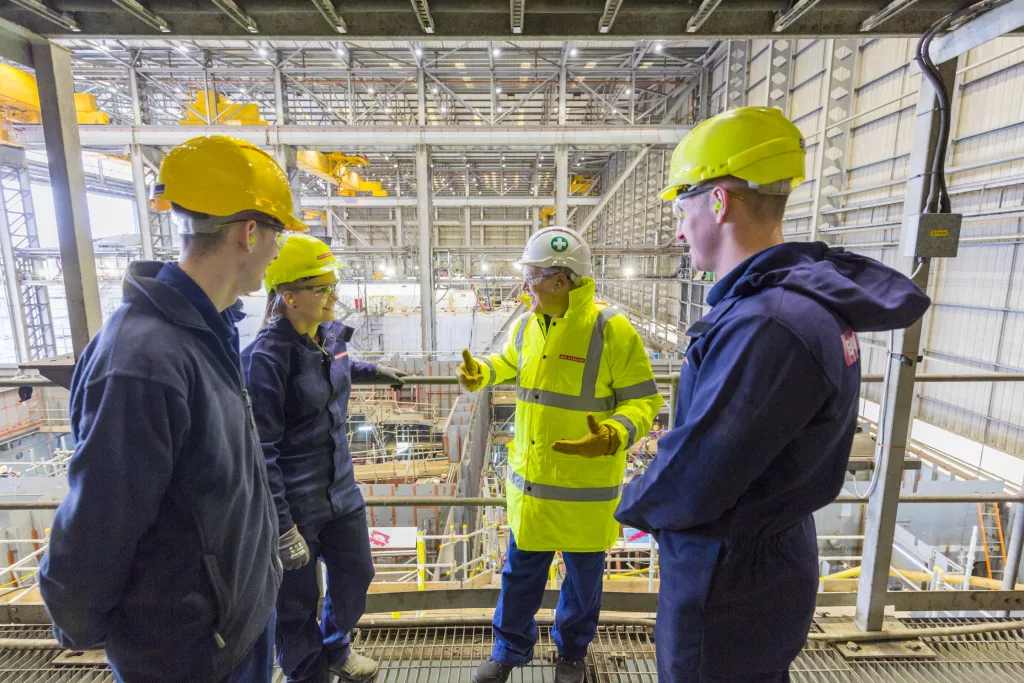
BAE Systems Calls for Nationwide Effort to Develop Skills for Industry 4.0 : BAE Systems has called today for a concerted and co-ordinated effort by industry, Government and the education sector to ensure the UK can fully benefit from the digital revolution and Industry 4.0. Nigel Whitehead, Chief Technology Officer at BAE Systems, stated that defence, aerospace, engineering and manufacturing sectors need to work together and prioritise investment in digital and ‘soft skills’, upskilling and retraining and supporting supply chains and SMEs, to respond to the expected levels of complexity in industrial and business systems and unprecedented demand from technologies such as artificial intelligence, for the Industry 4.0. Mr Whitehead also suggested that businesses in these sectors need to create a more diverse, inclusive and flexible workplace by reflecting different working preferences and lifestyles. To help address the UK’s shortage of engineers, he called for a nationwide programme of activity to improve the perception of science, technology, engineering and maths (STEM) subjects and careers and for the engineering industry to consider recruiting more people with highly applicable skills that traditionally are more associated with arts subjects, such as creativity and problem solving. In its whitepaper – ‘Future Skills for our UK Business’ – BAE Systems sets out six guiding principles for the development of skills in the UK in an environment of rapid technological change and fierce global competition: 1. Create a more diverse, inclusive and flexible workplace for the employees of tomorrow; the UK must attract and retain top class talent; 2. Commit to retraining and upskilling; it is vital for innovation and growth that employees continue to learn throughout their careers; 3. Prioritise investment in digital, soft and behavioural skills; to give the employees the broad range of technical and people skills needed to succeed in the modern workplace; 4. Continue to support suppliers and the SME community so that they can develop skills in the digitally-enabled workplace; successful and innovative partners help the UK economy thrive; 5. Continue to improve the perception of STEM subjects and careers; encouraging graduates and young people into a dynamic and rewarding industry; 6. Continue to champion vocational training; working with Government to ensure training is funded and prioritised. At a launch event hosted at the Company’s state-of-the-art Academy for Skills & Knowledge in Samlesbury, Lancashire, Nigel Whitehead, said: “I am personally really excited by the opportunities in today’s highly connected world and what the future will bring, but we cannot be complacent. By taking tangible action now and capitalising on the ambition of young people coupled with the UK’s traditions and advantages – education, strong legal frameworks, technical innovations and leadership – we can exploit the digital revolution and compete on the world stage.” Joining Mr Whitehead at the event in Samlesbury, Dr Hayaatun Sillem, Chief Executive of the Royal Academy of Engineering added: “Failure to successfully prepare for the impact of technological disruption means we will put at risk our ability to benefit from the opportunities created by digital transformation and other waves of technological change.” BAE Systems invests £90m annually in skills in the UK, providing world-class training facilities for its employees and education to ensure its current and future workforce are trained to the highest standards. At any given time, there are approximately 2,500 apprentices and graduates in training across its UK business. Manufacturing & Engineering Magazine | The Home of Manufacturing Industry News
Preparing for an Ever-Evolving Digital Ecosystem

Advances in technology over the last decade has paved the way for digital evolution, with many organisations putting digital at the core of operations. In a world of ‘Big Data’, it has become more important than ever before for those operating within the manufacturing industry to utilise technology effectively, particularly where monitoring efficiencies and productivity has become crucial, with many looking to developments in Industry 4.0 as motivation for acceleration. As many organisations are taking steps towards digital transformation, John Roberts, director of Idhammar Systems, explains why businesses must streamline their approach to digital within their manufacturing practices in order to create an ecosystem which is sustainable but also beneficial for both businesses and customers alike. Invest in the right technology Not all technology will be the right fit for your business and as more emerging technologies are introduced, it’s crucial to separate the necessary from the so-called ‘next-big-thing’. It’s important to strengthen the basic elements of the whole organisation – remember the route to improvement cannot be a one-size fits all approach. As such, always do your research and pay due diligence to evolving technology and ensure it’s the right fit for your organisation. There’s a lot to digest and according to Forbes, cloud services, analytics, security and management tools are set to be the biggest planned investments in technology across the next several years. By modernising these essential technology tools, it can help to future-proof your business, protecting it (and you) from any cybersecurity issues and also reduce any potential system downtime, minimising threat to profitability and overall efficiency levels. Consider the whole picture It’s unlikely that any business will be able to establish a comprehensive digital ecosystem in one fell swoop – it’ll require a range of elements in order to do so effectively and this cannot be expected to happen overnight. Plus, your team will need effective systems training in order to fully integrate any new processes into day-to-day operations. However, in the manufacturing sphere, you can look to implement digital measurement to understand data around profitability and efficiency levels – after all, every second counts on the production line. For example, data can help to better forecast product demand by 46% and can provide support to customers more quickly. Increasingly so, data is also available through mobile devices or remote access, meaning that data can be accessed anytime, anywhere, making any improvements or issues handling more streamlined and accessible. This will become increasingly important as 5G becomes more prominent, with 32% of users stating that they would look to adopt this technology. Add value As digital ecosystems continue to build momentum and change the business landscape, demonstrable value is ever-more important, especially when justifying cost within any organisation. Accenture recently highlighted that by transforming and flourishing with digital in mind, it can help to create benefits for customers and partners alike. Increasingly so, ecosystems are driven by evolving customer demands, particularly for those searching for more intuitive, real-time, integrated solutions. By addressing these needs, not only will it result in added value, but it can help companies expand their market share by introducing solutions tailored to customer pain points. The way that we do business as a whole is changing and particularly in the business of manufacturing, Industry 4.0 is becoming increasingly common and necessary in order to meet high production volume demands. Although still relatively in its infancy in the sector, those who invest in digital ecosystems and overall digital transformation are likely to be better prepared for the ever-evolving business landscape that we are operating in. This is particularly true in the manufacturing sector where change has been relatively slow for the most part, regardless of the need for increased efficiencies as competition levels are continuing to rise. However, transformation will not happen overnight, and an ecosystem needs to be nurtured and developed in a way that is tailored to the needs of your business, with the right training in place to ensure your team know how to implement it effectively for maximum return on investment. Manufacturing & Engineering Magazine | The Home of Manufacturing Industry News