
Hitachi Rail to deliver sustainable digital commuter railway

Hitachi Rail has been awarded a major contract worth around 114bn JPY*1(around 814m USD) called CP04 by the Philippine Government’s Department of Transportation to deliver Electrical & Mechanical Systems and Track Works, including digital signalling for the new commuter railway from Solis to Malolos in the Philippines. The project will cover around 35.4km and nine stations on the North South Commuter Railway, a 147km commuter line from Calamba to Clark, and will be funded by the Japan International Cooperation Agency (JICA). In a significant boost for sustainability in the Philippines, the project will reduce rail carbon emissions and encourage the use of environmentally friendly public transport over higher polluting cars. Hitachi Rail will introduce its innovative European Train Control System (ETCS) Level 2 signalling on the North South Commuter Railway. ETCS signalling technology monitors the train’s movement and the speed limit on the track and will help reduce the energy footprint of the railway by enabling very efficient operation of the trains. The introduction of ETCS Level 2 signalling will also boost safety on the line by enabling automatic activation of train safety functions, including emergency braking in case of danger or if trains exceed the track’s maximum line speed. Hitachi Rail is a global industry leader in digital signalling and was one of the pioneers to introduce ETCS technology in Europe – in the UK, Italy, Spain, Sweden and France – as well as in the highly competitive markets of China and India. Hitachi is now bringing its global digital signalling expertise to the Philippines in a first for the country by delivering the complete turnkey E&M systems of signalling, electrification, telecommunications, depot equipment, fare collection and trackwork for the railway. Takuya Yamakawa, Deputy Head of Japan Business, Head of Asia and Japan Initiatives (Sales and Projects), Railway Systems Business Unit, Hitachi, Ltd, said: “We are proud to be awarded this contract to bring our digital signalling expertise to the Philippines, following our experiences pioneering the technology and successfully introducing it to countries across Europe and Asia. By delivering this project, Hitachi Rail will reduce a major commuter railway’s energy footprint, supporting greener travel. “With ownership of cars and congestion in Manila projected to continue to increase rapidly, it is vital we support commuters to use more sustainable rail transport. Our state-of-the-art railway systems will do just that – encouraging rail travel by boosting safety, bringing huge benefits to passengers and driving down emissions in the Philippines.” Manufacturing & Engineering Magazine | The Home of Manufacturing Industry News
Hitachi Suspends All UK Nuclear Work

Hitachi Suspends All UK Nuclear Work : All work on UK nuclear power schemes – the £20 billion Horizon station at Wylfa Newydd in Wales and Oldbury in South Gloucestershire – has been suspended by the Japanese conglomerate Hitachi due to a UK government failure to secure more financing. As a result of this decision, 400 jobs will be lost and the Wylfa project will not create the estimated 9,000 jobs that it was going to. “We have made very strong progress on all aspects of the project’s development, including the UK design of our tried and tested reactor, supply chain development and especially the building of a very capable organisation of talented and committed people,” said Duncan Hawthorne, CEO of Horizon Nuclear Power, a subsidiary of Hitachi, about the decision. “We have been in close discussions with the UK government, in cooperation with the government of Japan, on the financing and associated commercial arrangements for our project for some years now. I am very sorry to say that despite the best efforts of everyone involved we’ve not been able to reach an agreement to the satisfaction of all concerned. As a result we will be suspending the development of the Wylfa Newydd project, as well as work related to Oldbury, until a solution can be found. In the meantime we will take steps to reduce our presence but keep the option to resume development in future,” Duncan added. The news was described by the Civil Engineering Contractors Association (CECA) as a “serious blow” to the UK’s future energy security. “This is an extremely disappointing decision that throws doubts on the future energy security of the UK. New nuclear power remains the best way of ensuring a secure future supply of low-carbon base load energy that is not reliant on external factors such as the weather,” commented CECA director of external affairs Marie-Claude Hemming. “Once completed, Wylfa Newydd will create up to 850 permanent jobs, stay online for sixty years, and offer employment to future generations of skilled workers. Its cancellation would be a serious blow to hopes for regeneration to the economy not only of Wales, but the whole UK. We call on the UK government to act quickly to provide certainty, demonstrate its commitment to the nuclear sector, and to engage with both industry and potential investors to ensure the scheme goes ahead,” Marie-Claude concluded. Manufacturing & Engineering Magazine | The Home of Manufacturing Industry News
Japan Urges UK To Reconsider Brexit
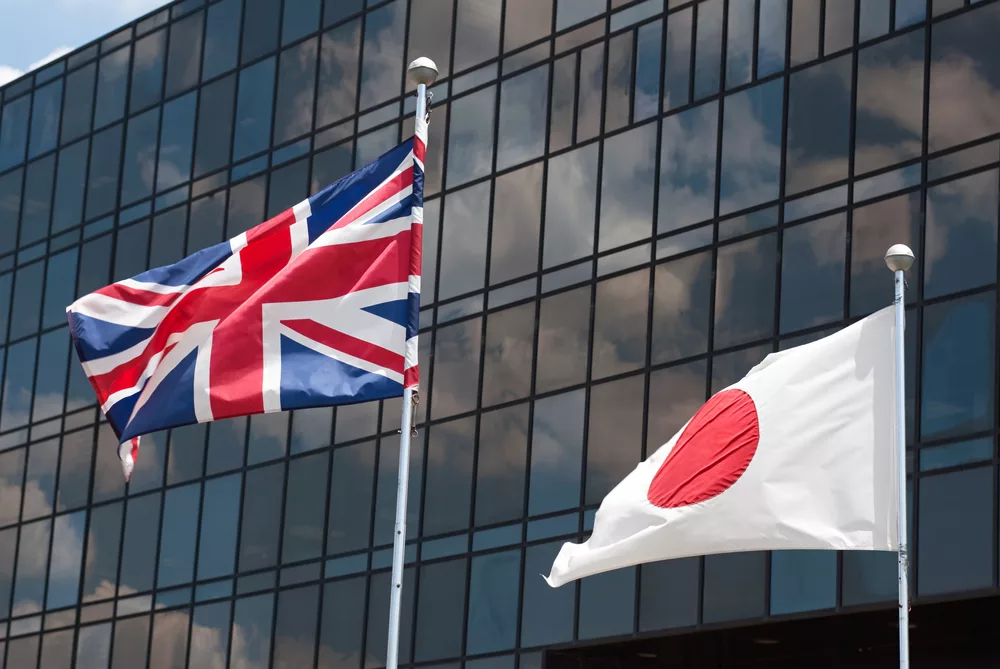
Japan Urges UK To Reconsider Brexit : At a time when the UK manufacturing sector remains somewhat ambivalent about the nationâs membership within the EU, a top executive from big-name Japanese automotive manufacturer, Hitachi, has urged businesses to recognise the value of such a lucrative membership body. Commenting on the Brexit debate currently sweeping not just the nation but the globe, Hiroaki Nakanishi, CEO of Hitachi, has described even the contemplation of Britain leaving the EU as both troubling and hard to understand. He points out that the EU is the worldâs largest trading bloc, adding that Brexit would do nothing to allay anxieties over global solidarity in the face of terrorism and financial insecurity. Asking, What gain could possibly compensate for these risks to the UK itself?, as Nakanishi does, is undoubtedly a question around which discussions in parliament continue to centre; as media representations have demonstrated, providing a clear-cut break-down of the advantages and disadvantages of Brexit is all but impossible. The inherently tough decision is only made harder by political parties and, indeed, politiciansâ own agendas as they attempt to align with the views of the Great British public. To have a more independent voice, one which is marred by neither the politics nor the increasingly fragmented national identity of the UK, so confident in his views against Brexit is therefore significant. And those views, Nakanishi points out, are shared amongst the majority of Japanese business leaders. Japanese business leaders in Britain share the same concerns, as they consider what such an exit from the EU would mean in the long term, he says, Not just for our investments but for the place of the UK in the world, and the importance of its markets, including London, in the eyes of global business operators. Indeed, Nakanishi is not the first big name from Japan to express uncertainty toward a vote to leave the EU. During a tour of Europe and Russia earlier this month ahead of the G7 summit, Japanese Prime Minister Shinzo Abe warned PM David Cameron that it would almost certainly deter Japanese investors. His comments come after it was revealed that EU trade regulations, by which Britain is currently subject and on which the exports/imports industry relies, would be difficult to uphold should the UK separate itself. Moreover, the development a new, UK standard would not only be incredibly time-consuming and costly to produce but would also be an additional for hurdle which overseas investors and importers would have to jump prior to even tendering. And thatâs without considering the implications for UK exports. 140,000 permanent employment roles in the UK are currently held by Japanese companies. Hitachi is but one; the leading automotive manufacturer is currently working on new rail and nuclear power projects in the UK â its two largest infrastructure projects overseas. The selection of the UK for those projects was directly motivated by the nationâs membership within the EU and, furthermore, the UKâs central position within the EU market. That centrality is not just concerned with the ease of acquisition when it comes to specialist component parts and suppliers, but also skills and knowledge more broadly. Thinking retrospectively, Nakanishi insists, Take away its EU membership, and the investment case looks very different. Despite all his commendations for the EU, Hitachiâs CEO admits that the body is not perfect; however, he suggests that Britainâs withdrawal would only weaken its potency further and prevent the EU from consolidating its strengths. And, on the matter of just what the UK adds to the EU that no other country can, Nakanishi emphasises the key role which Britain has played in making the EU market both more transparent and more open through key democratic insight. For Nakanishi and Japanese investors alike, an EU without the UK is rather a different proposition and, likewise, a UK without the EU would warrant some hesitancy. As the worldâs third largest economy, Japan represents investment opportunities to the UK â on both an import and export basis. And whilst it will ultimately be the British public who decide whether to stay or leave the EU, one can reasonably expect Japanâs insight to inform the decisions of the manufacturing body politic nationwide. Manufacturing & Engineering Magazine | The Home of Manufacturing Industry News