


Advanced Engineering Returns with the Medical Device Engineering Zone

The UK’s largest annual gathering of engineering professionals, Advanced Engineering, is back and bigger than ever on October 30 and 31, 2019 at the NEC, Birmingham. With a two-day attendance of some 15,000 engineering professionals, the eleventh edition of the trade show will provide companies with the opportunity to meet with OEMs and supply chain partners from sectors spanning the engineering industry. Bringing together thousands of attendees, Advanced Engineering incorporates all aspects of engineering, from design, test and measurement, inspection, materials and production, within aerospace, automotive, marine, medical and many more. At the show, representatives from across the entire supply chain of the UK’s advanced engineering industry will present their latest innovations and business developments in front of some of its most influential stakeholders. Not only has the show enjoyed growth in terms of its visitors over the past decade, but its floor space is also undergoing continuous expansion. Once a single show with 80 exhibitors, Advanced Engineering now features multiple co-locating zones under one roof, covering the industry’s most advanced and noteworthy sectors including aerospace, automotive, connected, composites and performance metals. This year, the latest zone additions are the Medical Device Engineering Zone and the revamped Enabling Innovation area, which will join the likes of aerospace, performance materials and nuclear engineering to host manufacturers and their new technologies in front of a targeted and enviable audience. Supported by Medilink, GTMA, Gambica and other UK trade bodies, the new Medical Device Engineering Zone is in response to the rapid growth of the industry and will welcome manufacturers looking to showcase their innovations in this booming area of engineering. Visitors will also have the opportunity to visit the Medical Device Engineering Open Forum to discover how medical technology is going to develop further in the future. With seven shows under one roof, attendees will be able to access all their business solutions in one place — providing them with expertise from the breadth and depth of the advanced engineering industry. “In times of uncertainty, whether that’s in the marketplace, innovation or the choice of technologies available to you, industry leaders suggest that those who strive to invest will overcome doubt and make profit,” explains Jeremy Whittingham, Head of Marketing at Advanced Engineering. “That’s why we believe in supporting and demonstrating the UK’s flourishing engineering markets here at Advanced Engineering. To do this, we’re expanding the show’s offering to keep pace with the burgeoning growth of the UK’s industry. “As a visitor, you have the chance to engage with OEMs and supply chain partners from sectors spanning design, test measurement, inspection and production, in industries that range from aero, automotive, motorsport, composite materials, civil nuclear and renewable energy, rail, marine, space and more,” explains Whittingham. “Last year, the show enjoyed a ten per cent rise in OEM and tier one manufacturer attendance compared to its previous year, leading exhibitors to book at a record rate for 2019’s show. With companies keener than ever to attend and exhibit at the show, Advanced Engineering is certainly positioned as one of the must-visit events of the year.”
Smart Sticker Helps Monitor Health at Home

An electronic epidermal sticker that monitors health has been patented by researchers and it can be easily applied to a patient’s wrist. A team at Purdue University has designed the 2cm advanced sticker solution, which moves healthcare one step closer to the concept of personalised care and wearable devices. Wearable devices keep growing in popularity, from measuring UV exposure, to making off-site work safer and even soothing the effects of diabetes, and they seem to be integrated into many different sectors and markets. The stickers that monitor health are made of cellulose, which is both biocompatible and breathable, and they are used to monitor physical activity and alert a wearer about possible health risks in real-time. Since paper degrades fast when it gets wet and human skin is prone to be covered in sweat, these wearable stickers were coated with molecules that repel water, oil, dust and bacteria. Each sticker costs about 5p to produce, and can be made using printing and manufacturing technologies reportedly similar to those used to print books. Patterned in serpentine shapes to make the devices as thin and stretchable as skin, the stickers are comfortable to be worn. The low cost of these wearable devices and their compatibility with large-scale manufacturing techniques, could enable the quick adoption of these new wearable sensors in a variety of healthcare applications. The concept of personalised medicine is nothing new and experts have been working to personalise care to individuals’ needs for a while now. However, never before has it been possible to predict, examine and identify a patient’s requirements as extensively as is possible today. Experts can now carry out whole genome sequencing, use data and informatics and exploit wearable technology to cater to specific people. Personalised medicine moves away from the ‘one size fits all’ approach to one that uses new methods to better manage individual health. Embedding a personalised medicine approach into mainstream healthcare is the journey experts, scientists and healthcare professionals are broaching
Healthy Food Menus Hit UK Primary Schools

The children returning to school this new academic year have been welcomed by new-look menus, with a range of healthier, more sustainable meat-free menu options. This change is part of the new School Plates programme launched by food awareness organisation ProVeg UK earlier this summer. ProVeg UK has been working on the new menus together with a total of 110 primary schools across two local authorities in England. Changes include the adoption of Meat-Free Mondays, new daily meat-free meals, as well as new descriptions for the meat-free and plant-based dishes to make them even more appealing to the students. “We all want children to thrive and these new-look, healthier menus are a big step in the right direction. Eating more plant-based foods is such a great way to improve children’s health in the short term – particularly by helping to reduce childhood obesity – and also in the long term by helping to reduce the risk of all kinds of chronic health conditions including heart disease and type 2 diabetes,” said Jimmy Pierson, Director of ProVeg UK. Around 3.1 million meat-based meals will become meat-free over the next 12 months, as schools and local authorities continue to engage with School Plates, despite it having runned for only a few months. One school taking part in the programme is Washingborough Academy in Lincolnshire. On School Plates, Headteacher Jason O’Rourke said: “I think School Plates is fantastic, really commendable. It is superb that we are highlighting the benefit of vegetables and giving children greater exposure to that. I would implore all schools, if they can, to get engaged with ProVeg UK and School Plates.” Many more local authorities and primary schools are set to follow suit next term with new enquiries coming in on a weekly basis. As each new local authority takes up the School Plates programme, millions more meals are changed giving more children access to a healthier, more balanced diet. Manufacturing & Engineering Magazine | The Home of Manufacturing Industry News
Manufacturing Problems for Hepatitis B Vaccine Leads to Shortages
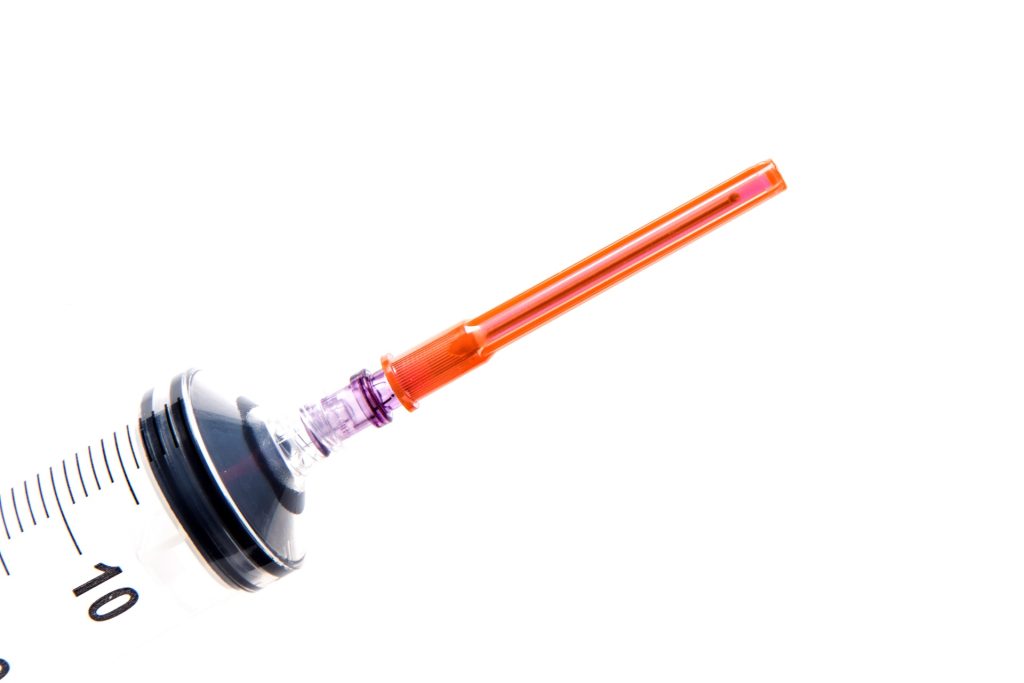
At the moment there is a shortage in the vaccine for Hepatitis B. This shortage which could have significant impacts has been caused by problems which have occurred in the manufacturing process. The news has been announced by Public Health England, and now a number of different measures have been put in place so that those who are at the highest immediate risk will have access to the vaccine through the NHS. The measures to minimise the impact of this shortage have been designed by Public Health England working alongside NHS England and the Department of health. The manufacturers have also been involved in the implementation of the series of measures which will be in place until the beginning of 2018. The manufacturing process of the Hepatitis B vaccine will also be kept under review in order to monitor the process. Public Health England has said that the risk of catching Hepatitis B in the UK is very low. This is good news considering the issues that are currently being faced with the manufacturing process. The supplies of the vaccine are limited, and therefore it is important to make sure that those who are at a higher risk of catching the disease have access to the vaccine. It is decided who is at the highest immediate risk by doctorâs assessments. For those who are considered less at risk, a Doctor could advise that it is safe for the vaccine to be deferred until a later date. For those who have already been exposed to the hepatitis B virus, the vaccination will still remain available. It has also been announced that hepatitis B protection is to be included in the routine childhood immunisation programme, which works to inoculate children at 2, 3 and 4 months. This introduction is still expected to go ahead as planned.
Artificial Fingertip Delivers Real “Feeling”

An artificial fingertip surgically connected to nerve endings in an amputeeâs arm is the first to deliver real touch sensation. Previous attempts to reconnect nerves and bionics after amputation had failed to simulate sensory stimulation in real-time. The pioneering research and technology was developed by Ecole Polytechnhique Fédérale de Lausanne (EPFL) in partnership with BioRobotics at the Institute Scuola Superiore SantâAnna (SSSA). The efforts of the French and Italian universities have allowed the patient to feel texture instantaneously, with no perceptible gap between touch and sensation. During research, the teams, led by Silvestro Micera and Calogero Oddo also found that nerves of non-amputees can also be stimulated to feel texture without intrusive surgery. Such a finding means that future technologies can be tested and refined on intact subjects. They also suggested that artificial tactile robotics might successfully be transferred to circumstances of rescue, as well to the manufacturing sector more broadly. Dennis Aabo Sørensen is reportedly the first person in the world to feel texture with the use of a bionic fingertip. The fingertip was connected to electrodes implanted above his stump to remaining nerves in the upper arm. Sensors on the bionic fingertip then perceived subtle differences in texture as a machine controlled the movement of the finger across a range of plastics with distinct patterns engraved on them. From the signal generated by the different textures, a series of electronic spikes were produced and relayed back through the nervous system of the patient. Sørensen was able to differentiate between rough and smooth surfaces at a phenomenal rate of 96%. When the pioneering testing was replicated on non-amputee subjects, the results remained promising; subjects could discern different textures in 77% of cases. Testing on non-amputees also allowed scientists to measure how much the bionic fingertipâs sensory perception correlated with that or innate brain function. EEG scans showed brain activity to be very comparable to that mimicked by the robotic fingertip. The results, published in eLife, could well revolutionise neuroprosthetics and pave the way for an increasingly state-of-the-art health care sector.