


UK Manufacturers Embracing Uncertainty to Build a Brighter Future
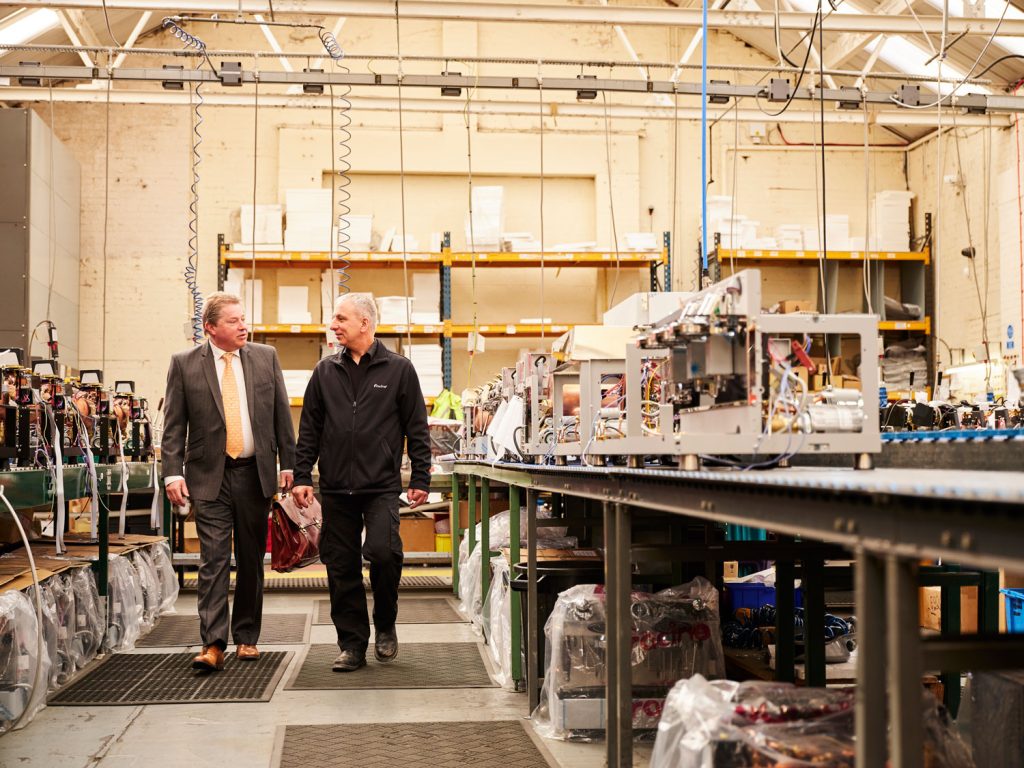
In the recent global state of the nation report issued by Sage, outcomes have revealed that UK process manufacturers are taking confident and optimistic steps towards building a world-leading industry, despite the current political and economic uncertainty in the country. Factors such as Brexit are making it difficult to predict future import-export conditions, which is causing many manufacturers to make new strategic decisions in preparation for growth. Unlike what might be expected, 82% feel confident that their UK home-grown industry will be a world leader as soon as 2025. This opinion shows the sector is treating the current climate of the unknown not as a period of gloom and doom, but more as a motivating force that will drive positive change and continuous improvement. “Contrary to prevailing sentiments about the decline of manufacturing in the UK, our research reveals attitudes are anything but downbeat,” said Sabby Gill, Managing Director UK & Ireland, Sage. “With the Fourth Industrial Revolution gathering pace, we see an industry taking the initiative to equip itself with the technologies and skills it needs to succeed. Half of UK manufacturers, for example, say uncertainty around Brexit is making them more likely to invest in technology as they prepare for possible changes.” So how are UK manufacturers going to build this brighter future? As mentioned by Mr Gill above, many are making significant investments in new technologies that will allow them to gain a competitive edge on the world stage. With the aim of driving productivity, creating better customer experiences and venturing into new markets, emerging technologies will allow businesses to reduce operational costs, increase traceability in the supply chain and automate repetitive tasks. Investment in robotics, IoT solutions and automation is set to make data-driven production the norm within the UK industry. In addition to embracing new tech, UK manufacturers are also working to expand their knowledge and skills. Around 39% believe proficiency in data science and computer science will be critical if UK manufacturing is to remain competitive. It’s also believed that the knock-on effect of regulatory immigration changes will see many manufacturers look outside of their usual talent pools when recruiting new people. Another factor driving the confidence of UK manufacturers is the increasing importance of entirely British manufactured products. Consumers are placing more value on “Brand Britain” goods, demonstrating a preference for home grown items created with locally-sourced and easily traceable materials. This is regardless of the lower prices that are often associated with products built from imported materials, with consumers showing a desire to support and fuel their own economy. Understanding this shift in attitude among UK manufacturers can help others in the sector to plan for uncertainty and take an active, confident approach in planning future growth. Viewing an unpredictable future as an opportunity rather than a threat, will help to guide the strategic decision making that will allow UK manufacturers to thrive. To find out more about the state of the industry, download Sage’s informative manufacturer’s toolkit by visiting www.poweringbritishindustry.co.uk
Advanced Engineering Discusses the Importance of Women

On 23 June 1919, a committee of influential women sensed a new dawn. The First World War had ended, and significant steps had been taken towards women’s suffrage. The group, ranging from designers and munitions factory managers to wives of eminent engineers, rallied to found the Women’s Engineering Society (WES). 100 years later, progress for women in industry has often felt stagnant. Hetal Patel, Marketing Projects Manager for the UK’s largest annual manufacturing and engineering exhibition, Advanced Engineering, discusses the importance of women in engineering. As we celebrate the centenary of the Women’s Engineering Society, the fact that only eleven per cent of the UK’s engineers are female is a tough pill to swallow. The Society’s initial journal outlined its aims to “encourage and stimulate all women who are interested in engineering”, but today’s figures show that it’s often hard to see these efforts come to fruition. So, what can be done to nurture talent in this milestone year? The state of industry The UK has the lowest percentage of female engineers in Europe. As it stands, this figure isn’t set to rise any time soon. It’s estimated that less than eight per cent of engineering and manufacturing apprentices are female, with figures plunging to as low as two per cent in the building and construction sector. But the UK needs to significantly increase its number of engineers. The STEM skills shortage is costing businesses £1.5 billion in recruitment every year. For the engineering sector to reduce its skills shortage, it needs to employ around 186,000 recruits each year until 2024. Role models To inspire the future, we should reflect on the past. A lack of role models is often cited as a reason why women shy away from a career in this industry. However, the reality is that our engineering heroines are often unsung. The pressures of war drew many women to the home front, only for them to experience rebuke once men returned. In resistance, the founders of WES created a committee that promotes engineering as a rewarding profession for women as well as men. The original members of the group paved the way for women in industry. Renowned for her adventures as a pilot, Amy Johnson was a qualified engineer and WES president from 1933-34. Johnson’s campaigning inspired others such as Dorothy Spicer, another society member and the first person to hold all four types of aeronautic licenses. Whether it’s a female Doctor at the helm of the Tardis, or a woman encouraging the next generation of engineers, prominent role models need to be realised as figures of inspiration. Striking the balance If we are to progress, we must strive for a more balanced workforce that reflects the diversity of our society and invests in the development of all talented workers. McKinsey’s Delivering Through Diversity report states that many companies struggle to increase the representation of diverse talent and create truly inclusive organisational cultures to profit from diversity. Yet data from 2017 found that companies in the top-quartile for gender diversity on their executive teams were 21 per cent more likely to have above-average profitability than companies in the fourth quartile. To address the skills gap and boost productivity, companies need to act to diversify. The next generation International Women in Engineering day takes place on June 23. To encourage women to pursue a career in engineering, action has to begin as early as possible. Professor Karen Holford, Deputy Vice Chancellor at Cardiff University and voted one of WES’s most influential female engineers in 2016 explains that “the stumbling blocks are there from a very young age, such as girls not being given toy trains and cars to play with. It may sound like a small thing, but unconscious stereotyping is still holding girls back, without them even realising it. “Schools must ensure that teachers have the critical skills to teach the subjects needed for a career in engineering. Finally, companies need to do more to promote flexible working for both men and women. This way we can ensure that the burden of childcare is equally shared so that women aren’t out of the workplace for long periods. If we can solve these problems, I believe we’ll see a big increase in women choosing engineering careers and, even better, staying in them.”
What Is the Checkout of the Future?

What Is the Checkout of the Future? : To keep up with consumer expectations, the in-store experience, in particular the process of checking out, needs to transform. Innovative technologies and immersive in-store experiences are already being used to whet the appetite and tingle the senses in many shops; but customers are still forced to stand in line at an old fashioned, static cash register. Craig Summers, Managing Director UK, Manhattan Associates considers the role of the checkout within a fundamentally reconsidered in-store experience. Store Commitment High street stores continue to play catch-up to the quality of the online experience. It is rarely as quick, or as convenient, and the beleaguered Store Associates often know less about the retailer’s products than the mobile-toting customer. The level of personalisation can be dire – a Store Associate has no idea if a customer is new or has been a brand advocate for years; and if a product is out of stock, there may be no quick and easy way to find out if it might be available in another store or at the warehouse. For online customers trained to expect a digital experience that is so good, so personalised and so frictionless, embarking on a store visit can be a shock to the system. They don’t want to stand in line to pay; be told a product is not in stock with no hint as to when it might be; undertake one transaction to return an item and a completely separate transaction to make a purchase. They want everything at once – and wherever they happen to be – whether they have spent two hours browsing or dashed in quickly during their lunch hour. In order to support this diverse expectation, retailers need to rethink the customer interaction, take a step back and fundamentally reconsider the in-store model. What would a store look like if it was being created from scratch today, with no baggage and no preconceptions? Re-Imagining the Experience The checkout is the point of sale – but it is not a standalone function; it needs to be embedded within the point of service. Customers don’t want to wait in line or be left hanging as to whether a product is in stock or not; nor are they willing to undertake multiple separate transactions to fulfil in-store needs. They want one, simple and frictionless transaction that covers an in-store purchase, a click & collect order, a product return, even ordering another item that is not in store but can be sent from another location either to that store or to the customer’s preferred delivery address. An effective and efficient checkout process will automatically and effectively handle coupons and giftcards, apply the correct promotional pricing, capture loyalty information and so on. But it will also be integrated directly with core operational systems to provide Store Associates with real-time inventory information and customer history. A Store Associate armed with a mobile device that provides real-time access to inventory across the organisation and the ability to order those products, offers personalised marketing and communication capabilities, and informs on purchase history and lifetime value, can embark upon a meaningful customer dialogue anywhere within the store. But, while it is tempting to focus only on the technology, it is creating the right in-store model that is just as critical for retailers. While the original self-service checkouts deployed in supermarkets and airlines were utterly dire, over decades the technology has been refined and more critically, organisations have experimented to learn how best to deploy self-service to deliver the optimal experience. The key to transforming the experience is not simply about embracing technology innovation, but a willingness to spend time understanding how to truly improve the customer experience. The challenge for retailers, however, is that they don’t have decades to get this right. They don’t have years. They have months at best. Today’s consumer was born online – they have high expectations and low tolerance for error. With this in mind, each retailer must understand the optimal model for its customer base; the best mix of touch free interaction and empowered Store Associates. The checkout of the future must be whatever the customer wants it to be, at any time – and released from the shackles of legacy technology. Retailers now have an enormous opportunity to rethink and reconsider the in-store experience, to reimagine the customer journey and really push the boundaries what is possible. Manufacturing & Engineering Magazine | The Home of Manufacturing Industry News