


Farm Invests in Robotic Milking Machine
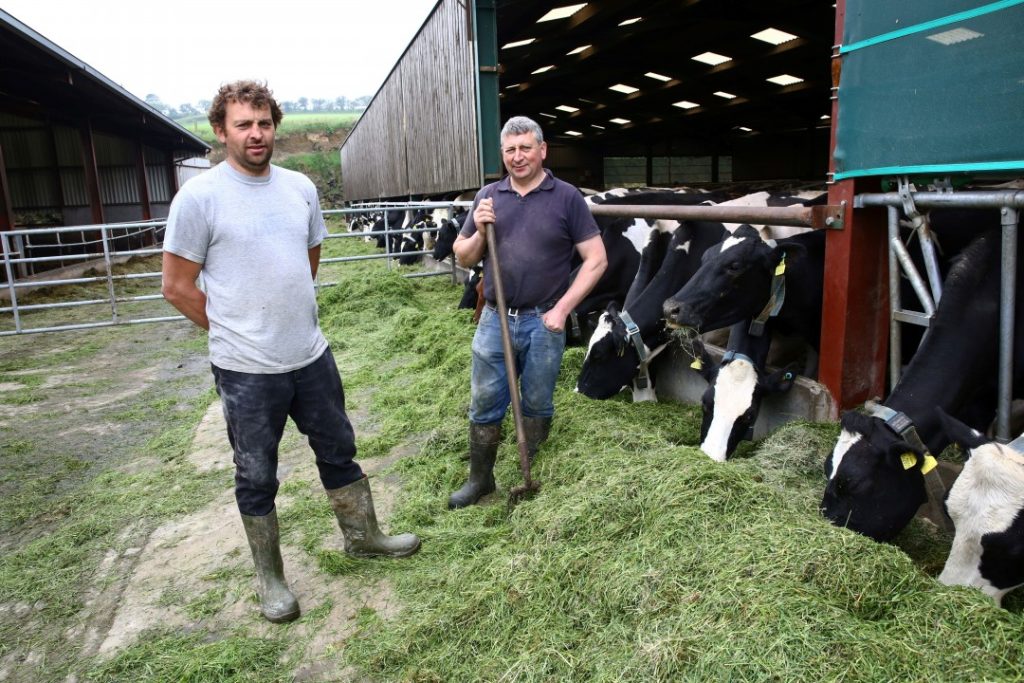
Farm Invests in Robotic Milking Machine : £350,000 have been invested by a farm in robotic milking machine that allows cows to milk themselves. James and Alec Cowan have signed up with dairy farming co-operative, South Caernarfon Creameries (SCC), and have installed the machine. The robotic milking machine learns the identity and individual characteristics of every cow in the 120-strong herd, at the brothers’ mid Wales farm, Blaencwmpridd, in Llandysul, Ceredigion. The technology is predicted to increase milk production at the JH Cowan & Sons farm to 1.2 million litres a year at, with milking going on 24 hours round the clock and cows being milked up to five times a day. “It is fascinating to watch how it works, the cows wander in and it picks up the teats every time. The robot uses lasers to learn the shape of the individual cows so it knows how to fit best with each one. It is better for the animal welfare, because they are milked when they are ready,” said James Cowan. “It works on all levels. Happier animals provide better food. It will increase milk production too because we are milking when the cow is ready. We produce between 4,000 litres and 8,000 litres a day so overall we will increase production to 1.2 million litres a year. It’s amazing to think that when my father came to Wales in 1948 as part of the war effort he was 14 and they were milking cows by hand, now I am milking cows with robots,” he added. South Caernarfon Creameries has 130 farming members across North and Mid-Wales and processes more than 100m litres of Welsh milk each year to make a wide range of cheeses for the retail and wholesale market. “We are delighted to welcome James and Alec as members at South Caernarfon Creameries. Our farming members are at the heart of everything we do to create high quality cheese here in Wales and it is fantastic for us to be able to work together with them to help secure the future of dairy in Wales,” commented Alan Wyn Jones, managing director at South Caernarfon Creameries. Manufacturing & Engineering Magazine | The Home of Manufacturing Industry News
I’Anson Brothers Invests in New Production Facility
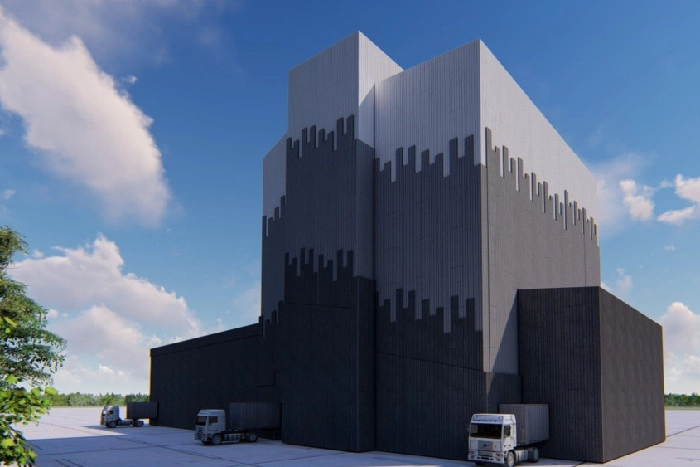
I’Anson Brothers Invests in New Production Facility : Plans to build a 23,000 sq ft production facility have been unveiled by animal feed manufacturer I’Anson Brothers, who is making the biggest single investment in the company’s history. The £12 million plant will be built at Dalton New Bridge, the next phase of the Dalton Industrial Estate. Producing an initial 150,000 tonne capacity per year – with two production lines producing over 30 tonnes per hour – this increased production will enable I’Anson to meet the growing demand of existing customers, expand its export operations and continue to be a major supporter of the North Yorkshire farming and wider economy. “This is an exciting time for I’Anson, and everyone connected to us. For the last 60 years we have been based at our Masham mill and have continually invested in new technology to increase production volumes and our efficiency. However, the physical limitations of the site mean we have reached production capacity, constraining our ability to grow,” said Chris I’Anson, chairman and managing director of I’Anson Brothers. “We are investing in the future of our business and this new facility paves the way for us to not only meet the increasing demands of our existing customers, but also provides significant opportunities for future growth and allows us to continue being a proud supporter of the local economy,” he added. I’Anson currently employs 80 people from the local community and the facility will initially create a further 10 jobs. It will also allow I’Anson to grow its existing network of local producers, farmers and suppliers from whom it buys a large proportion of its raw materials for manufacture. Founded in Masham in 1900, I’Anson has grown to become a leader in the production of animal feeds and has been based at its current mill for the past 60 years. It supports over 3,000 customers locally across the North, nationally and internationally, exporting to over 40 countries worldwide. The business’s headquarters will remain in Masham, where it will continue to manufacture an extensive range of micronized feeds, specialty rations and horse feeds. The new facility will focus on the production of bulk farm feeds, with the capacity created in Masham enabling the business to expand its UK and overseas sales of its British Horse Feeds and The Golden Paste supplement range, as well as continue to lead new product development. Manufacturing & Engineering Magazine | The Home of Manufacturing Industry News
Farmers Invited to the Farm Open Days

An operational research farm is inviting farmers to have their say on where scientists should focus future agricultural research. For the first time ever, northern food resilience research programme N8 AgriFood is opening the gates to three of its university farms in an effort to strengthen links with local farming communities. Local farmers and agricultural businesses can join the Farm Open Days to find out about research projects that may help increase productivity and efficiencies in their work, as well giving them the opportunity to contribute towards and help shape future projects. The topics included are soil and plant health, agri-tech and robotics, livestock health including diagnostics and breeding, and working with industry. “As a research programme, we want to create a network of farmers who are interested in working as equal partners in research with us. To help build those relationships, we want to give farmers the chance to look over the hedge and see what goes on at a research farm. By coming along to the open days, guests will be able to see some of the results from trials that have been carried out by N8 on the farms. We would also like to see farmers share their areas of concern with us, and help shape the areas of farming and agriculture that we look at in the future,” said Sally Howlett, one of N8 AgriFood’s knowledge exchange fellows based at the University of York, who is coordinating the events. Held at the University of Liverpool’s facilities, the first Open Day will take place on Tuesday, May 14. After convening at the University’s Leahurst Campus, the day begins at the 200ac dairy facility Woodpark Farm, before heading over to Ness Heath farm after lunch where the topic shifts to beef and sheep. On Friday, June 21, the University of Leeds will then host an open day at its Spen Farm facility, with a focus on arable and soil health. Plans for farming systems research will be discussed, as well as soil health and smart agri-systems. The day will conclude with a hog roast and networking. The overall goal of this evet is that after the open days, researchers at N8 AgriFood will have a list of topic areas identified by farmers where they would like academics to work with them on co-developing research solutions. Manufacturing & Engineering Magazine | The Home of Manufacturing Industry News
Cardiff Solar Farm Gets Planning Approval

A 40-acre solar farm in Cardiff has been recommended for approval and the plans are now moving forward. Earmarked for the old landfill site at Lamby Way, Rumney, the facility would generate 7.5 megawatts of green electricity and have a lifespan of 35 years. A business case for the scheme was backed by Cardiff Council’s cabinet last year and the local authority’s proposal has now received the support of planning officers. Last year, the council said it had been working with an organisation located close to the site which had agreed, in principle, to use 4.5 MW of from the solar farm over 20 years, with the remaining 3.5 MW of electricity being sold to the National Grid. More than 30,000 solar panels arranged in rows are included in the installation, as well as a security fence, 2.2 metres in height, which will be erected around the site and 39 camera poles, approximately three-to-four metres high, which will be put in place, each pole supporting a CCTV camera for surveillance. According to a report to be scrutinised by councillors, the development is considered to comply with local and national planning policies, which advise local authorities to “facilitate all forms of renewable and low carbon energy development” and “give significant weight to the Welsh Government’s targets to increase renewable and low carbon energy generation”, In addition, the council’s ecologist has looked into the impacts this project could have upon the neighbouring nature conservation designations and the ecologist is satisfied that there will be no adverse effect upon the integrity of the Severn Estuary sites, nor will there be any harmful impact upon the Severn Estuary SSSI or wildlife interests. Meanwhile, Natural Resource Wales (NRW) is said to currently take a different view and hold “significant concerns” regarding the potential for an adverse effect from the proposed development on the integrity of the Severn Estuary’s status as a designated special area of conservation and special protection area. A revised assessment is being prepared to address NRW’s current concerns and the body’s final comments will be reported to committee.
Conference Shows Farming’s Crucial Environmental Role

A landmark conference hosted by the NFU will underline the vital role that farming plays in protecting and enhancing the environment. Politicians, civil servants, campaigners and industry representatives will be joined by farmers from across the country at the event. The event aims to highlight the importance of a farmed environment working in harmony with productive food and farming businesses. A new report to be published at the conference will detail the role farming has played through the generations in shaping Britain’s iconic countryside. Moreover, it will highlight the need for a better data-based approach to underpin effective future agricultural and environmental policy-making and ensure that environmental successes can be recognised, as well as understand where more work is needed and the NFU’s key policy asks of government. “Farmers want to play our part in rising to the government’s wider challenge to be the first generation to leave the environment in a better condition than we found it. In order to do that, we need a balanced and honest appraisal of the current state of the farmed environment. Farmers take their environmental responsibilities very seriously and are passionate about the countryside – without it they would not have businesses,” said NFU president Minette Batters. “Our report highlights the need for better data to benchmark environmental performance in a meaningful way. Without accurate or comprehensive data we will be permanently reliant on anecdotal or cherry-picked evidence which does not show the full picture,” she added. As well as their environmental responsibilities, farmers are the foundation of the UK’s largest manufacturing sector food and drink. They produce the raw ingredients for a sector that is worth over £110 billion to the economy and provides 3.8 million jobs, all while producing safe, traceable and sustainable food for the nation. “The NFU, and farmers across the country, are also asking the government to rise to our challenge to make sure that a future agriculture policy enhances farmers’ ability to produce food for the nation. It is crucial that it gives us greater security in the supply of safe, traceable and affordable British food that the public trusts. The bottom line is that farm businesses need to be productive and profitable to be able to continue to deliver the environmental benefits we all want to see,” Minette concluded.
Big Farmland Bird Count 2019

Big Farmland Bird Count is back for the sixth successive year and farmers across the country are being urged to take part in it. The nationwide citizen science project calls on farmers, land managers and gamekeepers to spend 30 minutes spotting species on their patch of land between the 8th and 17th February 2019. The aim of this project is to distinguish which farmland birds are thriving due to good conservation efforts while identifying the ones in need of most help. Last-year saw a record-breaking 1,000 people take part in the count, recording 121 species across 950,000 acres. A total of 25 red-listed species were recorded, with five appearing in the 25 most commonly seen species list. These include fieldfares, starlings, house sparrows, song thrushes and yellowhammers. The most plentiful of these were fieldfares and starlings, which were seen on nearly 40% of the farms taking part. “Many, many farmers do lots on their farms to encourage wildlife, but when I give talks to the public, they always seem most surprised that this is the case. The big farmland bird count gives individual farmers the chance to spend just half an hour counting birds on their farm, so that the GWCT can shout from the roof-tops about your results,” said Peter Thompson, who works as a biodiversity advisor at event organisers Game & Wildlife Conservation Trust (GWCT). He also believes hundreds more people should vow their support to the initiative: “Last year, just over a 1,000 people took part in the count, which on the face of it looks fantastic.” “However, there are around 212,000 farm holdings and around 3000 full time gamekeepers in the UK (and a similar number who do the job part time). Therefore, less than one in every 200 (0.4%) of potential counters took part last year,” he continued. The NFU, whose president Minette Batters will be bird-spotting on the first day of the count on her Wiltshire farm, will be sponsoring the count this year. “The NFU is extremely pleased to be sponsoring the 2019 GWCT Big Farmland Bird Count. This event highlights perfectly how farmers balance excellent conservation work on farms across the country alongside producing the nation’s food,” said Minette. “Over the past four decades, farmers have carried out a huge amount of work to encourage wildlife and are responsible for protecting, maintaining and enhancing 70% of the nation’s iconic countryside. I would encourage as many farmers as possible to participate during the event in February as this is crucial in the survival and protection of many farmland bird species,” Minette added. At the end of the count, the results will be analysed by the Trust. All participants will receive a report on the national results once they have been collated. Manufacturing & Engineering Magazine | The Home of Manufacturing Indu