


Unblocktober Awareness Month to Save Sewers and Seas

Unblocktober, the world’s first awareness month aimed at protecting the UK’s sewers and seas has gained support from the Environment Agency as it attempts to fight plastic pollution and fatbergs. The campaign, which is led by Lanes Group plc, has been backed by the Love Water campaign, which includes over 40 organisations and is jointly led by the Environment Agency and Water UK. Unblocktober challenges the British public to make small changes to their kitchen and bathroom habits for the whole calendar month of October, to establish new routines that will be much less harmful to the environment. Over 1,000 people – a combination of individuals and organisations – have so far signed up to take part and commit to not putting any of the following down their sinks or loos: Cooking oil – pre or post-cooking Margarine Butter Lard Cooking sauces and condiments Food – even crumbs Wet wipes Tampons, applicators and wrappers Sanitary/menstrual pads and towels Nappies Condoms Cotton buds Contact lenses Bandages and plasters Razor blades Dental floss Helen Wakeham, Deputy Director of Water Quality at the Environment Agency, said: “Most people agree that water is a precious resource but too often we take it for granted. What we do at home can have a direct effect on the rivers, lakes and beaches we all care about. As part of the Love Water campaign we are urging people to use water wisely, protect water quality and think before pouring cooking oil down the drain or flushing a wet wipe away. By taking these simple steps, we can all play our part to reduce blockages of drains, as well as pollution of our rivers and seas.” Michelle Ringland from Unblocktober said: “Unblocktober is all about driving behavioural change – which is a key objective shared by all of our partners. “We know from our own research that the majority of the public (63%) consider themselves to be ‘very aware’ of what should and shouldn’t go down the drain, and yet almost half (48%) of the nation still pour fat and oil down their sinks – so at this point we need to do more than just raise awareness and educate, we need to change habits. “Unblocktober is the ideal way of encouraging people to make a series of small, achievable changes to their behaviour that will make a big difference to the environment.”
Photo-Me International Shakes Up Market with Revolution Technology

Photo-Me International, continue to shake up the market with their ‘Revolution’ technology – outdoor laundrettes with economic, commercial, and environmental benefits. Self-access machines are used in a growing number of areas (installed in various sites around the UK) including construction, retail, leisure and the public sector in universities as the latest technology for departments to procure. The Revolution Compact and Compact S as operated by Photo-Me, are ideal for washing large or heavy loads such as duvets, blankets and pillows finishing in a record time of 30 minutes per cycle. The external launderette service open 24/7 is the latest innovation in mass washing facilities contributing to a huge increase in footfall/revenue for retail sites with environmental benefits too. Machines use a small carbon footprint, help to reduce water consumption, and include a built-in eco-friendly washing up liquid pump providing the correct amount per wash to reduce waste. Machines have seen a surge in popularity over the last twelve months with companies under more pressure to improve their green quota to keep stakeholders, investors and customers satisfied. The new self-service technology also continues to provide a considerable increase of income for site owners. This new concept offers customers an affordable washing experience, with easy contactless and other payment options, disabled access, clear signage and SMS notification at end of cycle. The service also comes with full technical support – with over 150 engineers on hand throughout the UK, quality and efficiency (with regular maintenance) are guaranteed. Managing Director of Photo-Me, Elliott Andrews says: ‘‘Our aptly named ‘Revolution’ self-service technology is a step ahead of the market, delivering efficient, easy to use machines with great commercial and environmental benefits. We have seen a significant growth in our business over the last year as companies are under increasing pressure to improve carbon ratings, constantly looking for ways to reduce energy consumption. Our advanced technology uses the latest contemporary design set to become the future of laundry with an increasing number of sectors investing in our products to drive revenue.’’ Manufacturing & Engineering Magazine | The Home of Manufacturing Industry News
Plastic to Oil Recycling Trial Launched by Tesco
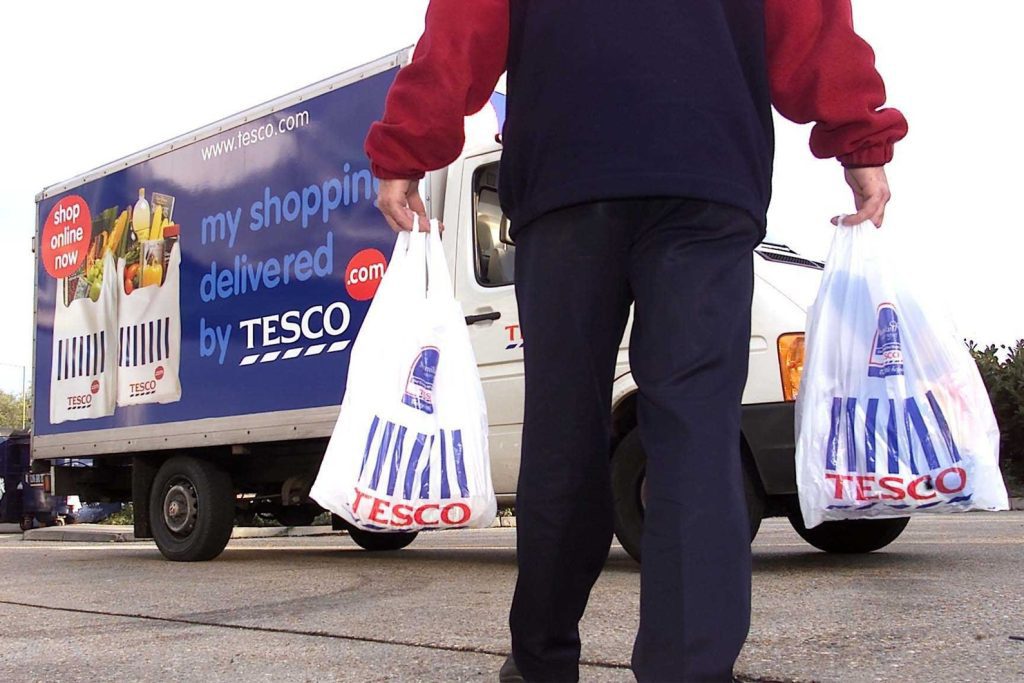
As part of a trial with Recycling Technologies, Tesco will be collecting previously unrecyclable plastics in 10 of its stores in the Bristol and Swindon areas. “Our trial with Recycling Technologies will make even more of our packaging recyclable and help us reach our target. This technology could be the final piece of the jigsaw for the UK plastic recycling industry,” commented Tesco’s director of quality, Sarah Bradbury. Customers will be able to return items such as pet food pouches, shopping bags and crisp packets that are not normally collected by councils. These will then be converted using Recycling Technologies Plaxx process into an oil that can be used to make new plastic. “Using our specialist feedstock recycling process, we keep more plastic waste in the economy and out of landfill and our oceans. This initiative with Tesco is designed to show there are solutions to recover this important material. Our goal is to double the UK’s capacity to recycle plastic waste by 2027,” said Recycling Technologies chief executive Adrian Griffiths. 83% of Tesco’s own label packaging is recyclable and this could reach 90% if the Recycling technologies trial is extended to all its stores, the equivalent of 65,000 tonnes of plastic a year. Tesco is working towards all its packaging being fully recyclable by 2025.
Concrete Answer: How the Industry Is Dealing with Excessive Emissions

Cement is mixed with water, sand and aggregate to be made into concrete, the most used building material in the world. Utilised in virtually every form of construction, concrete is the base for our schools, buildings and homes. But despite the fact that it is used so widely, concrete is hiding something of a dark secret. The fact is that cement production is now the second largest industrial cause of carbon dioxide emissions across the world. Concrete is doing a serious amount of damage to the environment, and as all industries look to reduce their carbon footprint, it is necessary that those involved in concrete product do the same. Some would suggest that the obvious answer is that we should stop using so much of the stuff – but unfortunately it is not quite that simple. A society built on concrete As a society we have become extremely reliant on concrete both as a part of general infrastructure, and its virtually unlimited variety of uses. Industrial cement producer Hanson lists sectors ranging as wide as energy and waste treatment to flood defence and property as requiring cement and concrete. As concrete barrier specialist Maltaward state in this blog post, concrete is also vital for so many day-to-day issues taken for granted – including controlling traffic and providing security to the public. In short; we would struggle to function without access to cement and concrete, which it why it is necessary to be realistic about finding a solution to this problem, rather than trying to reduce our dependence on concrete entirely. Some worrying statistics Nevertheless, there are some very concerning statistics hanging around regarding concrete and cement, and what it means for the planet. For example, research shows that five per cent of all global CO2 emissions comes purely from the production of cement and the growing size of the world’s population also means that it is estimated that cement product is likely to increase by as much as 23% by 2050. It is unsustainable for us to continue current methods of concrete production at the same rate, let alone this potential rise in the use of the material. Thankfully, however, it has been recognised that the industry does have a problem in terms of the emissions that it is producing. The change needs to happen as soon as possible, however, as many cities around the world are undergoing rapid development and require a great deal of concrete to keep up with the pace. Too long without a change The most widely used type of concrete across the world is known as Portland cement. The product was patented nearly 200 years ago and very little has changed in the production process since then. While the enduring longevity of this form of concrete is impressive, it is does point to the problem that the whole process did not take into account issues such as emissions or carbon footprint. Portland cement is produced mostly with limestone, and to create the desired form of the cement, the limestone must be heated to very high temperatures of around 1,500 degrees. This is environmentally hazardous for a couple of reasons: firstly, a great deal of fuel is required to create that heat, and also that at these temperatures, limestone begins to chemically decompose which creates a compound called calcium oxide. The fact that this process has been used for so long means that it can be difficult to convince the industry to change. New ideas and technologies are slowly coming through While it can be very difficult to make a whole industry re-think its approach to the product that it produces, there has been some progress with some companies coming up with interesting new technologies and ideas. One example of this is CarbiCrete which uses slag from steel factories instead of Portland cement in order to produce concrete. The slag contains the calcium, oxides and silicates necessary to produce a very similar product. The world needs more innovative concepts like this in order to produce the levels of concrete necessary for the estimated level of human expansion, without the scenario being so damaging to the environment. Another popular concept is that of CarbonCure which utilises waste CO2 in the concrete production process. This reduces the amount of Portland cement required and actually produces a superior product. Manufacturing & Engineering Magazine | The Home of Manufacturing Industry News
New Government Strategy to Tackle Air Pollution

An ambitious new strategy to clean up the air has been launched by the government. This includes a commitment to support farmers’ efforts to tackle air pollution, as agriculture is responsible for 88% of UK emissions of ammonia gas. The ammonia gas travels long distances and can be damaging to the environment and combine with other pollutants to form fine Particulate Matter pollution, which are harmful to human health. “Ammonia emissions can have a significant impact on the environment and on our health, and as custodians of the land, farmers have an important role to play in reducing them. Our future agriculture policy will involve financial rewards and incentives to help farmers reduce their ammonia emissions,” said George Eustice, Farming Minister. By 2020, the measures set out in the Clean Air Strategy will help cut the costs of air pollution to society by £1.7 billion every year and rising to £5.3 billion every year from 2030. Farmers will benefit from support to invest in infrastructure and equipment to reduce emissions, as well as work with the industry to encourage low emission and holistic farming techniques. Through the Countryside Productivity Scheme, funding has been available so that farmers could purchase manure management equipment, including low-emission spreaders. Funding is also available through the Countryside Stewardship Scheme for slurry tank and lagoon covers for farmers in priority water catchments.