


DHL Working with Manufacturers to Develop Self-Driving Delivery Trucks
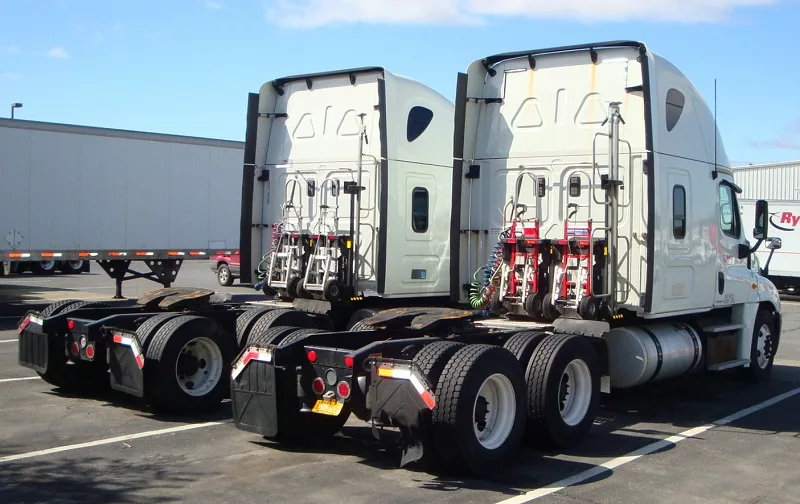
DHL Working with Manufacturers to Develop Self-Driving Delivery Trucks : The Automotive manufacturing company ZF specialises in the creation of driveline and chassis technology. Through a partnership with the delivery and logistics company Deutsche Post DHL Group and the visual technology developer Nvidia, the manufacturer is looking to create and then trial a fleet off autonomous delivery trucks. In 2018, it is expected that DHL will be equipping several of their StreetScooter electric delivery vehicles with a system developed by the driveline and chassis technology developer. The system will be the ZF ProAI self-driving system that has been based on the Nvidia Drive PX technology and will operate by collecting information from a number of different sensors before using artificial intelligence, or AI in order to understand the environment and drive along a safe route. The sensors used to collect the required information includes cameras, lidar and radar. It is hoped that if the first trials are successful and developments can be made, that the self-driving vehicles will be able to park themselves in the future. DHL and their partners have recently revealed a prototype of one of these autonomous delivery vehicles. The unveiling took place at the GPU Technology Conference in Munich. The prototype has six cameras, one radar and two lidar in order to sense surroundings. All of these sensors feed back to the Nvidia Drive PX. At the moment, DHL has a fleet of 3,400 StreetScooter electric vehicles that can be equipped with the ZF sensors and the self-driving system. The development of autonomous delivery vehicles is a demonstration of how both AI and deep learning can be used to reshape the commercial transportation industry. With the increased popularity of online shopping, more and more deliveries are being made and therefore larger delivery and logistics companies are needed, and possibly more drivers. The shortage of truck drivers is getting worse with the increase of online shopping orders. The use of AI-enabled vehicles could be the perfect solution to the deficit of truck drivers as well as a way of meeting demand of the online shopping market. Manufacturing & Engineering Magazine | The Home of Manufacturing Industry News
Exciting New Arrival of a Brand New Paper Know as “Keep it Running”

The management and business world are clearly excited to have been made aware of the impending arrival of a brand new paper known as Keep it Running. The paper has been completed by Armstrong & Associates, Incorporated and is part of the companyâs ongoing commitment to develop the logistical side of businesses, as well as various research programs and initiatives. They are a very popular and socially engaging business tool, having secured the membership and support of more than 30,000 people around the globe who all want to have access to their regular online updates. They have also had much success in alternative and various forms of publications and have succeeded in attracting the attention of magazines, journals and periodicals from all around the globe. In association with their initiative to provide the very latest forms of information to clients, the paper release was compiled as a section of Armstrong & Associatesâ Expert Information Service (EIS) service. In analyzing the various qualities and properties of no less than seven major different third-part logistics companies, from FedEx to DHL, the paper emphasizes the different ways in which logistics and delivery systems can be implemented effectively and offers useful comparisons and links between the companies, detailing therefore the reasons why those companies have managed to succeed in the logistics sector, unlike other third-party logistics around the world. An extremely valuable document of information, the Keep it Running sector is due to be a very successful and informative paper to anyone at all interested in the logistical side of things, and should be welcomed by experts in the field. This indicates that through this consistent initiative by Armstrong & Associates to remain up to date with the various different means of logistical systems in place all around the world, it is clear that the companyâs research initiatives and compilations have ultimately paid off in time. Manufacturing & Engineering Magazine | The Home of Manufacturing Industry News
3D printing to disrupt selected manufacturing techniques says DHL

DHL, the worldâs leading logistics service provider, released its latest DHL Trend Report today â 3D Printing and the Future of Supply Chains. DHL has been testing a variety of both 3D printing hardware and techniques for several years and has identified applications that have potential to redefine manufacturing and supply chain strategies. While the 3D printing market is estimated to grow between US$180 billion and US$490 billion by 2025, the report however finds it will not become a substitute for mass-production but a complementary process. Matthias Heutger, Senior Vice President, DHL Customer Solutions & Innovation, said: The DHL Trend Report â3D Printing and the Future of Supply Chainsâ recognizes 3D printing as a transformative technology. However, it is not a magic bullet that will render factory mass production and manufacturing obsolete. Its exciting potential lies more in its capability to simplify the production of highly complex and customizable products and spare parts â and this could bring logistics and manufacturing closer together than ever before. Redefining supply chain strategies Also known as additive technology, 3D printing involves manufacturing products by layering heated plastic or metal injected from the nozzle of a 3D printer onto a plate to create a three-dimensional object, potentially replacing processes such as forging and molding at a fraction of the cost. It can lead to improved product quality, multiple products being made by a single printer, new types of products â and new supply chain strategies and models. It has been adopted globally by the aviation, engineering, automotive and healthcare industries. Mercedes Benz Trucks has launched a 3D printed spare parts service and in healthcare, 3D printing allied to scanners is creating custom-made external and internal items from prosthetics to dental crowns. It is also being used for autonomous production in remote environments â a highly sought-after service by mining companies, space agencies, and the military to make critical spare parts. A complementary technology Factors currently limiting more widespread adoption of 3D printing â around since the 1980s â include lack of management knowledge, economic and technological issues. Many printers can use only one material and costs are still high for industrial-grade 3D printer. As well as facing warranty, liability and intellectual property issues, 3D printing needs to become faster, more agile and more advanced before it can become a core production technology. Read more at https://ciltuk.org.uk/News/LatestNews/TabId/235/ArtMID/6887/ArticleID/10653/3D-printing-to-disrupt-selected-manufacturing-techniques-says-DHL.aspx