


Alphabet Data Share Deal Gives BMW/Mini Drivers a ‘WOW’ Factor
Alphabet is urging more manufacturers to share vehicle maintenance-related data with leasing companies, following the successful launch of its Tele-services initiative with BMW UK earlier this year. Since January, when Alphabet and its BMW parent began trialling data sharing, the leasing company has received more than 13,200 service maintenance repair (SMR) data alerts for its BMW- and Mini-maintained vehicles, enabling it to take a proactive approach, and use preferred repairers. Data is provided by the manufacturer which enables us to capture the servicing that is required on those vehicles, to liaise with the customer and steer the customer down the channel that we see fit, be that to the BMW or Mini network for repair, be that to an independent network or be that to a fast fit, said Kit Wisdom, head of technical services at Alphabet, who was speaking at the International Auto Finance Network (IAFN) conference. Wisdom said that in some cases Alphabet is aware of a maintenance issue, such as engine oil being due for replacement, before the company car driver sees a message in their vehicle. Alphabet is also aware when the next service is due and when brakes are expected to be required based on usage of that vehicle, meaning it can contact the driver or fleet manager to get the vehicle booked in. Customer feedback is very positive, Wisdom said. For us to say âwe know your brake fluid needs to be changedâ or âwe know that your brake pads in the front need to be changed, we can book that in for you next weekâ, itâs a âwowâ moment for the customer. It has been really powerful. For fleet managers this proactive approach can help avoid neglected service warning lights or unexpected maintenance issues and help reduce downtime. The latest phase of Teleservices has seen Alphabet representatives gain access to BMW service centresâ online service booking systems so they can view real-time workshop availability and book a service slot while the customer is on the phone. Read more at http://www.fleetnews.co.uk/fleet-leasing/news/latest-fleet-leasing/2016/11/30/alphanet-data-share-deal-gives-bmw/mini-drivers-a-wow-factor
Electric Cars Gain Traction in the UK Market
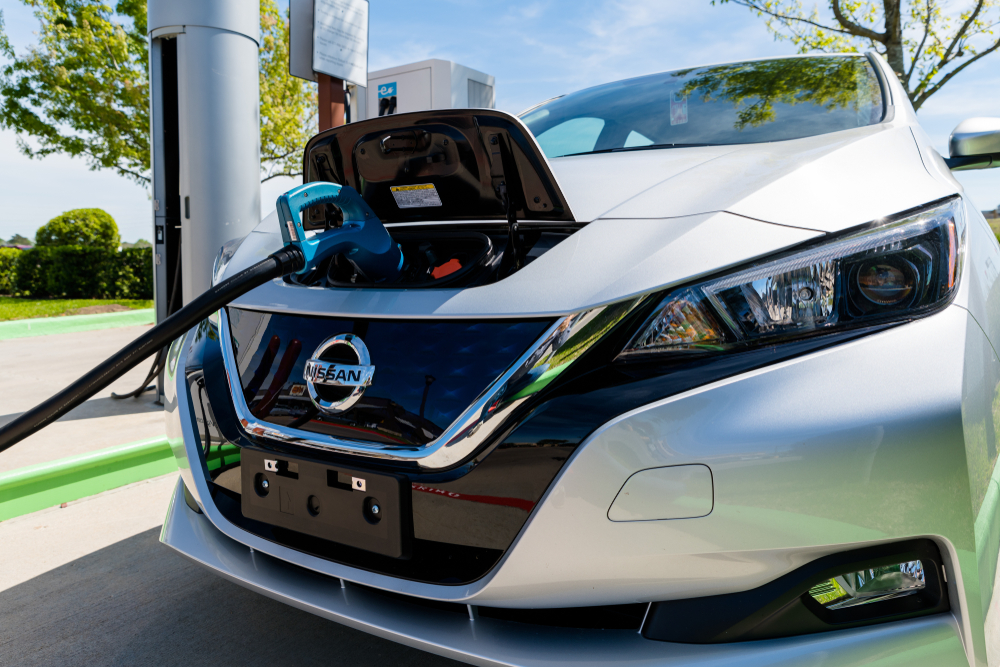
If market sales and the sheer number of models on offer is anything to go by, electric cars may well have proved a viable alternative to either petrol or diesel-powered vehicles. Against initial criticisms over price, capability and luxury, a number of recent releases have taken the market by storm â attending to previous shortcomings with some flourish. We take look at some of the best on todayâs market. Nissan Leaf (£16,290-£24,990 depending on spec. and leasing) The Nissan Leaf has fast-become one of the most popular electric cars in the UK, largely thanks to its makersâ affordable pricing. Not only representing a small investment for consumers but also fairing reasonably well in terms of torque, the Leaf is by and large the economical option which allows drivers to go green at relatively little expense. It also ticks the luxury box: Nissanâs electric car also allows drivers to precondition their vehicle to a set temperature as well as providing live monitoring data on the interior environment. BMW i3 (starts at £25,680) Retaining the rear wheel drive of like petrol and diesel BMW counterparts, it takes only a second to realise the i3 is yet widely different to any other BM drive. Powered by a 168hp electric motor, the i3 has a considerably higher rate of acceleration than many electrics cars on the market and with a stylish interior and sculpted exterior, it remains the tall glass of water than buyers are looking for in a car. Making use of a carbon fibre-infused body, the i3 typically achieves some 80 miles of charge and, like the Leaf, offers users ultimate control of preconditioning settings with the use of an app. Renault Zoe (starts at £13,945) Whilst certainly not the most luxurious electric car on the market, the Renault Zoe is, by some, margin, the cheapest and when one considers the efficiencies and power it provides that low-cost pricing is some feat by the French manufacturer. Alongside a more than adequate cabin, the Zoe in fact offers two distinct driving modes â Eco and Normal â thus drivers enjoy the best of both worlds: an environmentally-sound drive and one with decent torque and acceleration. Indeed, in Normal mode, the Zoe can achieve speeds of 30mph in under four seconds. Tesla Model S (£55,000-£85,000) Tesla has been a forerunner in the electric car industry for some years and the Model S very much continues the manufacturerâs hold on the EV market. Understated but sleek and modern on the outside, itâs beneath the carâs bonnet that the Tesla Model S tears strips off any like competitors. Able to hit 60mph in just 2.6 seconds (in Ludicrous mode), the car is also highly capable for inner-city as well as long haul drives. With a 90kWh battery, the Model S can travel 330 miles on full charge. Pioneering technology continues with fully autonomous Autopilot mode, and an attractive, 17in touch screen dashboard. Though a somewhat pricier venture into EV, drivers are sure to be impressed. And so, with a great variety of models now flooding the market and new improvements to charging infrastructure, electric cars are only increasing in popularity. Indeed, sales of electric vehicles were up 58% year-on-year between 2014 and 2015. With enhanced capabilities and attention paid to former flaws, manufacturers may well achieve a repeat performance this year.
Automotive Apprenticeship Matching Service Launch Could Fill Automotive Skills Gaps

It is well-documented that the UKâs manufacturing and engineering sector as a whole continues to be faced by major skills shortages owing to a declining uptake in specialist careers amongst younger generations. In order to fill those growing skills gaps, some of the worldâs major car manufacturers have recently launched the Automotive Apprenticeship Matching Service. It comes after the government announced plans to introduce an Apprentice Levy scheme would be going ahead at the start of next year. The levy will make it compulsory for all large employers to support apprenticeship schemes with the hope of introducing new talent to the sector. Amongst partners contributing to the Automotive Apprenticeship Matching Service are world-renowned Nissan, Bentley, BMW, Jaguar Land Rover and Ford. It aims to recruit in excess of 10,000 new apprenticeship within the automotive sector and will increase the chances of young people securing a place on the highly lucrative automotive apprenticeship schemes. In principle, the apprenticeship recruitment programme will enable automotive manufacturers to reconnect with previously unsuccessful candidates, give those applicants who narrowly missed out an apprenticeship the opportunity to work within another automotive setting. Simon Farrall, Head of Apprentices at BMW, was â in this respect â hopeful, admitting that the firm turn away a good many strong candidates that theyâre simply unable to accommodate. He added that the by pooling apprentices within the matching service, automotive manufacturers would be able to pick up where rivals cannot and gain the quality engineers and technicians of the future. Semta, the Science, Engineering, Manufacturing and Technologies Alliance, which promotes the interests of some of the sectorâs top employers and actively encourages the recruitment of apprenticeships, has suggested that the UKâs automotive sector is at risk of dwindling productivity if skills shortages do not begin to be addressed. In a report, published on Tuesday, the not-for-profit organisation found that as many as 5,000 jobs could be left vacant if the right training and opportunities are not introduced. Jo Lopes, Head of Technical Excellence at Jaguar Land Rover, admitted that the sector could do more to attract younger people to take up a career in the automotive industry. He added that the new collaborative approach evident within the Automotive Apprentice Matching Service could well be a solution to addressing current skills shortages as well as securing the future of the industry. Nick Boles, Skills Minister praised the UKâs automotive industry, insisting that it continues to be the most productive in Europe. If we are to maintain this position, itâs essential that we have the right skills, he added. The apprenticeship pooling platform will be hosted by GetMyFirstJob and will engage with national candidates and manufacturers throughout the supply chain. It may well be a step in the right direction for the industry and, in particular, the government which committed to recruiting three million more apprentices by 2020.